
België heeft, samen met de Europese Commissie, de rol van medevoorzitter van de EMN Return Expert Group (REG) op zich genomen. In die hoedanigheid was EMN België op 16 juni 2026 gastheer van een plenaire vergadering van de REG in Brussel.
16/06/2026

16/06/2026
A draft law introducing the possibility of home searches to enforce return decisions has begun its parliamentary examination in the House of Representatives. The measure would concern certain third-country nationals subject to an enforceable return decision who do not cooperate with their return and are considered to pose a risk to public order or national security. Discussed by the Committee on Home Affairs on 16 June 2026, the proposal will be subject to consultations with experts and stakeholders before the committee continues its examination.

12/06/2026
Belgium has contributed to Operation Global Chain 2026, a large-scale international law enforcement operation targeting human trafficking networks. Coordinated across 59 countries, the operation took place from 8 to 12 June 2026 and focused on trafficking for sexual exploitation, forced criminality and forced begging, with a particular focus on underage victims. In Belgium, a police operation in Charleroi and Verviers led to the dismantling of a trafficking network and the identification of 22 minor victims.
10/06/2026
According to figures published by Statbel on 10 June 2026, 69.017 persons acquired Belgian nationality in 2025. The most common previous nationalities among those who became Belgian were Moroccan, Romanian, Syrian, Polish and Italian. Compared to 2024, the number of acquisitions of Belgian nationality increased by almost 9.000.
Thema:
Type:
Trefwoorden:

09/06/2026
The European Union Agency for Asylum (EUAA) has published its Asylum Report 2026, providing an overview of asylum-related developments across EU+ countries in 2025 and early 2026. The report examines key policy, legislative and operational changes in the field of asylum against a backdrop of ongoing conflicts and geopolitical developments. It also analyses how EU+ countries prepared for the implementation of the Pact on Migration and Asylum.
04/06/2026
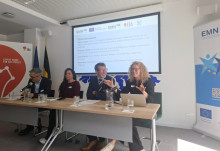
Op 4 juni 2026 organiseerden EMN België en EMN Zweden, samen met de Zweedse Expertgroep voor Hulpstudies (EBA) en de Zweedse Delegatie voor Migratiestudies (Delmi), het EU- lanceringsseminarie “Linking Migration and Development Cooperation: European Experiences and Policy Reflections” bij de Permanente Vertegenwoordiging van België bij de EU in Brussel.

26/05/2026
Op 26 mei 2026 bracht EMN België meer dan 130 stakeholders uit de asiel- en migratiesector samen. Tijdens dit evenement werd ook het Belgisch Asiel- en Migratieoverzicht 2025 uitgebracht, waarin de belangrijkste ontwikkelingen op het gebied van asiel en migratie in België gedurende het voorbije jaar worden belicht. Het diverse publiek van experts nam deel aan reflecties en discussies over recente trends binnen het domein, evenals over een versterkte samenwerking binnen het Belgische asiel- en migratiesysteem. De dag omvatte bovendien parallelsessies over belangrijke thema’s, naast informele netwerkmomenten om contacten te leggen en nieuwe samenwerkingen te stimuleren.
21/05/2026
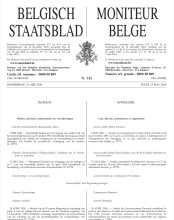
Belgium has adopted new rules governing the renewal of residence permits for third-country national students. The amendments introduce stricter requirements concerning study progress, maximum study duration, changes of study programme and enrolment in non-recognised higher education institutions. They were adopted by Royal Decree of 7 May 2026, published in the Belgian Official Gazette on 21 May 2026, and apply from the 2026/2027 academic year.
Thema:
Type:
Trefwoorden:
20/05/2026
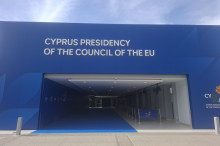
EMN België nam deel aan de EMN-conferentie op hoog niveau onder het voorzitterschap van Cyprus, getiteld “Taking stock of the Pact on Migration and Asylum: turning strategy into reality”, die op 19 en 20 mei 2026 plaatsvond in Nicosia.

13/05/2026
The Belgian Council of Ministers has approved a draft bill aimed at strengthening rules on labour migration and improving the framework for highly qualified non-EU workers. The proposal includes measures aimed at strengthening the fight against fraud linked to labour migration, while also seeking to make the European Blue Card more attractive for highly qualified workers from outside the European Union. The draft bill also provides for additional protection for workers who are victims of certain social law infringements committed by employers. The text will now be submitted to the Council of State for advice.
Thema:
Type:
Trefwoorden:
08/05/2026
The European Commission has updated its assessment of preparations for the Pact on Migration and Asylum ahead of its full application in June 2026. While most Member States have made progress in adapting legal and operational frameworks, significant gaps remain in key areas. These include border procedures, reception capacity, asylum processing, return systems and solidarity mechanisms. The Commission stresses that sustained efforts will be required beyond June to ensure full operational readiness.
Thema:
Type:
Trefwoorden:
07/05/2026
The Court of Justice of the European Union has ruled on the compatibility of a national residence requirement with EU equal treatment rules. The Court examined whether a 10-year residence condition could be applied to beneficiaries of international protection in order to access a social benefit. It found that the measure constitutes indirect discrimination prohibited under EU law.
Thema:
Type:
Trefwoorden:

07/05/2026
DUO for a JOB has launched a national awareness campaign highlighting the persistence of discrimination in recruitment processes in Belgium. The initiative uses the format of the well-known game “Guess Who?” to illustrate how candidates may still be excluded on the basis of appearance, name, origin or accent rather than skills. The campaign is being rolled out in May across public spaces, including stations and metro networks in several Belgian cities.

06/05/2026
On 6 May, the United Nations Human Rights Council reviewed Belgium under the Universal Periodic Review (UPR), a peer-review mechanism assessing the human rights situation in all UN Member States. The review examined the implementation of previous recommendations and the current situation across a range of policy areas, including asylum, migration and detention.
Thema:
Type:
Trefwoorden:

05/05/2026
The Belgian Commissioner General for Refugees and Stateless Persons (CGRS) announces a series of changes that will apply from 12 June 2026. These changes are part of the implementation of the EU Pact on Migration and Asylum, adopted in 2024. They will affect asylum procedures, operational practices and new institutional responsibilities.

29/04/2026
In 2025, minors accounted for 23.7% of all first-time asylum applicants in the European Union, according to recent Eurostat data. A total of 158.400 children applied for asylum for the first time, including a significant proportion of unaccompanied minors. While the overall number of minor applicants declined compared to previous years, children continue to represent a substantial share of asylum seekers in the EU.
Thema:
Type:
Trefwoorden:
27/04/2026
The Council for Alien Law Litigation (CALL) has made the use of its child-friendly courtroom (“Salle M”) a structural arrangement as of March 2026. The measure applies to asylum appeal cases involving unaccompanied minors and is accompanied by adapted summonses, age-appropriate information materials, and strengthened judicial training on children’s rights. The initiative builds on a pilot phase and forms part of broader European efforts to enhance child-friendly justice.
Thema:
Type:
Trefwoorden:

23/04/2026
On 23 April 2026, the Belgian Chamber of Representatives adopted a bill introducing the possibility of imposing a lifetime entry ban on certain foreign nationals. The measure concerns individuals registered in the national database on terrorism, extremism and radicalisation and amends the Law of 15 December 1980 on access to the territory, residence, establishment and removal of foreign nationals.

23/04/2026
Coastal rescue services along the Belgian North Sea are being briefed on how to respond to increased small boat activity linked to attempted irregular crossings towards the United Kingdom. The sessions aim to strengthen awareness and improve coordination with relevant authorities ahead of the start of the beach surveillance season.
Thema:
Type:
Trefwoorden:
22/04/2026
On 22 April 2026, the Belgian Federal Ombudsman published its annual report for 2025. The institution recorded a further increase in the number of cases handled, with migration-related issues remaining the main source of complaints. The report highlights recurring concerns linked to administrative procedures, in particular in the field of visas and residence-related decisions.
Thema:
Type:
Trefwoorden:
21/04/2026
Based on data released by the International Organization for Migration (IOM), nearly 7.900 deaths or disappearances were recorded on migration routes worldwide in 2025. This compares with approximately 9.200 recorded in 2024. The figures bring the cumulative total to more than 80.000 deaths or disappearances recorded since 2014, when the Missing Migrants Project began collecting data.
Thema:
Type:
Trefwoorden:
16/04/2026
The Court of Justice of the European Union (CJEU) has clarified that detention centres holding applicants for international protection under the border procedure do not need to be located at the external border of a Member State. It also confirmed that continued detention after the expiry of the border procedure time limit may be permissible under certain conditions. The judgment further addresses the validity of procedural steps taken during the border procedure and reiterates key safeguards under EU law.
Thema:
Type:
Trefwoorden:

13/04/2026
Belgian Minister for Asylum and Migration Anneleen Van Bossuyt is carrying out a visit to the Democratic Republic of Congo. The visit takes place in the context of a marked increase in asylum applications from Congolese nationals in Belgium in recent years. The mission aims to discourage unfounded asylum applications, address the misuse of visa procedures, counter document fraud and misleading messages from smugglers, and strengthen cooperation on return and the fight against irregular migration.
09/04/2026
On 9 April 2026, the European Court of Human Rights delivered its judgment in M.V. and Others v. Belgium and held that Belgium had violated several provisions of the European Convention on Human Rights in relation to the reception conditions of four applicants for international protection.

03/04/2026
The Belgian Council of Ministers has approved a draft law aimed at bringing Belgian legislation on the guardianship of unaccompanied minors into line with the EU Pact on Migration and Asylum and introducing additional safeguards for minors. The text has been submitted to the Council of State for its opinion.