
Publicatie datum:
Coastal rescue services along the Belgian North Sea are being briefed on how to respond to increased small boat activity linked to attempted irregular crossings towards the United Kingdom. The sessions aim to strengthen awareness and improve coordination with relevant authorities ahead of the start of the beach surveillance season.
Lees meer
Hoofdthema: Irregular Migration, Smuggling & Trafficking
Trefwoorden: small boat, human smuggling, Belgian coast, rescue services
Publicatie datum:
On 22 April 2026, the Belgian Federal Ombudsman published its annual report for 2025. The institution recorded a further increase in the number of cases handled, with migration-related issues remaining the main source of complaints. The report highlights recurring concerns linked to administrative procedures, in particular in the field of visas and residence-related decisions.
Lees meer
Hoofdthema: Cross-sectional, Asylum, Migration
Trefwoorden: federal ombudsman, complaint, visa, family reunification
Publicatie datum:
On 9 April 2026, the European Court of Human Rights delivered its judgment in M.V. and Others v. Belgium and held that Belgium had violated several provisions of the European Convention on Human Rights in relation to the reception conditions of four applicants for international protection.
Lees meer
Hoofdthema: Reception
Trefwoorden: European Court of Human Rights, Belgium, violation, European Convention on Human Rights, inhuman and degrading treatment, right to a fair hearing

Publicatie datum:
The Belgian Council of Ministers has approved a draft law aimed at bringing Belgian legislation on the guardianship of unaccompanied minors into line with the EU Pact on Migration and Asylum and introducing additional safeguards for minors. The text has been submitted to the Council of State for its opinion.
Lees meer
Hoofdthema: Vulnerable groups
Trefwoorden: unaccompanied minors, guardianship, New Pact on Migration and Asylum, age assessment, multidisciplinary approach

Publicatie datum:
The Belgian Constitutional Court has clarified how the means of subsistence requirement applies in family reunification applications. The ruling establishes that the means of subsistence of both the Belgian sponsor and their partner must be taken into account when assessing compliance with this requirement. Previously, some applications were refused because only the sponsor’s means were considered. The decision aims to ensure compliance with principles of equality, non-discrimination, and respect for family life.
Lees meer
Hoofdthema: Family Migration
Trefwoorden: Constitutional Court, application for family reunification, income requirement, partner's income

Publicatie datum:
On 31 March 2026, the Office of the Commissioner General for Refugees and Stateless Persons (CGRS) announced that it would temporarily suspend the notification of certain decisions in cases concerning applicants from Lebanon, in view of the current situation in the country.
Lees meer
Hoofdthema: International Protection
Trefwoorden: application for international protection, Lebanon, suspension, refusal, refugee status, subsidiary protection status

Publicatie datum:
Belgium and Algeria have signed two linked agreements, one on the readmission of irregularly staying Algerians and another providing a visa exemption for holders of Algerian diplomatic and service passports. The readmission agreement introduces measures to speed up identification, extend the validity of travel documents, allow the return of multiple individuals on the same flight, and permit the use of Algerian escorts during enforced returns.
Lees meer
Hoofdthema: Borders & Visa, Return & Readmission
Trefwoorden: Belgium, Algeria, readmission agreement, visa exemption

Publicatie datum:
Belgium has postponed the registration of biometric data for third-country nationals entering the Schengen area. The measure, announced by the Interior Minister Bernard Quintin and Minister of Asylum and Migration Anneleen Van Bossuyt, follows significant queues and operational disruptions at Brussels Airport. The decision affects the gradual implementation of the European Entry/Exit System (EES) and aims to ensure border checks can be conducted under acceptable conditions for passengers.
Lees meer
Hoofdthema: Borders & Visa
Trefwoorden: entry exit system, biometric data, registration, Brussels Airport, delay
Publicatie datum:
The Fedasil Pondrôme reception centre will host a photo exhibition featuring the work of unaccompanied and accompanied minors. The images were created over an eighteen-month project led by CIDJ Rochefort–Beauraing. The exhibition provides insight into the daily lives, experiences, and identities of the young participants. The event is free, open to all, and offers an opportunity to meet the creators.
Lees meer
Hoofdthema: Reception
Trefwoorden: unaccompanied minors, accompanied minors, photo exhibition
Publicatie datum:
The Belgian Council of State has suspended a ministerial instruction that systematically limited material assistance to international protection applicants who had already obtained protection in another EU Member State. The court ruled that the instruction exposed these individuals to the risk of severe hardship and potential homelessness. It also noted that, due to its regulatory character, the instruction should have been submitted for review by the Council of State’s Legislation Section.
Lees meer
Hoofdthema: Reception
Trefwoorden: Council of State, suspension, instruction, limitation, material reception condition

Publicatie datum:
Belgium is advancing plans to consolidate its asylum and migration services under a single Federal Public Service (FPS) Migration. The initiative aims to create a unified administrative framework for managing asylum and migration processes. The governance model for the new service was approved by the Council of Ministers to structure its internal organisation.
Lees meer
Hoofdthema: Cross-sectional, Asylum, Migration
Trefwoorden: Federal Public Service Migration, Belgium, coordination, centralisation

Publicatie datum:
Op 27 maart 2026 nam EMN België deel aan de studiedag van Myria en het Nationaal Instituut voor Criminalistiek en Criminologie (NICC) getiteld "Het smokkelstatuut onder de loep", waar de resultaten werden voorgesteld van het onderzoeksrapport over de toepassing van het smokkelstatuut in de praktijk.
Lees meer
Hoofdthema: Irreguliere migratie
Trefwoorden: mensensmokkel, statuut, verblijfsvergunning, België

Publicatie datum:
Belgium plans to progressively return several defence sites used for the reception of applicants for international protection to military use as part of a broader plan to expand defence infrastructure towards 2040. The measure concerns around 4.000 reception places located on military premises across the country. Authorities state that the reduction in capacity can be absorbed within the existing reception network. The transition will take place gradually, with closures scheduled at different times depending on the site.
Lees meer
Hoofdthema: Reception
Trefwoorden: reception place, reception capacity, defence, military site

Publicatie datum:
On 20 March 2026, the Belgian Council of Ministers approved a draft law that would link the level of social assistance granted to beneficiaries of subsidiary and temporary protection to their participation in integration efforts through the Individual Social Integration Project (ISIP). Under the proposal, the amount of social assistance could be adjusted depending on the efforts made by the beneficiary to integrate.
Lees meer

Publicatie datum:
The Office of the Commissioner General for Refugees and Stateless Persons (CGRS) has announced that it will resume processing cases from applicants originating from the West Bank who are not registered with UNRWA. The decision follows a temporary suspension in March 2025 due to the unstable situation in the region. The CGRS now has sufficient up-to-date and objective information to assess the need for international protection.
Lees meer
Hoofdthema: International Protection
Trefwoorden: West Bank, application for international protection, processing
Publicatie datum:
Myria, the Federal Migration Centre, has advised against a draft law proposing to remove the legal possibility of activating a mandatory distribution plan for reception places in times of crisis. The plan allows the federal government to require municipalities to provide local reception initiatives according to objective allocation criteria. Myria stresses that this mechanism is important to safeguard human dignity and the right to reception, particularly during periods of structural shortages.
Lees meer
Hoofdthema: Reception
Trefwoorden: reception place, distribution plan
Publicatie datum:
CIRÉ, together with partner organisations, has lodged an urgent appeal at the Council of State challenging a ministerial instruction that continues to exclude asylum seekers who have already been granted protection in another EU member state from reception facilities. The move follows a recent temporary suspension of the measure by the Constitutional Court. CIRÉ argues the instruction undermines judicial authority and the rule of law.
Lees meer
Hoofdthema: Reception
Trefwoorden: limitation, material reception condition, appeal procedure, Council of State
Publicatie datum:
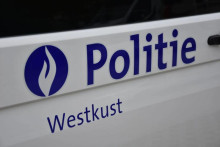
Authorities in Belgium have reported a notable increase in migrant smuggling attempts along the country’s North Sea coast in recent weeks, prompting enhanced law enforcement action and efforts to strengthen international cooperation. Federal and local police forces have stepped up patrols and arrests as part of a broader response to the phenomenon, while Belgium and the United Kingdom are exploring closer collaboration to address the cross-border dimension.
Lees meer
Hoofdthema: Smuggling & Trafficking
Trefwoorden: Belgian coast, migrant smuggling, police operation, international cooperation

Publicatie datum:
The Council of Ministers approved, at second reading, two draft bills aimed at implementing the European Pact on Migration and Asylum in Belgian law. The texts were adopted with a view to their submission to the Chamber of Representatives of Belgium under an urgent procedure. The first draft bill aims to apply or transpose eight legislative instruments of the Pact into Belgian law, while the second concerns procedures before the Council for Alien Law Litigation.
Lees meer
Hoofdthema: Cross-sectional, Asylum, Migration
Trefwoorden: New Pact on Migration and Asylum, implementation, transposition, Belgian law

Publicatie datum:
According to Belgian Minister for Asylum and Migration Anneleen Van Bossuyt, the minimum proof of sufficient means of subsistance for non-EU students wishing to study in Belgium has been increased. She said the measure aims to strengthen study migration as a gateway for international talent while preventing financial abuse and protecting students from precarious situations.
Lees meer
Hoofdthema: Student Migration
Trefwoorden: student migration, sufficient financial resources, sufficient means of subsistance, guarantor
Publicatie datum:
Myria has released its first comprehensive mapping of quantitative data on minor victims of human trafficking and aggravated forms of smuggling in Belgium. The report aims to provide a clearer statistical basis for understanding the situation of minors at risk, while also highlighting structural gaps in current data collection and sharing practices.
Lees meer
Hoofdthema: Vulnerable groups, Data & Statistics, Smuggling & Trafficking
Trefwoorden: victim of trafficking, victim of smuggling, minor, data collection, figures

Publicatie datum:
The Antwerp Family Court has annulled the decisions of local civil registry officials that sought to revoke the Belgian nationality of children born in Belgium to Palestinian parents. In five rulings issued on 27 February 2026, the court emphasised that depriving these children of nationality would be contrary to their best interests.
Lees meer
Hoofdthema: Statelessness, Citizenship & Nationality
Trefwoorden: Belgian nationality, misuse, withdrawal, Palestinian, child, best interests of the child

Publicatie datum:
The Belgian Constitutional Court has temporarily suspended legislative measures introduced in 2025 that tightened rules on material reception conditions for asylum seekers and family reunification for beneficiaries of subsidiary protection. The suspensions concern two separate laws, and the Court has referred several preliminary questions to the Court of Justice of the European Union (CJEU) to clarify their compatibility with EU law.
Lees meer
Hoofdthema: Reception, Family Migration
Trefwoorden: Constitutional Court, suspension, limitation, material reception condition, family reunification, beneficiary of subsidiary protection
Publicatie datum:
Child Focus and Payoke have signed a collaboration protocol to better detect, support, and protect minors who are victims of sexual exploitation. The agreement establishes fixed contact points, faster coordination for urgent cases, and tailored referrals, aiming to ensure that victims receive appropriate assistance without having to repeat their story.
Lees meer
Hoofdthema: Smuggling & Trafficking
Trefwoorden: child sexual exploitation, victims of human trafficking, coordination, referral

Publicatie datum:
Four years after Russia launched its full-scale invasion of Ukraine on 24 February 2022, Belgium has granted more than 101.500 temporary protection certificates to people fleeing the conflict. Today, around 70.600 of these displaced Ukrainians remain in the country. While the temporary protection scheme has been extended until March 2027, uncertainty remains over what will happen afterwards, raising questions for both the authorities and Ukrainian beneficiaries.