De deskundigengroep inzake de bestrijding van mensenhandel van de Raad van Europa (GRETA) heeft zijn vierde evaluatieverslag over België gepubliceerd. Het verslag bestrijkt de periode van juli 2022 tot juni 2026. Het rapport onderzoekt de kwetsbaarheden voor mensenhandel, de maatregelen om deze te voorkomen en op te sporen, en de identificatie, bescherming en bijstand van slachtoffers. Daarnaast beoordeelt het de onderzoeken en strafvervolgingen, alsook het gebruik van informatie- en communicatietechnologieën (ICT) bij mensenhandel. GRETA wijst op een aantal domeinen waarop verdere actie nodig is om de Belgische aanpak van mensenhandel te versterken.
Hoofdthema: Kwetsbare groepen, Mensensmokkel & Mensenhandel
Trefwoorden: GRETA, Verdrag inzake bestrijding van mensenhandel, uitvoering, België, slachtoffer van mensenhandel, kwetsbaarheid
The European Commission has proposed a five-point plan to strengthen the resilience and security of the EU’s external borders and improve preparedness for sudden mass arrivals. The plan sets out actions for the Commission, Member States and EU Justice and Home Affairs (JHA) agencies in five areas, covering cooperation with partner countries, border management, monitoring and early warning, action against migrant smuggling and trafficking, and returns.
Hoofdthema: Borders & Visa, Irregular Migration, Return & Readmission, Smuggling & Trafficking
Trefwoorden: external border, border security, border management, mass arrivals
De Europese Commissie heeft België en 19 andere EU-lidstaten een aanmaningsbrief gestuurd omdat zij de volledige omzetting van de herziene EU-richtlijn inzake mensenhandel niet hebben meegedeeld. De Commissie verzond deze brieven op 25 september 2026, nadat de termijn waarbinnen de lidstaten de richtlijn in nationaal recht moesten omzetten, was verstreken.
Hoofdthema: Mensensmokkel & Mensenhandel
Trefwoorden: Anti-Mensenhandel Richtlijn, omzetting, inbreukprocedure

België heeft deelgenomen aan een internationale rechtshandhavingsoperatie gericht op mensenhandel met het oog op arbeidsuitbuiting in de restaurantsector. De operatie, die op 18 september 2026 werd gecoördineerd in vijf Europese landen, richtte zich op een crimineel netwerk dat ervan wordt verdacht voornamelijk Indiase onderdanen uit te buiten. In België werd één restaurant geïnspecteerd in het kader van deze gecoördineerde actie, die leidde tot twee arrestaties en de identificatie van meer dan 70 mogelijke slachtoffers.
Hoofdthema: Mensensmokkel & Mensenhandel
Trefwoorden: mensenhandel, economische uitbuiting, Indiase restaurants
Belgian coastal police zones tested drone surveillance during summer 2026 as part of efforts to prevent irregular crossings to the United Kingdom by small boats. Following an evaluation meeting on 10 September, the West Flanders acting governor announced plans to develop the approach on a structural basis in 2027, subject to external funding.
Hoofdthema: Irregular Migration, Smuggling & Trafficking
Trefwoorden: transit migration, smuggling of migrants, small boat, Belgian coast, drone surveillance

België en het Verenigd Koninkrijk hebben een Samenwerkingsovereenkomst inzake Rechtshandhaving (Law Enforcement Cooperation Agreement, LECA) ondertekend, met als doel de samenwerking tussen hun rechtshandhavingsautoriteiten te versterken. De overeenkomst zal een snellere en meer autonome uitwisseling van inlichtingen mogelijk maken en gezamenlijke acties ondersteunen tegen migrantensmokkel en andere vormen van ernstige en georganiseerde criminaliteit.
Hoofdthema: Mensensmokkel & Mensenhandel
Trefwoorden: België, Verenigd Koninkrijk, rechtshandhaving, samenwerking, mensensmokkel

Europol and the European Labour Authority (ELA) are strengthening their cooperation on labour exploitation, trafficking in human beings, fraud and related serious and organised crime. On 2 September 2026, the two agencies signed a Working Arrangement providing a framework for information exchange and further cooperation in areas of shared interest.
Hoofdthema: Economic migration, Smuggling & Trafficking
Trefwoorden: Europol, European Labour Authority, labour exploitation, labour inspection, organised crime
Het nieuwe Strafwetboek van België treedt op 1 september 2026 in werking. Onder de bepalingen die relevant zijn voor migratie, bevatten de artikelen 258 tot en met 264 regels inzake mensenhandel en mensensmokkel, met inbegrip van de definities ervan, verzwarende vormen, straffen en specifieke bepalingen met betrekking tot slachtoffers.
Hoofdthema: Mensensmokkel & Mensenhandel
Trefwoorden: België, Strafwetboek, mensenhandel, mensensmokkel, strafbaar feit, straf

De afdeling Gent van de Rechtbank van eerste aanleg Oost-Vlaanderen heeft in de Lotus-zaak 33 beklaagden veroordeeld wegens mensenhandel met verzwarende omstandigheden en wegens het leiden van of deelnemen aan een criminele organisatie. De organisatie ronselde meer dan 100 financieel kwetsbare Chinese vrouwen en exploiteerde hen in de prostitutie in België en andere Europese landen. Vier beklaagden werden eveneens veroordeeld voor mensenhandel met de verzwarende omstandigheid dat het misdrijf de dood van een slachtoffer tot gevolg had. Er werden gevangenisstraffen tot zeven jaar, geldboetes en verbeurdverklaringen opgelegd.
Hoofdthema: Mensensmokkel & Mensenhandel
Trefwoorden: mensenhandel, criminele organisatie, seksuele uitbuiting, prostitutie, Chinese vrouwen

On World Day against Trafficking in Persons, the Council of Europe’s Group of Experts on Action against Trafficking in Human Beings (GRETA) joined the Inter-Agency Coordination Group against Trafficking in Persons (ICAT) in calling for victims of trafficking who are forced to commit crimes to be protected rather than punished. The two bodies highlight the growing prevalence of trafficking for forced criminality, particularly in scam operations, and call for stronger measures to identify and protect victims.
Hoofdthema: Smuggling & Trafficking
Trefwoorden: human trafficking, forced criminality, victim protection, non-punishment principle

België heeft op 27 juli 2026 in Namen officieel het startschot gegeven voor zijn deelname aan de Blue Heart-campagne van de Verenigde Naties, in de aanloop naar de Werelddag tegen mensenhandel op 30 juli. De campagne van 2026, die wordt gecoördineerd door de Federale Overheidsdienst (FOD) Justitie in samenwerking met verschillende nationale en internationale partners, richt zich op mensenhandel met het oog op gedwongen onlinefraude.
Hoofdthema: Mensensmokkel & Mensenhandel
Trefwoorden: blue heart campaign, bewustmakingscampagne

The European Union agencies Europol and Frontex have signed a new Working Arrangement to strengthen their cooperation in addressing cross-border threats affecting the European Union. The agreement replaces the 2015 arrangement and takes into account the expanded mandates of both agencies, providing an updated framework for the secure exchange of information, including for operational purposes.
Hoofdthema: Borders & Visa, Smuggling & Trafficking
Trefwoorden: Europol, European Border and Coast Guard, working arrangement
The European Commission and the High Representative of the Union for Foreign Affairs and Security Policy have proposed a new horizontal EU sanctions regime targeting migrant smuggling, trafficking in human beings and other serious forms of organised crime. The proposed framework would allow the European Union to impose restrictive measures on individuals and entities involved in such activities originating outside the EU where they pose a serious threat to the Union's values, the security of the EU and its Member States, or to international security. The proposals will now be examined by the Council.
Hoofdthema: Smuggling & Trafficking
Trefwoorden: migrant smuggling, trafficking in human beings, sanction, asset freeze, travel ban

The new Directive on the rights, support and protection of victims of crime revises the EU framework on the rights of people who are victims of criminal offences, including victims of violence, victims of trafficking in human beings, child victims of sexual exploitation, and victims of terrorism. It introduces measures to improve access to information, support and protection, facilitate the reporting of crime and strengthen victims’ rights in criminal proceedings.
Hoofdthema: Smuggling & Trafficking
Trefwoorden: victim of trafficking, victim of crime, access to rights, Victims' Rights Directive

Belgium has contributed to Operation Global Chain 2026, a large-scale international law enforcement operation targeting human trafficking networks. Coordinated across 59 countries, the operation took place from 8 to 12 June 2026 and focused on trafficking for sexual exploitation, forced criminality and forced begging, with a particular focus on underage victims. In Belgium, a police operation in Charleroi and Verviers led to the dismantling of a trafficking network and the identification of 22 minor victims.
Hoofdthema: Smuggling & Trafficking
Trefwoorden: human trafficking, Operation Global Chain, sexual exploitation, forced criminality, forced begging, underage victim

Coastal rescue services along the Belgian North Sea are being briefed on how to respond to increased small boat activity linked to attempted irregular crossings towards the United Kingdom. The sessions aim to strengthen awareness and improve coordination with relevant authorities ahead of the start of the beach surveillance season.
Hoofdthema: Irregular Migration, Smuggling & Trafficking
Trefwoorden: small boat, human smuggling, Belgian coast, rescue services

Belgian Minister for Asylum and Migration Anneleen Van Bossuyt is carrying out a visit to the Democratic Republic of Congo. The visit takes place in the context of a marked increase in asylum applications from Congolese nationals in Belgium in recent years. The mission aims to discourage unfounded asylum applications, address the misuse of visa procedures, counter document fraud and misleading messages from smugglers, and strengthen cooperation on return and the fight against irregular migration.
Belgian judicial and law enforcement authorities contributed to an operation targeting a criminal network supplying small boats for migrant crossings. Four high-level suspects were arrested in Germany and are expected to be extradited to Belgium for prosecution in Bruges. Searches in Germany and Belgium resulted in the seizure of boats, engines, life jackets, cash, and other equipment used in the smuggling activities.
Hoofdthema: Smuggling & Trafficking
Trefwoorden: smuggling network, small boat, English channel, crossing, transit country, Belgium

On 24 March 2026, Europol has launched the European Centre Against Migrant Smuggling (ECAMS) in The Hague. The centre is intended to strengthen the EU’s response to migrant smuggling networks. It focuses on intelligence-led, data-driven and financial investigations. The initiative builds on over a decade of operational work, including the European Migrant Smuggling Centre established in 2016, which supported Member States through arrests, network dismantling and joint operations.
Hoofdthema: Smuggling & Trafficking
Trefwoorden: European Centre Against Migrant Smuggling, ECAMS
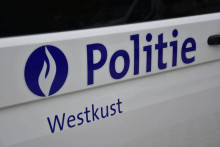
Authorities in Belgium have reported a notable increase in migrant smuggling attempts along the country’s North Sea coast in recent weeks, prompting enhanced law enforcement action and efforts to strengthen international cooperation. Federal and local police forces have stepped up patrols and arrests as part of a broader response to the phenomenon, while Belgium and the United Kingdom are exploring closer collaboration to address the cross-border dimension.
Hoofdthema: Smuggling & Trafficking
Trefwoorden: Belgian coast, migrant smuggling, police operation, international cooperation
Myria has released its first comprehensive mapping of quantitative data on minor victims of human trafficking and aggravated forms of smuggling in Belgium. The report aims to provide a clearer statistical basis for understanding the situation of minors at risk, while also highlighting structural gaps in current data collection and sharing practices.
Hoofdthema: Vulnerable groups, Data & Statistics, Smuggling & Trafficking
Trefwoorden: victim of trafficking, victim of smuggling, minor, data collection, figures

Child Focus and Payoke have signed a collaboration protocol to better detect, support, and protect minors who are victims of sexual exploitation. The agreement establishes fixed contact points, faster coordination for urgent cases, and tailored referrals, aiming to ensure that victims receive appropriate assistance without having to repeat their story.
Hoofdthema: Smuggling & Trafficking
Trefwoorden: child sexual exploitation, victims of human trafficking, coordination, referral

The European Commission has launched a new EU-wide awareness campaign to address human trafficking. Under the slogan “End human trafficking. Break the invisible chain”, the initiative seeks to make this often hidden crime more visible to the public. Around 10.000 victims are identified each year across the European Union, while many more remain undetected. The campaign calls on citizens to recognise the signs of exploitation, report concerns and help support victims.
Hoofdthema: Smuggling & Trafficking
Trefwoorden: awareness campaign, victim of trafficking, signs, indicators, national hotline

From 3 to 7 November 2025, the Group of Experts on Action against Trafficking in Human Beings (GRETA) conducted an evaluation visit to Belgium under the fourth cycle of its monitoring of the Convention on Action against Trafficking in Human Beings. The evaluation focuses on vulnerabilities to trafficking, the measures taken to prevent and detect them, support victims, and sanction perpetrators, with particular attention to the role of information and communication technologies.
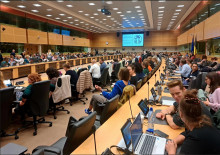
Op 20 oktober 2025 kwamen ongeveer 200 Belgische actoren en Europese partners samen om dertig jaar strijd tegen mensenhandel in België te herdenken. Ze benadrukten zowel de sterke punten van een multidisciplinair en gespecialiseerd systeem, gebaseerd op samenwerking en informatie-uitwisseling, als de aanhoudende uitdagingen, zoals beperkte middelen, moeilijkheden bij het verkrijgen van schadevergoeding voor slachtoffers, de bescherming van minderjarigen en de noodzaak om zich aan te passen aan nieuwe vormen van mensenhandel.