
Belgian coastal police zones tested drone surveillance during summer 2026 as part of efforts to prevent irregular crossings to the United Kingdom by small boats. Following an evaluation meeting on 10 September, the West Flanders acting governor announced plans to develop the approach on a structural basis in 2027, subject to external funding.

16/09/2026
In the first eight months of 2026, 1.239 prisoners without a residence permit were returned to their country of origin following their detention in Belgium, according to figures published by the Immigration Office. This represents an increase compared with the 991 returns recorded during the same period in 2025 and the 828 recorded in 2024.
15/09/2026
On 15 September 2026, the European Commission proposed a package of measures to facilitate labour mobility and strengthen the enforcement of EU rules across borders. The package includes five legislative proposals covering the digitalisation of social security documents, the portability and recognition of qualifications, the recognition of qualifications obtained outside the EU, and the mandate of the European Labour Authority (ELA), including its role in relation to third-country nationals.

07/10/2026
This national conference will examine the challenges and opportunities surrounding the integration and participation of young migrants and young people with a migrant background in an increasingly diverse Europe. It will explore the role of education, sport, culture and the digital environment in fostering social inclusion, while addressing barriers such as racism and discrimination.

19/11/2026
This high-level conference will explore new approaches to managing labour immigration in response to a changing labour and skills landscape in Europe. Bringing together policymakers, experts, social partners and other stakeholders from the EU and beyond, the event will examine how labour mobility can help address skills and labour shortages, support competitiveness and benefit both local labour markets and migrant workers.
Theme:
Type:
Keywords:
10/09/2026
In the first half of 2026, EU+ countries received around 332.000 applications for international protection, 17% fewer than during the same period in 2025, according to the European Union Agency for Asylum (EUAA). This was the lowest number recorded for the first half of a year since 2021. The EUAA also reported a decline in pending cases at first instance, although older cases continued to account for a large share of the caseload.
10/09/2026
This ad hoc query examines national data, statistical collection practices, detected cases of misuse, and preventive administrative and legislative checks related to the issuance of residence permits to long-term residents who are third-country nationals and their family members moving from another EU Member State under Directive 2003/109/EC.
Theme:
Publication type:
Keywords:
10/09/2026
This ad hoc query maps existing legislation and practices across EMN Member and Observer Countries regarding entries on travel documents issued to foreign nationals (such as alien's passports or refugee travel documents), specifically concerning whether a person's identity has been verified or not, as well as the process and level of certainty required for establishing identity.
Theme:
Publication type:
Keywords:
10/09/2026
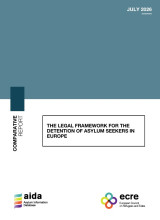
ECRE has published a comparative report on the legal framework for the detention of asylum seekers in 21 EU Member States and five non-EU European countries. The report examines the legal concepts and grounds for detention, procedural safeguards and detention in the context of return procedures. It also considers the potential legal and practical implications of the EU Pact on Migration and Asylum for existing detention frameworks and practices.
Theme:
Publication type:
Keywords:
10/09/2026
On 10 September 2026, the Diversity Committee of the Social and Economic Council of Flanders (SERV) published an advice calling for an integrated approach to strengthen the labour market participation of first-generation women from non-EU countries. The advice identifies their comparatively vulnerable position on the Flemish labour market and calls for policies addressing barriers across different policy areas, while taking account of differences within this group.
Theme:
Type:
Keywords:

09/09/2026
On 9 September 2026, the European Commission decided to provide Spain with €114.7 million in emergency assistance to help manage the situation in Ceuta, following the large-scale irregular border crossings on 30 and 31 July.
Theme:
Type:
Keywords:
09/09/2026
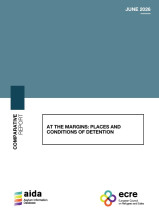
ECRE has published a comparative report on places and conditions of detention of people seeking international protection in 21 EU Member States and five non-EU European countries. The report examines the places used for detention, including their management and staffing. It also assesses detention conditions, including living conditions, healthcare, activities, access and monitoring. Finally, it looks at the situation of people in vulnerable positions, including women, families and unaccompanied children.
Theme:
Publication type:
Keywords:

09/09/2026
Belgium and the United Kingdom have signed a Law Enforcement Cooperation Agreement (LECA) aimed at strengthening cooperation between their law enforcement authorities. The agreement will facilitate faster and more autonomous intelligence sharing and support joint action against migrant smuggling and other forms of serious and organised crime.
Theme:
Type:
Keywords:

25/11/2026
This multistakeholder meeting will mark the 10th anniversary of the EMN Platform on Statelessness, bringing together policymakers, practitioners, international organisations, researchers and civil society representatives to reflect on a decade of cooperation and knowledge exchange on statelessness in Europe. The event will also present the latest EMN Inform on statelessness and provide an opportunity to discuss evolving challenges, future priorities and the way forward for cooperation.
Theme:
Type:
Keywords:

07/09/2026
Frontex supported EU Member States in returning more than 33.000 people to non-EU countries during the first half of 2026. Around two-thirds of these returns were voluntary. Belgium ranked among the five Member States with the highest number of Frontex-supported returns.
Theme:
Type:
Keywords:
04/09/2026
Ministers from Austria, Denmark, Germany, Greece and the Netherlands met in Copenhagen on 4 September to discuss the establishment of return hubs in countries outside the EU. The five countries agreed on guiding principles for the proposed model and on a common timeframe for the national legal processes required for its implementation. Amnesty International warned that such arrangements could pose serious risks to human rights.
Theme:
Type:
Keywords:

04/09/2026
Frontex is deploying maritime assets to support French search and rescue operations in the English Channel. Spanish and Lithuanian vessels will temporarily reinforce the French maritime rescue arrangements between September 2026 and January 2027.
Theme:
Type:
Keywords:

02/09/2026
Europol and the European Labour Authority (ELA) are strengthening their cooperation on labour exploitation, trafficking in human beings, fraud and related serious and organised crime. On 2 September 2026, the two agencies signed a Working Arrangement providing a framework for information exchange and further cooperation in areas of shared interest.

01/09/2026
Belgium’s new Criminal Code enters into force on 1 September 2026. Among its provisions relevant to migration, Articles 258 to 264 set out rules on human trafficking and human smuggling, including their definitions, aggravated forms, penalties and specific provisions concerning victims.
Theme:
Type:
Keywords:

01/09/2026
From 1 September 2026, employers in Flanders recruiting workers from outside the European Economic Area or Switzerland must pay a €180 fee for each application for a single permit. The fee applies to both first applications and renewals and is separate from the federal fee payable for the residence application.

31/08/2026
A spending review published on 31 August 2026 examines the organisation of Belgium’s closed centres and their role in the return chain. It finds that the centres operate relatively efficiently within current constraints, while identifying structural challenges affecting the use of available capacity. As of 20 May 2026, 541 of the 689 theoretical places were effectively usable, with 148 unavailable due to infrastructure problems or staff shortages. The review puts forward 74 recommendations and more than 170 concrete actions across nine areas.
Theme:
Type:
Keywords:

07/09/2026
This seminar will bring together researchers and practitioners to discuss current research and practical experiences related to asylum in Belgium. Organised to mark the 10th anniversary of the Migration Law Research Group (MigrLaw) at Ghent University, the event will explore challenges faced by applicants for international protection and the role of interdisciplinary and empirical research in informing policy and practice.
Theme:
Type:
Keywords:

27/08/2026
The Ghent division of the East Flanders Court of First Instance has convicted 33 defendants in the Lotus case for human trafficking with aggravating circumstances and leadership or participation in a criminal organisation. The organisation recruited more than 100 financially vulnerable Chinese women and exploited them in prostitution in Belgium and other European countries. Four defendants were also convicted of human trafficking resulting in the death of a victim. Prison sentences of up to seven years, fines and confiscation orders were imposed.
25/08/2026
On 25 August 2026, the European Commission confirmed that it had received a formal request from Spain for emergency funding to address the migratory situation in Ceuta. The Commission said it was assessing the request as a priority, with a view to taking a swift decision, and stood ready to provide further EU support, including through EU agencies. It also identified the swift return of people remaining irregularly in Ceuta as a priority.
Theme:
Type:
Keywords:

15/08/2026
Belgium has introduced new rules for foreign nationals working in Belgium without residing there. The new framework entered into force on 15 August 2026 and replaces rules dating from 1981. It introduces changes to the definition of frontier workers and to the documents and procedures applicable to them, including specific rules for third-country nationals.