Publicatie datum:
On 23 December 2025, the Belgian Council of Ministers approved a draft law linking social assistance to integration efforts. For recognised refugees, the draft law foresees that the Individual Social Integration Project (ISIP) should include, at a minimum, participation in an integration path. Other newcomers, including third-country students and economically inactive EU citizens, would now need to have legally resided in Belgium for five years before becoming eligible for social assistance.
Lees meer
Hoofdthema: Integration
Trefwoorden: integration income, Integration path, integration programme, requirement, efforts to integrate
Publicatie datum:
The Belgian Council of Ministers has taken note of a strategic vision for the reorganisation and centralisation of the federal administrative landscape. The plan foresees the regrouping of asylum and migration services under a dedicated Federal Public Service (FPS) Migration. The Council of Ministers has approved a timeline for the reorganisation and centralisation and has tasked the Minister for Public Administration with overseeing its implementation.
Lees meer
Hoofdthema: Cross-sectional, Asylum, Migration
Trefwoorden: federal administration, Belgium, Federal Public Service Migration
Publicatie datum:
According to Statbel, the Belgian statistical office, 5.925 persons obtained Belgian nationality in September 2025. The main countries of origin of people who acquired Belgian nationality in September are Morocco, Romania, Syria, Poland and Italy.
Lees meer
Hoofdthema: Data & Statistics, Citizenship & Nationality
Trefwoorden: Belgian nationality, access to nationality

Publicatie datum:
During a session of the Chamber of Representatives’ Interior Committee on 2 December 2025, Minister Anneleen Van Bossuyt outlined the government’s decision regarding the list of safe countries of origin. She specified which countries are included in the 2025 list and explained that Morocco was added due to improvements in its human rights situation and the low recognition rate for asylum applications from Moroccan nationals.
Lees meer
Hoofdthema: International Protection
Trefwoorden: list of safe countries of origin
Publicatie datum:
The Federal Ombudsman has highlighted persistent challenges for individuals required to submit visa applications in person at Belgian diplomatic or consular posts. These requirements can create significant financial, administrative, and security burdens, particularly for applicants living far from a competent post or in conflict-affected regions. The Ombudsman recommends reviewing visa submission procedures to improve accessibility and consistency.
Lees meer
Hoofdthema: Family Migration, Borders & Visa
Trefwoorden: visa application, diplomatic post, consular post, submission, Afrin
Publicatie datum:
According to Statbel, the Belgian statistical office, 4.859 persons obtained Belgian nationality in August 2025. The main countries of origin of people who acquired Belgian nationality in August are Morocco, Syria, Romania, Poland and France.
Lees meer
Hoofdthema: Data & Statistics, Citizenship & Nationality
Trefwoorden: access to nationality, Belgian nationality

Publicatie datum:
On 17 November 2025, the City of Brussels adopted a motion for a welcoming, responsible and caring city, opposing the draft law allowing judicially authorised home searches for irregularly staying migrants. The motion emphasises that security and human dignity are inextricably linked and states that Brussels must remain a welcoming, responsible and just city, faithful to its constitutional and European obligations.
Lees meer
Hoofdthema: Return & Readmission
Trefwoorden: irregularly staying third-country national, home search, opposition, privacy

Publicatie datum:
Belgium has laid the first stone of a new short-stay departure centre in Steenokkerzeel, aimed at housing individuals in irregular stay pending return. The 50-place facility is scheduled to open by the end of 2026. It forms part of a broader plan to expand and improve the country’s closed centres.
Lees meer
Hoofdthema: Return & Readmission
Trefwoorden: closed centre, construction
Publicatie datum:
The Belgian Council of Ministers has approved a draft law providing for the possibility of imposing lifetime entry bans on individuals who pose a genuine security threat, based on an assessment by the Coordinating Body for Threat Analysis (OCAM). The measure is intended to implement a commitment set out in the government agreement and envisage amendments to several provisions of the Aliens Act of 15 December 1980. The draft law will now be submitted to the Council of State for its opinion.
Lees meer
Hoofdthema: Borders & Visa
Trefwoorden: entry ban, security threat, terrorism

Publicatie datum:
The Office of the Commissioner General for Refugees and Stateless Persons (CGRS) is resuming the processing of applications for international protection from Syrian nationals from 1 November 2025. The suspension, in place since 9 December 2024, was implemented to gather sufficient information on the security situation in Syria.
Lees meer
Hoofdthema: International Protection
Trefwoorden: application for international protection, Syria

Publicatie datum:
On Monday, Belgium repatriated 75 people from the Gaza Strip. They arrived at Ostend airport in the afternoon. Belgian authorities report that around 850 eligible individuals have already been evacuated from Gaza. About 150 people remain on the list awaiting evacuation.
Lees meer
Hoofdthema: Family Migration
Trefwoorden: Gaza, evacuation, family member, Belgian, refugee, stateless persons
Publicatie datum:
Belgium and Morocco have signed an agreement to strengthen cooperation across multiple areas, aiming for concrete and measurable results. The deal covers security, justice, economic development, and migration. Belgium has also committed to supporting Morocco’s autonomy proposal for Western Sahara, a region that has been at the centre of an international dispute for nearly fifty years.
Lees meer
Hoofdthema: Return & Readmission
Trefwoorden: bilateral cooperation, Belgium, Morocco, irregularly staying third-country national
Publicatie datum:
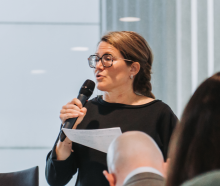
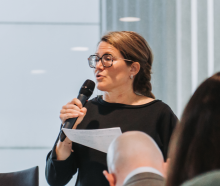
Op 20 oktober 2025 kwamen ongeveer 200 Belgische actoren en Europese partners samen om dertig jaar strijd tegen mensenhandel in België te herdenken. Ze benadrukten zowel de sterke punten van een multidisciplinair en gespecialiseerd systeem, gebaseerd op samenwerking en informatie-uitwisseling, als de aanhoudende uitdagingen, zoals beperkte middelen, moeilijkheden bij het verkrijgen van schadevergoeding voor slachtoffers, de bescherming van minderjarigen en de noodzaak om zich aan te passen aan nieuwe vormen van mensenhandel.
Lees meer
Publicatie datum:
On 16 October 2025, twenty EU Member States signed a joint letter urging the European Commission to take coordinated steps to enable voluntary and forced return to Afghanistan. The initiative, led by Belgian Minister for Asylum and Migration Anneleen Van Bossuyt, calls for a coherent European approach to address cases of Afghan nationals residing irregularly in the EU, particularly those posing a threat to public order or national security. The signatories stress that credible migration policies require effective return mechanisms and call for tangible progress by the end of the year.
Lees meer
Hoofdthema: Return & Readmission
Trefwoorden: Afghanistan, voluntary return, forced return, public order, national security
Publicatie datum:
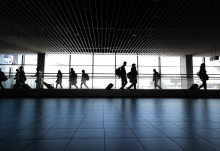
On 12 October 2025, Belgium began implementing the European Entry-Exit System (EES) for third-country nationals travelling to Europe for short stays. Brussels Airport and Brussels-Midi station (for Eurostar passengers) have planned the necessary infrastructure and procedures to support border registration. EU and Schengen-area travellers are not affected. Full implementation across Europe is scheduled for 10 April 2026.
Lees meer
Hoofdthema: Borders & Visa
Trefwoorden: entry exit system, Brussels Airport, border control, non-EU national, Eurostar passenger
Publicatie datum:
According to Statbel, the Belgian statistical office, 6.535 persons obtained Belgian nationality in July 2025. The main countries of origin of people who acquired Belgian nationality in July are Morocco, Romania, Syria, Turkey and Afghanistan.
Lees meer
Hoofdthema: Data & Statistics, Citizenship & Nationality
Trefwoorden: Belgian nationality, access to nationality
Publicatie datum:
Belgian Ministers of Justice and Asylum and Migration, Annelies Verlinden and Anneleen Van Bossuyt, visited Albania and Kosovo on 6–8 October 2025. Their discussions addressed migration management, prison overcrowding, and bilateral cooperation in justice and security. Meetings involved national authorities and highlighted ongoing collaboration between Belgium and the two countries.
Lees meer
Hoofdthema: Irregular Migration, Return & Readmission, Smuggling & Trafficking
Trefwoorden: Belgium, Albania, Kosovo, cooperation, identification, forced return, detainee
Publicatie datum:
The Flemish government has decided that third-country workers – from outside the EU, Iceland, Liechtenstein, Norway and Switzerland – will follow a mandatory tailored integration trajectory from 2027. The initiative, proposed by Minister Hilde Crevits, will be delivered digitally and can be started in the country of origin or within six months of arrival in Flanders. The programme provides essential information on work, rights and responsibilities, and Flemish norms and values. Certain temporary or seasonal workers, students, and holiday-work participants are excluded.
Lees meer
Hoofdthema: Integration, Economic migration
Trefwoorden: migrant worker, self-employed, integration programme, digital learning
Publicatie datum:
The Fedasil Info Point in Brussels has been supporting asylum seekers and other migrants for two years, providing accessible and centralised information in one location. Since reopening on 27 September 2023 at the former Bordet Hospital site, it has welcomed over 22.000 visitors, mostly single men with ongoing asylum procedures. Visitors most frequently ask about accommodation, medical care, legal support, and other practical matters. Partners such as Caritas International and the European Union Agency for Asylum (EUAA) assist in providing guidance and support.
Lees meer
Publicatie datum:
According to Statbel, the Belgian statistical office, 5.523 persons obtained Belgian nationality in June 2025. The main countries of origin of people who acquired Belgian nationality in June are Morocco, Syria, Romania, Italy and Turkey.
Lees meer
Hoofdthema: Data & Statistics, Citizenship & Nationality
Trefwoorden: access to nationality, Belgian nationality
Publicatie datum:
The Belgian Minister for Equal Opportunities, Rob Beenders, has launched a campaign aimed at employers, HR professionals and relevant actors to promote gender equality in the workplace. It particularly highlights the challenges faced by women of foreign origin and draws on a recent report showing that they encounter structural difficulties, such as precarious work and under-employment. A podcast complements the campaign by giving a voice to migrant women and illustrating their resilience in the face of these obstacles.
Lees meer
Hoofdthema: Vulnerable groups
Trefwoorden: migrant women, labour market, gender equality, inclusion
Minister Van Bossuyt updates Parliament on internal checks against irregular and secondary migration

Publicatie datum:
Belgium introduced targeted internal checks in July 2025 to address irregular and secondary migration. The measures are applied at airports, international bus and rail stations, and motorway rest areas. Over 11.000 individuals have been checked, with some ordered to leave the territory or placed in closed centres. The government plans to continue the checks and to conduct a six‑month evaluation.
Lees meer
Hoofdthema: Borders & Visa, Irregular Migration
Trefwoorden: checks, Belgian territory, irregularly staying third-country national, secondary movement

Publicatie datum:
Eight officers from the European Border and Coast Guard Agency (Frontex) have started work at Brussels Airport to assist in return operations. They will operate alongside Belgian police to increase the number of returns. Their deployment follows the adoption of national legislation and a Royal Decree defining their powers and operational zones.
Lees meer
Hoofdthema: Return & Readmission
Trefwoorden: forced return, Frontex, European Border and Coast Guard, Brussels Airport
Publicatie datum:
From 1 September 2025, the filing fee for appeals before Belgium’s Council for Alien Law Litigation will increase from €186 to €251, marking a rise of approximately 35%. The fee for parties wishing to intervene in ongoing cases will also increase, from €133 to €180. Legal practitioners are advised to inform clients of the new rates. Questions remain over the impact of these increases on access to justice for vulnerable individuals.
Lees meer
Hoofdthema: Cross-sectional, Asylum, Migration
Trefwoorden: Council for Alien Law Litigation, appeal procedure, fee
Publicatie datum:
In the first half of 2025, West Flanders saw 72 transit migrants intercepted, a significant decrease compared with previous years. Most were from Ethiopia, while earlier periods involved people from Sudan, Iraq and Vietnam. Authorities cite preventive policing and cross-border controls as key factors.