
According to preliminary data published by Frontex on 19 October 2026, just over 91.000 irregular border crossings into the EU were detected in the first nine months of 2026, a decrease of almost one-third compared with the same period in 2025.
Hoofdthema: Borders & Visa, Irregular Migration
Trefwoorden: irregular border crossing, Mediterranean, Western Balkans, Canary islands, English channel

Naar aanleiding van de Europese Dag tegen Mensenhandel op 18 oktober organiseert PAG-ASA de vijfde editie van haar Week tegen Mensenhandel in Brussel. Van 12 tot en met 18 oktober zal een reeks activiteiten het publiek informeren over de verschillende vormen van mensenhandel, de gevolgen ervan voor de slachtoffers en het Belgische beschermingskader. Op het programma staan onder meer een sensibiliseringsinstallatie, een documentairevertoning, opleidingssessies voor professionals en een fototentoonstelling.
Hoofdthema: Irreguliere migratie
Trefwoorden: week tegen mensenhandel

On 7 October 2026, the Belgian Chamber of Representatives’ Committee on the Interior approved in second reading a bill amending the Law of 15 December 1980 on access to the territory, residence, settlement and removal of foreign nationals. The bill would allow, under specific conditions and with authorisation from an investigating judge, home searches to apprehend certain foreign nationals subject to an order to leave the territory. The proposal has raised concerns regarding the protection of the inviolability of the home and fundamental rights.
The European Commission has proposed a five-point plan to strengthen the resilience and security of the EU’s external borders and improve preparedness for sudden mass arrivals. The plan sets out actions for the Commission, Member States and EU Justice and Home Affairs (JHA) agencies in five areas, covering cooperation with partner countries, border management, monitoring and early warning, action against migrant smuggling and trafficking, and returns.
Hoofdthema: Borders & Visa, Irregular Migration, Return & Readmission, Smuggling & Trafficking
Trefwoorden: external border, border security, border management, mass arrivals

Belgian coastal police zones tested drone surveillance during summer 2026 as part of efforts to prevent irregular crossings to the United Kingdom by small boats. Following an evaluation meeting on 10 September, the West Flanders acting governor announced plans to develop the approach on a structural basis in 2027, subject to external funding.
Hoofdthema: Irregular Migration, Smuggling & Trafficking
Trefwoorden: transit migration, smuggling of migrants, small boat, Belgian coast, drone surveillance

On 9 September 2026, the European Commission decided to provide Spain with €114.7 million in emergency assistance to help manage the situation in Ceuta, following the large-scale irregular border crossings on 30 and 31 July.
Hoofdthema: Borders & Visa, Irregular Migration
Trefwoorden: Ceuta, emergency funding, emergency assistance, border surveillance, border management

Frontex is deploying maritime assets to support French search and rescue operations in the English Channel. Spanish and Lithuanian vessels will temporarily reinforce the French maritime rescue arrangements between September 2026 and January 2027.
Hoofdthema: Borders & Visa, Irregular Migration
Trefwoorden: Frontex, European Border and Coast Guard, search and rescue, English channel
On 25 August 2026, the European Commission confirmed that it had received a formal request from Spain for emergency funding to address the migratory situation in Ceuta. The Commission said it was assessing the request as a priority, with a view to taking a swift decision, and stood ready to provide further EU support, including through EU agencies. It also identified the swift return of people remaining irregularly in Ceuta as a priority.
Hoofdthema: Borders & Visa, Irregular Migration
Trefwoorden: Ceuta, border management, emergency funding, EU funding
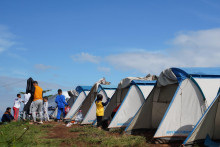
The City of Tournai has adopted a common protocol to guide the dismantling of informal migrant camps, with the aim of ensuring coordinated interventions while safeguarding the dignity and fundamental rights of the persons concerned. The protocol was developed jointly by local authorities, police and civil society organisations following discussions prompted by previous dismantling operations.
Hoofdthema: Irregular Migration
Trefwoorden: migrant camp, dismantling, cooperation, fundamental rights

Coastal rescue services along the Belgian North Sea are being briefed on how to respond to increased small boat activity linked to attempted irregular crossings towards the United Kingdom. The sessions aim to strengthen awareness and improve coordination with relevant authorities ahead of the start of the beach surveillance season.
Hoofdthema: Irregular Migration, Smuggling & Trafficking
Trefwoorden: small boat, human smuggling, Belgian coast, rescue services

Based on data released by the International Organization for Migration (IOM), nearly 7.900 deaths or disappearances were recorded on migration routes worldwide in 2025. This compares with approximately 9.200 recorded in 2024. The figures bring the cumulative total to more than 80.000 deaths or disappearances recorded since 2014, when the Missing Migrants Project began collecting data.
Hoofdthema: Data & Statistics, Irregular Migration
Trefwoorden: Missing Migrants Project, migration route, migrant death, disappearance
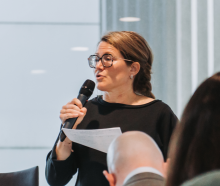
Belgian Minister for Asylum and Migration Anneleen Van Bossuyt is carrying out a visit to the Democratic Republic of Congo. The visit takes place in the context of a marked increase in asylum applications from Congolese nationals in Belgium in recent years. The mission aims to discourage unfounded asylum applications, address the misuse of visa procedures, counter document fraud and misleading messages from smugglers, and strengthen cooperation on return and the fight against irregular migration.

Op 27 maart 2026 nam EMN België deel aan de studiedag van Myria en het Nationaal Instituut voor Criminalistiek en Criminologie (NICC) getiteld "Het smokkelstatuut onder de loep", waar de resultaten werden voorgesteld van het onderzoeksrapport over de toepassing van het smokkelstatuut in de praktijk.
Hoofdthema: Irreguliere migratie
Trefwoorden: mensensmokkel, statuut, verblijfsvergunning, België

On 1 February 2026, Belgian Ministers Anneleen Van Bossuyt (Asylum and Migration) and Bernard Quintin (Interior) announced the extension of targeted internal checks, in place since July 2025, until at least 31 July 2026. The measures aim to curb irregular migration and secondary movements into Belgium while enforcing residence requirements and enhancing security. Targeted checks are conducted on major roads, long‑distance buses, selected trains, and intra‑Schengen flights.
Hoofdthema: Borders & Visa, Irregular Migration
Trefwoorden: Schengen borders code, checks, Belgian territory, irregularly staying third-country national, secondary movement
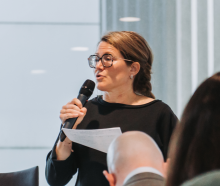
Belgian Ministers of Justice and Asylum and Migration, Annelies Verlinden and Anneleen Van Bossuyt, visited Albania and Kosovo on 6–8 October 2025. Their discussions addressed migration management, prison overcrowding, and bilateral cooperation in justice and security. Meetings involved national authorities and highlighted ongoing collaboration between Belgium and the two countries.
Hoofdthema: Irregular Migration, Return & Readmission, Smuggling & Trafficking
Trefwoorden: Belgium, Albania, Kosovo, cooperation, identification, forced return, detainee

The Fedasil Info Point in Brussels has been supporting asylum seekers and other migrants for two years, providing accessible and centralised information in one location. Since reopening on 27 September 2023 at the former Bordet Hospital site, it has welcomed over 22.000 visitors, mostly single men with ongoing asylum procedures. Visitors most frequently ask about accommodation, medical care, legal support, and other practical matters. Partners such as Caritas International and the European Union Agency for Asylum (EUAA) assist in providing guidance and support.
Minister Van Bossuyt updates Parliament on internal checks against irregular and secondary migration

Belgium introduced targeted internal checks in July 2025 to address irregular and secondary migration. The measures are applied at airports, international bus and rail stations, and motorway rest areas. Over 11.000 individuals have been checked, with some ordered to leave the territory or placed in closed centres. The government plans to continue the checks and to conduct a six‑month evaluation.
Hoofdthema: Borders & Visa, Irregular Migration
Trefwoorden: checks, Belgian territory, irregularly staying third-country national, secondary movement
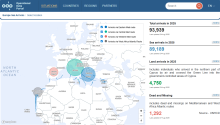
Did you know that the UNHCR Operational Data Portal provides detailed, up-to-date information on sea arrivals in Europe? As of 24 August 2025, a total of 89.189 people have reached European shores by sea. The majority of these arrivals have been recorded in Italy and Greece, while Spain also received significant numbers. In 2024, a total of 187.337 sea arrivals were reported, illustrating the continued importance of Mediterranean and North-West African routes.
Hoofdthema: Irregular Migration
Trefwoorden: UNHCR, operational data portal, sea arrival, land arrival
In the first half of 2025, West Flanders saw 72 transit migrants intercepted, a significant decrease compared with previous years. Most were from Ethiopia, while earlier periods involved people from Sudan, Iraq and Vietnam. Authorities cite preventive policing and cross-border controls as key factors.
Hoofdthema: Irregular Migration, Smuggling & Trafficking
Trefwoorden: transit migrant, transmigrant, interception, border control

Op 24 juni 2025 nam EMN België deel aan de conferentie in het kader van het Poolse voorzitterschap over aanpak van irreguliere migratie. Tijdens de besprekingen werd dit fenomeen vanuit drie perspectieven bekeken: versterking van de buitengrenzen van de EU om irreguliere migratie te voorkomen, bestrijding van migrantensmokkel om criminele netwerken te ontmantelen, en aanpak van de onderliggende oorzaken van irreguliere migratie en het voorzien van veilige en legale alternatieven.
Hoofdthema: Grenscontrole & Visa, Irreguliere migratie, Mensensmokkel & Mensenhandel
Trefwoorden: externe grenzen, legale migratieroutes, mensensmokkel, grensbewaking

Op 19 juni 2025 kondigden minister van Binnenlandse Zaken Bernard Quintin en staatssecretaris voor Asiel en Migratie Anneleen Van Bossuyt aan dat vanaf de zomer van 2025 de federale politie, lokale politie en Dienst Vreemdelingenzaken zullen samenwerken om gerichte controles binnen België uit te voeren. Deze maatregelen zijn bedoeld om irreguliere migratie en secundaire migratiebewegingen naar België tegen te gaan. Er zijn reacties gekomen over de capaciteit die nodig is om dergelijke controles uit te voeren, over hun daadwerkelijke effectiviteit in het terugdringen van irreguliere migratie, en over de vraag of ze een echt afschrikkend effect kunnen hebben of grotendeels symbolisch blijven.
Hoofdthema: Grenscontrole & Visa, Irreguliere migratie
Trefwoorden: schengen grenscode, controle, Belgisch grondgebied, irregulier verblijvende migrant, secundaire beweging
Op 3 juni 2025 heeft het Hof van Justitie van de Europese Unie (HvJ-EU) een uitspraak gedaan die de reikwijdte van het strafbaar feit van het faciliteren van illegale binnenkomst in de EU verduidelijkt. Het Hof oordeelde dat een onderdaan van een derde land niet strafrechtelijk mag worden vervolgd voor het binnenbrengen van minderjarigen onder zijn of haar hoede in een EU-lidstaat, ook al is deze binnenkomst in strijd met de grensregels. Deze beslissing benadrukt de bescherming van gezinsverantwoordelijkheden en fundamentele rechten binnen het EU-recht.

According to preliminary data published by Frontex, the number of irregular border crossings into the European Union decreased by 27% between January and April 2025, compared to the same period in 2024. Nearly 47.000 crossings were detected during the first four months of 2025.
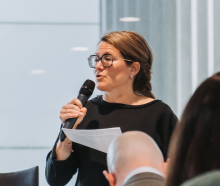
Op 11-12 mei 2025 bezocht de Belgische Minister voor Asiel en Migratie Anneleen Van Bossuyt Chisinau om te benadrukken dat verzoeken om internationale bescherming van Moldavische staatsburgers—afkomstig uit een land dat als veilig wordt beschouwd—in België via een versnelde procedure worden verwerkt. Ze kondigde ook de onmiddellijke stopzetting van de terugkeerpremie aan, die door het kabinet wordt gezien als een stimulans voor misbruik van het asielsysteem.
Hoofdthema: Internationale bescherming, Irreguliere migratie
Trefwoorden: ongegronde asielaanvraag, Moldavie, veilige herkomstlanden, terugkeerpremie
The UK Home Office released provisional figures showing that more than 36.000 people were detected in 2024, making the crossing of the English Channel in small boats. The International Organisation for Migration (IOM) estimates that at least 78 migrants died trying to cross the Channel in 2024.