On 18 March 2017, a regulation amending the Schengen borders code was published in the EU Official Journal. The amendment aims to reinforce checks against relevant databases at the external borders.
Other government information and services: belgium.be
On 18 March 2017, a regulation amending the Schengen borders code was published in the EU Official Journal. The amendment aims to reinforce checks against relevant databases at the external borders.
This policy brief examines how the unprecedented influx of asylum seekers has led to the fragmentation of the Dublin system. The flaws of the Dublin system are analysed, and the Commission’s proposal for the recast of the Dublin system is looked into.
24 (Member) States provided information on their policies and practices regarding the application of the ‘safe countries of origin’ concept in their procedures for international protection. This ad hoc query was launched by the Dutch and the Estonian Contact Points of the EMN.
Eurostat published a news release on the number of asylum applications in 2016 and published an article on asylum applications and decisions for 2016 on its website.
This report from the EU Agency for Fundamental Rights (FRA) aims to encourage determined and effective action towards building a Europe that is truly inclusive, rights-based and fair.
This joint seminar organized by the Estonian Contact Point of the EMN, UNHCR and IOM focuses on the current state, challenges and future directions of resettlement in Estonia and elsewhere.
In its judgement delivered today, the Court of Justice has ruled that Member States are not required – under EU law – to grant a humanitarian visa to persons who wish to enter their territory with a view to applying for asylum. However, they are free to do so on the basis of their national law.
The European Migration Platform will meet for the third time to focus on access to Europe, examining safe legal aternatives to the perilous journeys migrants undertake, how to access services upon arrival and rights they are entitled to.
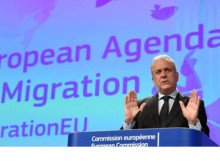
Today the European Commission presented new measures in the context of the review of the EU return policy which was announced in the Malta Declaration from 3 February 2017.
This report identifies concrete actions that could be taken to better leverage European Union soft law, funding, and knowledge exchange mechanisms to support cities’ activities when it comes to labour market integration.
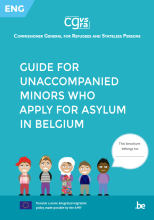
The Commissioner General for Refugees and Stateless Persons has published a new guide that provides information to unaccompanied minors applying for asylum in Belgium, as well as their guardians.
The handbook highlights the complex implications of statelessness for individuals, states and societies, with good practices and recommendations aiming to increase engagement and progress in addressing this phenomenon by OSCE participating States.
The updated country report on Belgium contains information on recent developments in case law and policy related to asylum procedures, reception conditions, detention of asylum seekers and integration of beneficiaries of international protection.
We know surprisingly little about how NGOs and asylum lawyers conduct research for asylum claims. To close this gap, Asylos interviewed 20 asylum lawyers and NGO staff in Belgium, France, Germany, Greece and the UK to understand the challenges of researching evidence, as well as the opportunities for improving the research process. Access the findings in our report
Eritrea has during the last decade become among the largest producers of refugees and asylum seekers in the world. The dominant narrative explaining this trend refers to the combination of a highly authoritarian and militarized state structure, an infinite and abusive national service program, and gross, widespread, and systematic human rights violations. This dominant narrative has however in recent years become increasingly challenged by those who argue that migration from Eritrea predominantly is driven by economic aspirations and that Eritreans really are fleeing a stagnant economy which deprives the citizens of a viable future.
This report, by Andreas Holm Røsberg and Kjetil Tronvoll, seeks to provide some clarity to this issue.
16 (Member) States provided information on their policies and practices regarding the implementation and execution of provisions of EU directives on public order and public security. This ad hoc query was launched by the Dutch Contact Point to the EMN.
Six years after the promotion of a “new approach to a new neighbourhood” following the 2011 uprisings, what is the state of play of EU’s cooperation with the MENA region in the field of migration and asylum? This session will allow to reflect on the EU's external cooperation in the field of migration and asylum with South and East Mediterranean countries.
Today is the opening of a photo exhibition focusing on Melilla, Europe's Southern border. This exhibition is the outcome of a one year and a half project initiated by four youths graduated in journalism.
The Odysseus Annual Conference 2017 is entitled "Beyond the crisis? The State of Immigration and Asylum Law and Policy in the EU". It will critically assess developments that took place in 2016, and look into 2017.
Today, the Commission adopted its ninth progress report on the EU's emergency relocation and resettlement schemes, assessing actions taken since 8 December 2016.
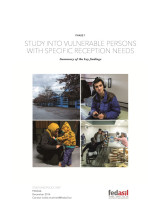
In 2015 the Study and Policy Unit from the Federal Agency for the Reception of Asylum Seekers, started with a study into vulnerable persons with specific reception needs. The first phase of this study has been completed.
Through its work in collaboration with grassroots associations and its task to provide information and referral in relation to individual requests, the Human Rights League has noted a series of needs specific to the domain of migration. The most important is undoubtedly that of access to information for migrants about their rights. The Human Rights League has therefore published a pocket guide containing the most important practical information for migrants.
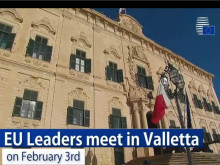
On 3 February 2017, the 28 Heads of States discussed the external dimension of migration at the informal summit in Malta. They adopted the Malta Declaration.