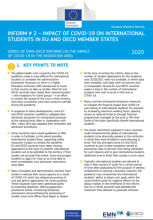
The COVID-19 crisis has impacted the ability of international students to enrol in a HEI abroad and to travel to that country to take up studies. How did EU & OECD countries respond? Did they adapt their admission processes? An answer to these and other questions can be found in the Inform.
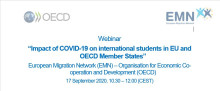
31/08/2020
The outbreak of the COVID-19 pandemic and the substantial measures taken by EU and OECD countries to prevent the spread of the virus are having direct and indirect impacts on international students coming to those countries. While the long-term consequences are difficult to predict, the immediate impacts are already visible, for example, the processing of new applications or renewing of residence permits has in many cases been hindered or suspended, with consequences for international students already present in the host country. In addition, the abrupt downturn in economic activity has had a significant impact across many sectors, with international students facing the loss of their part time jobs or reduced or lost incomes, which could have an impact on their ability to continue their studies or find a job or start a business following their graduation.
29/01/2020
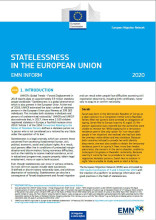
In de Europese Unie zijn naar schatting 400.000 mensen erkend staatloos of hebben geen vastgestelde nationaliteit (UNHCR, 2018). In 2017 waren er niet minder dan 2.100 staatloze kinderen in Europa geregistreerd. Dit is een verviervoudiging t.o.v. 2010. Hoe stellen EU-lidstaten staatloosheid vast? Wat betekent deze erkenning in de praktijk voor staatloze migranten? Op deze en andere vragen over staatloosheid vindt u een antwoord in deze Inform.