Publication date:
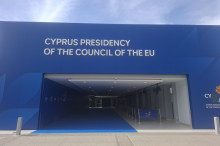
EMN Belgium participated in the EMN Cyprus High-Level Presidency Conference, “Taking stock of the Pact on Migration and Asylum: turning strategy into reality”, held in Nicosia on 19 and 20 May 2026.
Read more

Publication date:
The Belgian Council of Ministers has approved a draft bill aimed at strengthening rules on labour migration and improving the framework for highly qualified non-EU workers. The proposal includes measures aimed at strengthening the fight against fraud linked to labour migration, while also seeking to make the European Blue Card more attractive for highly qualified workers from outside the European Union. The draft bill also provides for additional protection for workers who are victims of certain social law infringements committed by employers. The text will now be submitted to the Council of State for advice.
Read more
Main theme: Economic migration
Keywords: labour migration, highly skilled workers, EU blue card, single permit, fraud, infringement, exploitation

Publication date:
EMN Belgium and EMN Sweden, together with the Swedish Expert Group for Aid Studies (EBA) and the Swedish Migration Studies Delegation (Delmi), are organising the EU launch seminar of the anthology "Linking Migration and Development: European Experiences and Policy Lessons for Sweden".
Read more
Main theme: External Dimension
Keywords: migration and development, migration-development nexus

Publication date:
The European Commission has updated its assessment of preparations for the Pact on Migration and Asylum ahead of its full application in June 2026. While most Member States have made progress in adapting legal and operational frameworks, significant gaps remain in key areas. These include border procedures, reception capacity, asylum processing, return systems and solidarity mechanisms. The Commission stresses that sustained efforts will be required beyond June to ensure full operational readiness.
Read more
Main theme: Cross-sectional, Asylum, Migration
Keywords: New Pact on Migration and Asylum, implementation

Publication date:
The Court of Justice of the European Union has ruled on the compatibility of a national residence requirement with EU equal treatment rules. The Court examined whether a 10-year residence condition could be applied to beneficiaries of international protection in order to access a social benefit. It found that the measure constitutes indirect discrimination prohibited under EU law.
Read more
Main theme: Integration
Keywords: beneficiary of subsidiary protection, social assistance, access to employment, equal treatment, discrimination

Publication date:
DUO for a JOB has launched a national awareness campaign highlighting the persistence of discrimination in recruitment processes in Belgium. The initiative uses the format of the well-known game “Guess Who?” to illustrate how candidates may still be excluded on the basis of appearance, name, origin or accent rather than skills. The campaign is being rolled out in May across public spaces, including stations and metro networks in several Belgian cities.
Read more
Main theme: Integration
Keywords: labour market access, discrimination, recruitment

Publication date:
On 6 May, the United Nations Human Rights Council reviewed Belgium under the Universal Periodic Review (UPR), a peer-review mechanism assessing the human rights situation in all UN Member States. The review examined the implementation of previous recommendations and the current situation across a range of policy areas, including asylum, migration and detention.
Read more
Main theme: Cross-sectional, Asylum, Migration
Keywords: Universal Periodic Review, Belgium, human rights

Publication date:
The Belgian Commissioner General for Refugees and Stateless Persons (CGRS) announces a series of changes that will apply from 12 June 2026. These changes are part of the implementation of the EU Pact on Migration and Asylum, adopted in 2024. They will affect asylum procedures, operational practices and new institutional responsibilities.
Read more

Publication date:
In 2025, minors accounted for 23.7% of all first-time asylum applicants in the European Union, according to recent Eurostat data. A total of 158.400 children applied for asylum for the first time, including a significant proportion of unaccompanied minors. While the overall number of minor applicants declined compared to previous years, children continue to represent a substantial share of asylum seekers in the EU.
Read more
Main theme: Vulnerable groups, International Protection
Keywords: minor, first-time asylum applicant

Publication date:
The Council for Alien Law Litigation (CALL) has made the use of its child-friendly courtroom (“Salle M”) a structural arrangement as of March 2026. The measure applies to asylum appeal cases involving unaccompanied minors and is accompanied by adapted summonses, age-appropriate information materials, and strengthened judicial training on children’s rights. The initiative builds on a pilot phase and forms part of broader European efforts to enhance child-friendly justice.
Read more
Main theme: Vulnerable groups, International Protection
Keywords: Council for Alien Law Litigation, unaccompanied minors, courtroom, hearing room

Publication date:
On 23 April 2026, the Belgian Chamber of Representatives adopted a bill introducing the possibility of imposing a lifetime entry ban on certain foreign nationals. The measure concerns individuals registered in the national database on terrorism, extremism and radicalisation and amends the Law of 15 December 1980 on access to the territory, residence, establishment and removal of foreign nationals.
Read more
Main theme: Borders & Visa, Return & Readmission
Keywords: Belgium, lifetime, entry ban

Publication date:
Coastal rescue services along the Belgian North Sea are being briefed on how to respond to increased small boat activity linked to attempted irregular crossings towards the United Kingdom. The sessions aim to strengthen awareness and improve coordination with relevant authorities ahead of the start of the beach surveillance season.
Read more
Main theme: Irregular Migration, Smuggling & Trafficking
Keywords: small boat, human smuggling, Belgian coast, rescue services
Publication date:
On 22 April 2026, the Belgian Federal Ombudsman published its annual report for 2025. The institution recorded a further increase in the number of cases handled, with migration-related issues remaining the main source of complaints. The report highlights recurring concerns linked to administrative procedures, in particular in the field of visas and residence-related decisions.
Read more
Main theme: Cross-sectional, Asylum, Migration
Keywords: federal ombudsman, complaint, visa, family reunification

Publication date:
The Court of Justice of the European Union (CJEU) has clarified that detention centres holding applicants for international protection under the border procedure do not need to be located at the external border of a Member State. It also confirmed that continued detention after the expiry of the border procedure time limit may be permissible under certain conditions. The judgment further addresses the validity of procedural steps taken during the border procedure and reiterates key safeguards under EU law.
Read more
Main theme: Borders & Visa
Keywords: border procedure, detention, detention center, applicant for international protection, risk of absconding

Publication date:
On 9 April 2026, the European Court of Human Rights delivered its judgment in M.V. and Others v. Belgium and held that Belgium had violated several provisions of the European Convention on Human Rights in relation to the reception conditions of four applicants for international protection.
Read more

Publication date:
The Belgian Council of Ministers has approved a draft law aimed at bringing Belgian legislation on the guardianship of unaccompanied minors into line with the EU Pact on Migration and Asylum and introducing additional safeguards for minors. The text has been submitted to the Council of State for its opinion.
Read more
Main theme: Vulnerable groups
Keywords: unaccompanied minors, guardianship, New Pact on Migration and Asylum, age assessment, multidisciplinary approach

Publication date:
The Belgian Constitutional Court has clarified how the means of subsistence requirement applies in family reunification applications. The ruling establishes that the means of subsistence of both the Belgian sponsor and their partner must be taken into account when assessing compliance with this requirement. Previously, some applications were refused because only the sponsor’s means were considered. The decision aims to ensure compliance with principles of equality, non-discrimination, and respect for family life.
Read more
Main theme: Family Migration
Keywords: Constitutional Court, application for family reunification, income requirement, partner's income

Publication date:
On 31 March 2026, the Office of the Commissioner General for Refugees and Stateless Persons (CGRS) announced that it would temporarily suspend the notification of certain decisions in cases concerning applicants from Lebanon, in view of the current situation in the country.
Read more
Main theme: International Protection
Keywords: application for international protection, Lebanon, suspension, refusal, refugee status, subsidiary protection status

Publication date:
Belgium and Algeria have signed two linked agreements, one on the readmission of irregularly staying Algerians and another providing a visa exemption for holders of Algerian diplomatic and service passports. The readmission agreement introduces measures to speed up identification, extend the validity of travel documents, allow the return of multiple individuals on the same flight, and permit the use of Algerian escorts during enforced returns.
Read more
Main theme: Borders & Visa, Return & Readmission
Keywords: Belgium, Algeria, readmission agreement, visa exemption

Publication date:
Belgium has postponed the registration of biometric data for third-country nationals entering the Schengen area. The measure, announced by the Interior Minister Bernard Quintin and Minister of Asylum and Migration Anneleen Van Bossuyt, follows significant queues and operational disruptions at Brussels Airport. The decision affects the gradual implementation of the European Entry/Exit System (EES) and aims to ensure border checks can be conducted under acceptable conditions for passengers.
Read more
Main theme: Borders & Visa
Keywords: entry exit system, biometric data, registration, Brussels Airport, delay
Publication date:
The Fedasil Pondrôme reception centre will host a photo exhibition featuring the work of unaccompanied and accompanied minors. The images were created over an eighteen-month project led by CIDJ Rochefort–Beauraing. The exhibition provides insight into the daily lives, experiences, and identities of the young participants. The event is free, open to all, and offers an opportunity to meet the creators.
Read more
Main theme: Reception
Keywords: unaccompanied minors, accompanied minors, photo exhibition

Publication date:
The Belgian Council of State has suspended a ministerial instruction that systematically limited material assistance to international protection applicants who had already obtained protection in another EU Member State. The court ruled that the instruction exposed these individuals to the risk of severe hardship and potential homelessness. It also noted that, due to its regulatory character, the instruction should have been submitted for review by the Council of State’s Legislation Section.
Read more
Main theme: Reception
Keywords: Council of State, suspension, instruction, limitation, material reception condition

Publication date:
Belgium is advancing plans to consolidate its asylum and migration services under a single Federal Public Service (FPS) Migration. The initiative aims to create a unified administrative framework for managing asylum and migration processes. The governance model for the new service was approved by the Council of Ministers to structure its internal organisation.
Read more
Main theme: Cross-sectional, Asylum, Migration
Keywords: Federal Public Service Migration, Belgium, coordination, centralisation

Publication date:
On 27 March 2026, EMN Belgium participated in a seminar organised by Myria and the National Institute of Criminalistics and Criminology (NICC) entitled "The status of victim of smuggling under the microscope", where the results of the research report on the practical application of this status were presented.
Read more
Main theme: Irregular Migration
Keywords: human smuggling, legal status, residence permit, Belgium
Publication date:
Belgian judicial and law enforcement authorities contributed to an operation targeting a criminal network supplying small boats for migrant crossings. Four high-level suspects were arrested in Germany and are expected to be extradited to Belgium for prosecution in Bruges. Searches in Germany and Belgium resulted in the seizure of boats, engines, life jackets, cash, and other equipment used in the smuggling activities.