Publication date:
Civil society organisations, as highlighted by Vluchtelingenwerk Vlaanderen, have urged the federal government to abandon the draft law allowing home searches for enforcement of return decisions, citing serious concerns raised by the Council of State. The draft law, first adopted by the Council of Ministers in July 2025, has faced scrutiny from several advisory bodies, including Myria, the Children’s Rights Delegate, and the Data Protection Authority. Municipal motions in various cities, including Brussels, Verviers, and La Hulpe, have also questioned its provisions.
Read more
Main theme: Return & Readmission
Keywords: home search, forced return, privacy, inviolability of the home

Publication date:
Flanders granted around 21.460 work permits to non-EU nationals in 2025, the highest level in recent years. Seasonal work and medium- to high-skilled positions accounted for a large share of the permits. New rules introduced in January 2026 give priority to domestic and EU labour before non-EU recruitment. Stakeholders, including employer organisations and political parties, have expressed differing perspectives on these developments.
Read more
Main theme: Data & Statistics, Economic migration
Keywords: Flanders, work permit, single permit, third-country nationals, seasonal work, shortage occupation
Publication date:
Fedasil has released its management plan for 2025–2030. Approved in December 2025 and submitted by Director General Pieter Spinnewijn to the Minister for Asylum and Migration, the plan sets out the Agency’s priorities, including restoring the core functioning of the reception system, strengthening its capacity to respond to fluctuations in the number of applicants to be accommodated, and improving the quality, resilience, and effectiveness of services.
Read more
Main theme: Reception
Keywords: Fedasil, management plan, reception policy

Publication date:
The Council of Europe’s Division on Migration and Refugees published a Frequently Asked Questions document on 12 February 2026, explaining how the European Convention on Human Rights (ECHR) applies to migration issues. It clarifies which rights are relevant to non-nationals, how national authorities retain discretion over entry and stay, and the limited circumstances under which the European Court of Human Rights (ECHR) may intervene. The document also provides data on immigration-related cases processed over the past decade.
Read more
Publication date:
A joint initiative coordinated by the Platform for International Cooperation on Undocumented Migrants (PICUM) has brought together over 100 organisations across Europe to urge EU institutions to reject the proposed Return Regulation. The statement, issued on 11 February 2026, highlights concerns that the regulation could expand immigration detention, limit access to essential services, and increase surveillance and control over people in an irregular situation. The European Parliament’s Committee on Civil Liberties, Justice and Home Affairs (LIBE) is scheduled to vote on the proposal in early March 2026.
Read more
Main theme: Return & Readmission
Keywords: return regulation, illegally staying person, detection, surveillance, racial profiling
Publication date:
On 9 February 2026, the Minerva think tank published a report assessing the economic and demographic impacts of current asylum and migration policies in Belgium, while also considering comparative cases in other European countries. It examines how policy choices in this field interact with labour market needs, demographic trends and public finances, and explores potential medium- to long-term effects associated with different policy approaches. The publication contributes to the broader policy debate by presenting available data and modelling selected scenarios.
Read more
Main theme: Cross-sectional, Asylum, Migration
Keywords: asylum policy, migration policy, labour market, demography, population ageing, welfare

Publication date:
Twenty-five organisations have submitted a petition to the Belgian Constitutional Court challenging the new family reunification law, which entered into force in August 2025. The petition highlights concerns that the law creates barriers that may prevent families from reuniting, potentially separating children from their parents indefinitely.
Read more
Main theme: Family Migration
Keywords: family reunification law, access to family reunification, petition, Constitutional Court
Publication date:
The European Parliament has approved new EU asylum rules to enable faster processing of asylum requests. The reform establishes a common list of safe countries of origin while allowing Member States to maintain or designate additional safe countries at national level. It also clarifies the conditions under which Member States can apply the safe third country concept. While the legislation has now passed Parliament, it still needs to be formally adopted by the Council before entering into force.
Read more
Main theme: International Protection
Keywords: list of safe countries of origin, safe third country, safe country of origin

Publication date:
On 1 February 2026, Belgian Ministers Anneleen Van Bossuyt (Asylum and Migration) and Bernard Quintin (Interior) announced the extension of targeted internal checks, in place since July 2025, until at least 31 July 2026. The measures aim to curb irregular migration and secondary movements into Belgium while enforcing residence requirements and enhancing security. Targeted checks are conducted on major roads, long‑distance buses, selected trains, and intra‑Schengen flights.
Read more
Publication date:
The documents set out key elements of the European Commission’s approach to managing international mobility to the EU. The EU Visa Strategy aims to strengthen the Union’s security and integrity through enhanced visa procedures, modernise the processing and management of visas, and support the EU’s economy and competitiveness by facilitating legitimate travel. Complementing this, the Recommendation on Attracting Talent for Innovation provides guidance to Member States on attracting, admitting, and retaining international students, researchers, highly skilled workers, and innovative entrepreneurs.
Read more
Main theme: Economic migration, Student Migration, Borders & Visa
Keywords: visa policy, visa strategy, talent attraction, talent retention
Publication date:
On 3 February 2026, Fedasil published its statistics on voluntary returns for 2025. A total of 3.122 people chose to return to their country of origin. The number is slightly lower than in 2024 but higher than in 2023. The top destination countries include Brazil, Moldova, Syria, Colombia, and Turkey.
Read more
Main theme: Return & Readmission
Keywords: voluntary return, reintegration assistance
Publication date:
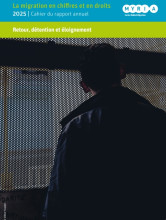
Myria, the Federal Migration Centre, has published a new thematic booklet as part of its annual report "Migration in figures and rights 2025". The publication presents recent figures on return, detention and removal, while analysing major legislative developments in Belgian return policy. It also examines the situation of detainees without legal residence in Belgian prisons and reviews the creation of the National Preventive Mechanism against ill-treatment in detention. According to Myria, return indicators have continued to rise after the pandemic, while new laws significantly expand the use of control and coercive measures.
Read more
Main theme: Return & Readmission
Keywords: return policy, detention, voluntary return, forced return, National Preventive Mechanism, Convention against Torture
Publication date:
On 29 January 2026, the European Commission presented the first European Asylum and Migration Management Strategy, setting out the Union’s objectives on asylum and migration for the next five years. The Strategy identifies three overarching objectives: preventing irregular migration and disrupting smuggling networks; protecting people fleeing conflict and persecution while preventing abuse of the asylum system; and attracting talent to support the EU economy. It also outlines a set of priorities to guide EU action in the coming years.
Read more

Publication date:
In 2025, Belgium received 34.439 applications for international protection, a decline compared with 2024. The Office of the Commissioner General for Refugees and Stateless Persons (CGRS) took decisions on 31.457 people, with a protection rate falling to its lowest level in over a decade. Key factors behind this trend include the suspension of the processing of Syrian cases in the first ten months of 2025 and prioritisation of applications from individuals already protected in other EU Member States.
Read more
Main theme: International Protection
Keywords: application for international protection, asylum decisions, protection rate

Publication date:
Belgium has confirmed its participation in an exploratory administrative mission to Afghanistan, representing 20 European Union Member States. The announcement was made by Minister of Asylum and Migration Anneleen Van Bossuyt. The mission, organised by the European Commission, aimed to establish technical administrative contacts with Afghan authorities. The initiative has drawn attention from refugee organisations, which have expressed concern about engagement with the Taliban regime.
Read more
Main theme: Return & Readmission
Keywords: voluntary return, forced return, illegally staying person, Afghanistan, identification, criminal foreigner

Publication date:
During the informal European Justice and Home Affairs Council in Cyprus on 22 January 2026, Minister of Asylum and Migration Anneleen Van Bossuyt announced targeted measures to encourage the voluntary return of Syrian nationals. The plan includes enhanced reintegration assistance for Syrians choosing to return to their country, while continuing to implement forced returns for non-cooperating individuals in general, prioritising those irregularly staying in Belgium with criminal convictions.
Read more
Main theme: Return & Readmission
Keywords: voluntary return, reintegration assistance, Syria

Publication date:
The Office of the Commissioner General for Refugees and Stateless Persons (CGVS) announced on 15 January 2026 that it is temporarily suspending the processing of applications for international protection from Iranian nationals. The CGVS stated that, given the current situation in Iran and the difficulty in obtaining sufficiently reliable and up-to-date information, it is currently unable to assess the need for protection accurately.
Read more
Main theme: International Protection
Keywords: application for international protection, Iran, suspension, asylum decisions
Publication date:
On 12 January 2026, Myria issued a press release regarding a joint opinion with the Federal Institute for Human Rights (IFDH) on a draft law concerning the automatic loss of Belgian nationality. The joint opinion raises concerns over the significant expansion of offences and individuals affected, including dual nationals and Belgian-born citizens. Myria and IFDH highlight potential conflicts with equality, procedural safeguards, and fundamental rights, including the presumption of innocence. The press release draws attention to the consequences for residence rights and the need for thorough judicial review.
Read more
Main theme: Citizenship & Nationality
Keywords: Belgian nationality, loss of nationality, residence, dual national, criminal offence, fundamental right
Publication date:
This conference will address the pressing issue of human trafficking affecting young people in Belgium, including sexual exploitation, forced criminality, and economic exploitation. It will bring together international experts, as well as Minister Yves Coppieters, responsible for Women’s Rights and Equal Opportunities, to discuss the current situation, share experiences, and highlight effective measures to protect youth. The Samilia Prize will be presented later in the evening.
Read more
Main theme: Smuggling & Trafficking
Keywords: human trafficking, awareness-raising, young people, Samilia Prize

Publication date:
On 8 January 2026, the Resettlement Coalition issued a joint statement expressing concern over the European Union’s newly adopted Union Resettlement and Humanitarian Admission Plan (URP) for 2026–2027. While welcoming the plan’s adoption as a step towards embedding resettlement in EU migration policy, the coalition highlighted that the number of pledges is dramatically lower than previous commitments and that the eligibility criteria are narrow. The statement calls on EU Member States to increase their contributions and ensure that protection needs remain central to resettlement efforts.
Read more
Main theme: International Protection
Keywords: Union Resettlement and Humanitarian Admission Plan, EU resettlement framework, pledge, eligibility
Publication date:
Fragomen will host a webinar on recent changes to Belgium’s immigration policies. The session will cover two main areas: first, new rules in the Flanders Region concerning economic migration, including labour migration pathways, contractual liability, and labour market testing; and second, nationwide modifications affecting family reunification, such as stricter financial criteria for visa applications. The webinar will also highlight practical implications for businesses employing foreign nationals.
Read more

Publication date:
From 1 January 2026, the Onder1Dak project, which promotes co-housing between private homeowners and recognised refugees in Flanders, has restarted following renewed support from the Flemish Minister for Civic Integration and Integration. The initiative aims to facilitate access to housing while supporting the social and professional integration of recognised refugees.
Read more
Main theme: Integration
Keywords: refugee, access to housing

Publication date:
On 1 January 2026, Cyprus assumes the Presidency of the Council of the European Union for six months. The Presidency’s programme includes the implementation of the EU Pact on Migration and Asylum, the efficiency of asylum and return systems, and cooperation with third countries. International organisations have issued recommendations to the Cyprus Presidency on migration and asylum.
Read more
Main theme: Cross-sectional, Asylum, Migration
Keywords: Cyprus, presidency, Council of the European Union

Publication date:
As 2025 comes to a close, the EMN Belgium team warmly thanks you for your continued interest in and engagement with the work of the European Migration Network. Your active participation has been essential in supporting exchanges and fostering a shared understanding of key developments and challenges in asylum and migration.
Read more
Main theme: Cross-sectional, Asylum, Migration
Keywords: holiday season greetings, EMN Belgium, New Year wishes

Publication date:
On 23 December 2025, the Belgian Council of Ministers approved a draft law linking social assistance to integration efforts. For recognised refugees, the draft law foresees that the Individual Social Integration Project (ISIP) should include, at a minimum, participation in an integration path. Other newcomers, including third-country students and economically inactive EU citizens, would now need to have legally resided in Belgium for five years before becoming eligible for social assistance.