In order to structurally shorten the duration of reception in Belgium, an amendment was made to the Reception Act. Anyone who receives a final negative asylum decision must leave the reception place within a period of 30 days.
21/06/2024
In its 2023 Annual Report, Fedasil reviews the key events of the year and provides an overview of the reception network for international protection applicants, the resettlement of refugees, and voluntary returns. The report also presents key statistics that offer valuable insights into these areas, helping to illustrate both the challenges faced and the progress made.
Theme:
Publication type:
Keywords:
02/05/2024
This event will convene key stakeholders to facilitate discussions about current challenges and to provide insights on good practices in governing the accommodation of international protection applicants and supporting access to housing for international protection beneficiaries.
05/06/2024
Doctors Without Borders, Doctors of the World, CIRÉ, Vluchtelingenwerk Vlaanderen, BelRefugees, Caritas International, and the Humanitarian Hub underline the permanent lack of reception, protection and access to medical services for applicants for international protection without a reception place. They want to challenge policy-makers and raise public awareness about people left left on the street.
02/06/2024
This ad hoc query seeks to better understand EMN Member and Observer countries’ approaches to language learning by third-country nationals.
Theme:
Publication type:
Keywords:

23/05/2024
In its 2023 annual report, the Federal Institute for Human Rights draws attention, among other things, to the failure of the authorities to enforce the rulings of the Belgian and European courts and tribunals, in particular in the context of the reception crisis. The lack of resources for the judiciary, threats to human rights defenders and weaknesses in the right to information are also underlined.
22/05/2024
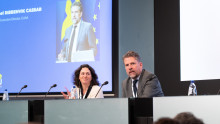
On 22 May 2024, a joint conference hosted by Fedasil and the EUAA highlighted innovative collaboration models designed to strengthen migration systems. The event brought together diverse participants from various EU Member States, including government bodies, international organisations, civil society groups, and private entities. It focused on strategies to improve the reception, information provision, and pre-integration of international protection applicants.
16/05/2024
The Expert Conference, that is jointly hosted by Belgium’s Federal Agency for the Reception of Asylum Seekers (Fedasil), and the European Union Agency for Asylum (EUAA), in cooperation with the Migration Policy Institute Europe (MPI Europe), aims to explore multi-stakeholder strategies in three specific areas: reception, information provision, and pre-integration.
Theme:
Type:
Keywords:
21/05/2024
During a joint webinar, experts from the European Migration Network and the Organization for Economic Cooperation and Development highlighted the positive trends characterizing the labour market integration of Ukrainians, including employment rates and their progress, main sectors of employment, and most common policies and measures for facilitating labour market integration. They also identified the difficulties and remaining challenges in this domain.
21/05/2024
This Inform, jointly produced by the European Migration Network and the Organisation for Economic Cooperation and Development, offers an analysis of employment trends, policy priorities, and measures aimed at facilitating the integration of displaced individuals from Ukraine into host countries' labour markets.
13/05/2024
This webinar will showcase key findings from the new joint EMN-OECD Inform on the "Labour market integration of beneficiaries of temporary protection from Ukraine". These findings will be contextualised by drawing insights from other international organisations and highlighting specific approaches and measures adopted by different host countries.
Theme:
Type:
Keywords:
03/05/2024
On Friday 3 May 2024, the Council of Ministers approved a draft royal decree appointing Pieter Spinnewijn as Director General of the Federal Agency for the Reception of Asylum Seekers (Fedasil). His mandate will begin on 1 July 2024 for a period of six years.
03/05/2024
This ad hoc query seeks to better understand EMN Member and Observer Countries’ approaches to financial contributions in the context of reception for international protection applicants.
Theme:
Publication type:
Keywords:

15/04/2024
In the context of growing diversity and societal polarisation within European municipalities and cities, the Government of Flanders is inviting mayors and local government officials to gather for sharing insights, mutual learning, and cooperative exploration on advancing diversity policies and enhancing social cohesion collectively.

05/03/2024
This ad hoc query examines the measures taken by EMN Member and Observer Countries to maintain the mother tongue of students with a migratory background. The query addresses such measures in preschool, primary school, and secondary school, as well as the economic resources and fundings to finance these measures.
Theme:
Publication type:
Keywords:
29/02/2024
This ad hoc query sheds light on organisations for young people with a migratory background, their involvement in decision-making processes, and the existence of national registers for these organisations.
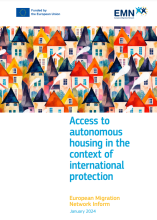
26/02/2024
This EMN Inform sheds light on the challenges faced by beneficiaries and applicants for international protection in EMN Member Countries and Serbia as they strive to access autonomous housing. It also provides an overview of the different approaches and strategies employed by these countries to support their access to autonomous housing.
Theme:
Publication type:
Keywords:
19/02/2024
Of the 14.779 Ukrainian refugees registered with the VDAB, 45 percent (6.599) have already worked and 27 percent (4.045) are still working. Some argue that more should be done to guide them into work, inter alia encouraging language learning in the workplace.
Theme:
Type:
Keywords:
15/02/2024
Given the strong pressure on the Belgian reception system, Fedasil created more than 3.000 places in 2023. Despite these efforts, Fedasil ran out of places to accommodate all applicants for international protection last year.

09/02/2024
On the proposal of the Secretary of State for Asylum and Migration, the Council of Ministers agreed today to the conclusion of a rental contract for land in Lodelinsart (Charleroi). Fedasil will make the site available to the Belgian Red Cross to place containers in order to increase the reception capacity for applicants for international protection.
25/01/2024
A new reception centre that can accommodate a maximum of 135 applicants for international protection has opened in Ghent. This is the second reception centre managed by Fedasil in the city. Since 2020, the Agency has been organizing the reception of 250 people on a pontoon in the port of Ghent.
04/12/2023
The first 15 asylum seekers have arrived today at the new Fedasil reception centre in Grimbergen. The new reception centre, which will accommodate up to 100 people, is specifically intended for people with medical problems, as well as their families.
01/12/2023
On the proposal of the Secretary of State for Asylum and Migration Nicole de Moor, the Council of Ministers agreed today on the extension of support measures for the reception and support of asylum seekers in the Brussels-Capital Region. A total of 2000 places are now available for asylum seekers who cannot immediately get a place in the Fedasil reception network.
29/11/2023
Upon Sweden's request, this ad hoc query examines the measures taken in the EMN Member Countries in the context of Article 7.1 of Directive 2013/33/EU of the European Parliament and of the Council of 26 June 2013 laying down standards for the reception of applicants for international protection (recast).
Theme:
Publication type:
Keywords:

14/11/2023
EMN Malta, in collaboration with the Human Rights Directorate, organises a conference on intersectional integration. The aim is to discuss the need for an intersectional approach in policies, strategies and services relating to migrants who, as a non-homogeneous category, have multiple identities.