The European Commission has rejected calls from the aviation sector and the Port of Dover to suspend the EU Entry/Exit System (EES) during the summer travel season. While acknowledging operational difficulties at around 20 external border crossing points, the Commission considers that suspending the system would not be appropriate. It has instead announced additional efforts to support Member States facing implementation challenges.
07/07/2026
25/06/2026
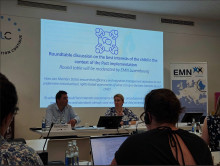
On 25 June 2026, the Belgian Contact Point to the European Migration Network (EMN) participated in the third thematic meeting on children in migration, organised jointly by the Luxembourgish Contact Point to the EMN and the OKaJu (Ombudsman for Children in Luxembourg – Ombudsman fir Kanner a Jugenlecher). The aim of the conference was to discuss the best interests of the child in the context of the implementation of the EU Pact on Migration and Asylum. The event brought together various stakeholders from 24 countries, as well as several international organisations and networks, both online and in person.
Theme:
Type:
Keywords:

09/06/2026
EMN Luxembourg and the Luxembourg Ombudsman for Children and Youngsters (OKaJu) are bringing together EU ombudsmen for children and youth, as well as child welfare agencies, to discuss the best interests of the child in the context of the implementation of the EU Pact on Migration and Asylum. The meeting offers a timely opportunity to take stock of early experiences and emerging practices. It places a particular focus on ensuring that fundamental rights obligations, especially those relating to children, are upheld in national systems.
Theme:
Type:
Keywords:
15/06/2026
This ad hoc query maps national governance arrangements for implementing Regulations (EU) 2019/817 and 2019/818. It explores the mandates, institutional positioning, and resources of designated interoperability authorities, as well as their duration and future planning.
Theme:
Publication type:
Keywords:
06/06/2026
This ad hoc query examines which actors are responsible for monitoring the fundamental rights of unaccompanied minors during screening in Member States, and whether the Ombudsmen for children have a role in this procedure. The query explores whether the Ombudsmen are consulted during the screening process, whether they conduct unannounced visits to the facilities where unaccompanied minors are accommodated, whether they can speak with the children in private, and whether they have access to documents concerning the children during the screening process.
Theme:
Publication type:
Keywords:
12/05/2026
This Inform examines how digital services in legal migration procedures are designed and implemented in EMN Member and Observer Countries to ensure accessibility and inclusion for applicants with disabilities and digitally disadvantaged applicants. It looks at how authorities have adapted applications, document submission, appointment booking, communication and information exchange, and case-tracking services in the context of the ongoing digitalisation of legal migration procedures. The analysis is based on contributions from 25 EMN Member and Observer Countries.
Theme:
Publication type:
Keywords:
08/05/2026
This ad hoc query maps how EMN Member and Observer Countries address the legal status and documentation of children born on their territory to legally residing Belarusian parents who are unable to obtain a national passport following the adoption of Decree No. 278 of the Republic of Belarus.
Theme:
Publication type:
Keywords:

05/05/2026
The Belgian Commissioner General for Refugees and Stateless Persons (CGRS) announces a series of changes that will apply from 12 June 2026. These changes are part of the implementation of the EU Pact on Migration and Asylum, adopted in 2024. They will affect asylum procedures, operational practices and new institutional responsibilities.
30/04/2026
This ad hoc query examines whether EMN Member Countries allow persons holding a Schengen visa and persons enjoying visa-free travel to apply for a single permit on their territory during their short stay. Additionally, the ad hoc query inquires about different aspects of such procedures as well as possibilities for third-country nationals to obtain a visa for the purpose of seeking employment.
Theme:
Publication type:
Keywords:
29/04/2026
In 2025, minors accounted for 23.7% of all first-time asylum applicants in the European Union, according to recent Eurostat data. A total of 158.400 children applied for asylum for the first time, including a significant proportion of unaccompanied minors. While the overall number of minor applicants declined compared to previous years, children continue to represent a substantial share of asylum seekers in the EU.
Theme:
Type:
Keywords:

27/04/2026
The Council for Alien Law Litigation (CALL) has made the use of its child-friendly courtroom (“Salle M”) a structural arrangement as of March 2026. The measure applies to asylum appeal cases involving unaccompanied minors and is accompanied by adapted summonses, age-appropriate information materials, and strengthened judicial training on children’s rights. The initiative builds on a pilot phase and forms part of broader European efforts to enhance child-friendly justice.

23/04/2026
On 23 April 2026, the Belgian Chamber of Representatives adopted a bill introducing the possibility of imposing a lifetime entry ban on certain foreign nationals. The measure concerns individuals registered in the national database on terrorism, extremism and radicalisation and amends the Law of 15 December 1980 on access to the territory, residence, establishment and removal of foreign nationals.

16/04/2026
The Court of Justice of the European Union (CJEU) has clarified that detention centres holding applicants for international protection under the border procedure do not need to be located at the external border of a Member State. It also confirmed that continued detention after the expiry of the border procedure time limit may be permissible under certain conditions. The judgment further addresses the validity of procedural steps taken during the border procedure and reiterates key safeguards under EU law.
10/04/2026
This ad hoc query examines whether EMN Member Countries plan to change their age assessment procedures in light of Article 25 of Regulation (EU) 2024/1348 on multidisciplinary age assessments. It explores which authorities or external providers are involved in the procedure, and how multidisciplinary teams carry out the assessment in practice. The query also covers how applicants are interviewed and how conclusions are drawn and communicated.
Theme:
Publication type:
Keywords:

03/04/2026
The Belgian Council of Ministers has approved a draft law aimed at bringing Belgian legislation on the guardianship of unaccompanied minors into line with the EU Pact on Migration and Asylum and introducing additional safeguards for minors. The text has been submitted to the Council of State for its opinion.

31/03/2026
Belgium and Algeria have signed two linked agreements, one on the readmission of irregularly staying Algerians and another providing a visa exemption for holders of Algerian diplomatic and service passports. The readmission agreement introduces measures to speed up identification, extend the validity of travel documents, allow the return of multiple individuals on the same flight, and permit the use of Algerian escorts during enforced returns.
Theme:
Type:
Keywords:

30/03/2026
Belgium has postponed the registration of biometric data for third-country nationals entering the Schengen area. The measure, announced by the Interior Minister Bernard Quintin and Minister of Asylum and Migration Anneleen Van Bossuyt, follows significant queues and operational disruptions at Brussels Airport. The decision affects the gradual implementation of the European Entry/Exit System (EES) and aims to ensure border checks can be conducted under acceptable conditions for passengers.
Theme:
Type:
Keywords:
18/03/2026
This ad hoc query examines whether EMN Member and Observer Countries have age assessment procedures in place, how these procedures are conducted, and which actors are responsible. It also explores the challenges encountered and how they are addressed. Finally, it examines whether the respondent countries plan to introduce a new procedure or amend an existing one in the near future.
Theme:
Publication type:
Keywords:
04/03/2026
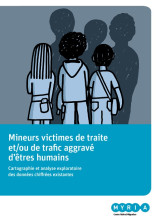
Myria has released its first comprehensive mapping of quantitative data on minor victims of human trafficking and aggravated forms of smuggling in Belgium. The report aims to provide a clearer statistical basis for understanding the situation of minors at risk, while also highlighting structural gaps in current data collection and sharing practices.
04/03/2026
The report compiles available figures for the period 2015–2024 and examines how data are recorded, shared and used. It provides a clearer statistical basis for understanding the situation of minors at risk of trafficking and aggravated forms of smuggling, while identifying structural gaps in current data systems.
Theme:
Publication type:
Keywords:
20/02/2026
The medical office run by Médecins du Monde within the Humanitarian Hub in Brussels will cease its activities on 31 March 2026. The closure follows the recent shutdown of the Athena Medical Centre. According to the organisation, this will further reduce access to primary healthcare for vulnerable groups in the capital. Médecins du Monde has warned of likely consequences for emergency services and for people with limited access to care.
Theme:
Type:
Keywords:

01/02/2026
On 1 February 2026, Belgian Ministers Anneleen Van Bossuyt (Asylum and Migration) and Bernard Quintin (Interior) announced the extension of targeted internal checks, in place since July 2025, until at least 31 July 2026. The measures aim to curb irregular migration and secondary movements into Belgium while enforcing residence requirements and enhancing security. Targeted checks are conducted on major roads, long‑distance buses, selected trains, and intra‑Schengen flights.
29/01/2026
The documents set out key elements of the European Commission’s approach to managing international mobility to the EU. The EU Visa Strategy aims to strengthen the Union’s security and integrity through enhanced visa procedures, modernise the processing and management of visas, and support the EU’s economy and competitiveness by facilitating legitimate travel. Complementing this, the Recommendation on Attracting Talent for Innovation provides guidance to Member States on attracting, admitting, and retaining international students, researchers, highly skilled workers, and innovative entrepreneurs.
Theme:
Type:
Keywords:
18/01/2026
This ad hoc query provides an overview of which EMN Member and Observer Countries require criminal record certificates in order to issue long-stay visas or residence permits. Details are provided on the categories of third-country nationals exempted from this requirement, the countries from which these certificates are required (country of origin and/or of previous residence), the other types of documents that may be accepted in lieu of a certificate (such as an affidavit), and more.
Theme:
Publication type:
Keywords:
14/12/2025
This ad hoc query, which informed the preparation of an EMN Inform, collected information on how EMN Member and Observer Countries have adapted digital services in legal migration procedures to ensure accessibility and inclusion for applicants with disabilities and digitally disadvantaged applicants. It examined compliance with relevant EU and international frameworks, as well as national legislation. It also explored additional accessibility measures, support for users with special needs, GDPR safeguards, user involvement in service design, and approaches to digital disadvantage, alongside challenges and good practices identified by countries.
This ad hoc query, which informed the preparation of an EMN Inform, collected information on how EMN Member and Observer Countries have adapted digital services in legal migration procedures to ensure accessibility and inclusion for applicants with disabilities and digitally disadvantaged applicants. It examined compliance with relevant EU and international frameworks, as well as national legislation. It also explored additional accessibility measures, support for users with special needs, GDPR safeguards, user involvement in service design, and approaches to digital disadvantage, alongside challenges and good practices identified by countries.