Publication date:
Myria has published the first thematic section of its 2025 annual report. This section, entitled "Population and movements", reveals that foreign nationals made up over 13% of the Belgian population as of 1 January 2024. Immigration from Romania, France and Ukraine was particularly high. The report also details key trends in foreign residence permits, demographic profiles and migratory flows.
Read more
Main theme: Data & Statistics, Asylum, Migration
Keywords: migrant population, immigration, emigration, first residence permit, temporary protection
Publication date:
Nearly one in eight self-employed workers in Belgium do not hold Belgian nationality. This proportion rises to more than four in ten in the Brussels-Capital Region. An analysis of recent data from the National Institute for Social Security of the Self-Employed (INASTI) by the social insurance fund Acerta highlights these figures. The study also reveals differences in age, sector activity, and income between Belgian and non-Belgian self-employed individuals.
Read more
Main theme: Integration, Data & Statistics, Economic migration
Keywords: self-employed, Belgian, non-Belgian

Publication date:
Organised by the Czech National Contact Point of the European Migration Network, the conference will explore forthcoming changes and approaches to integration policies across the EU. It will also reflect on the development of integration policy in the Czech Republic and support the definition of a long-term national vision, including the roles of the various actors involved.
Read more
Main theme: Integration
Keywords: integration policy, third country national, Social cohesion
Publication date:
On the International Day in Support of Victims of Torture, NANSEN highlights its work with applicants for international protection who have experienced torture. The organisation provides legal information and tailored support to help them navigate the protection procedure. Victims of torture are entitled to specific procedural guarantees. NANSEN ensures that these rights are respected throughout their application process.
Read more
Main theme: Vulnerable groups, International Protection
Keywords: applicant for international protection, victim of torture, legal assistance, support

Publication date:
On 24 June 2025, EMN Belgium participated in the Polish Presidency Conference on countering irregular migration. The discussions examined this phenomenon from three perspectives: strengthening the EU’s external borders to prevent irregular entries, combating migrant smuggling to dismantle criminal networks, and addressing the root causes of irregular migration and providing safe and legal alternatives.
Read more
Main theme: Borders & Visa, Irregular Migration, Smuggling & Trafficking
Keywords: external border, border control, migrant smuggling, criminal network, root causes, legal pathway
Publication date:
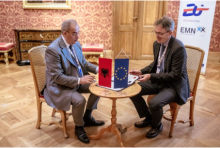
Albania has officially joined the European Migration Network (EMN) as an Observer Country. An Administrative Agreement was signed on 24 June between the European Commission and the Albanian Ministry of Interior. The arrangement was concluded on the margins of a conference co-organised by EMN Poland and establishes formal cooperation between the two parties within the EMN framework.
Read more
Main theme: Cross-sectional, Asylum, Migration
Keywords: European Migration Network, observer country, Albania

Publication date:
On 19 June 2025, the Court of Justice of the European Union delivered a judgment in response to a request from the Brussels Court of First Instance (French-speaking) regarding appeal procedures following the refusal of student visas. The referral followed concerns raised by Belgian lawyers and the NGO CIRÉ, highlighting that late notification of refusals often prevents students from exercising an effective remedy. The Court clarified that, while no urgent procedure is required, national systems must ensure that visa decisions and related appeals are issued in time for a meaningful judicial review.
Read more
Main theme: Student Migration
Keywords: student visa, refusal, effective remedy

Publication date:
On 19 June 2025, Interior Minister Bernard Quintin and Asylum and Migration Minister Anneleen Van Bossuyt announced that, starting from summer 2025, federal police, local police, and the Immigration Office will collaborate to conduct targeted checks within Belgium. These measures aim to combat irregular migration and secondary movements towards Belgium. Reactions have emerged regarding the capacity required to implement such checks, their actual effectiveness in reducing irregular migration, and whether they can deliver a real deterrent effect or remain largely symbolic.
Read more
Publication date:
According to Statbel, the Belgian statistical office, 5.539 persons obtained Belgian nationality in March 2025. The main countries of origin of people who acquired Belgian nationality in March are Morocco, Romania, Syria, Turkey and Afghanistan.
Read more
Main theme: Data & Statistics, Citizenship & Nationality
Keywords: access to nationality, Belgian nationality
Publication date:
Thirty-eight members of a Belgian-Chinese human trafficking network have been formally referred by the Ghent chamber of indictment to the correctional court. They face multiple charges including sexual exploitation, trafficking, pimping, money laundering, and document forgery. The Federal Migration Centre, Myria, has joined the case as a civil party, representing the interests of victims.
Read more
Main theme: Smuggling & Trafficking
Keywords: victims of human trafficking, criminal network, sexual exploitation

Publication date:
During this online event, the European Migration Network (EMN) will present the 2024 Asylum and Migration Overview (AMO). This comprehensive publication provides a clear overview of the main trends and developments in migration and asylum across EMN Member and Observer countries in 2024. Additionally, a new interactive format will be introduced to enhance the accessibility of the information for a broader audience. Participants will gain insight into the key policy changes and challenges that shaped migration and asylum in Europe over the past year.
Read more
Main theme: Cross-sectional, Asylum, Migration
Keywords: Asylum and Migration Overview, asylum trend, migration trend, annual report
Publication date:
At their meeting on 13 June 2025, EU Home Affairs Ministers reached a political agreement to extend by one year, until March 2027, the temporary protection for people displaced from Ukraine. They also discussed ways to improve readmission cooperation with third countries and endorsed new priorities for the Schengen area.
Read more
Main theme: Temporary protection, Borders & Visa, Return & Readmission
Keywords: Justice and Home Affairs Council, Ukraine, cooperation, third country, Schengen area
Publication date:
Fedasil has announced a further reduction in the number of reception places for unaccompanied foreign minors (MENA), with 279 places set to be withdrawn from the network by 1 September 2025. The measure, approved in April, comes in response to the continuing decline in arrivals observed since 2023. Most of the places concerned will be converted into generic reception places.
Read more
Main theme: Reception
Keywords: reception place, unaccompanied foreign minor
Publication date:
As of 1 January 2025, more than one-third of Belgium’s population has a foreign background, according to the latest data from Statbel, the Belgian statistical office. While 64% of residents are Belgian with a Belgian background, the remainder includes Belgians with a foreign background and non-Belgians. Regional disparities and changes over the last two decades highlight evolving demographic patterns.
Read more
Main theme: Data & Statistics, Citizenship & Nationality
Keywords: population structure, diversity, Belgian nationality, foreign background, non-Belgian
Publication date:
On 11 June 2025, the European Commission published a report reviewing the implementation of the Pact on Migration and Asylum, halfway through its implementation phase, which is expected to be completed by June 2026. The report provides an overview of progress across the main elements of the Common Implementation Plan, while identifying remaining operational and legal challenges. A mid-term review of the Action Plan on Integration and Inclusion 2021–2027 was also released.
Read more
Main theme: Cross-sectional, Asylum, Migration
Keywords: New Pact on Migration and Asylum, implementation, Action Plan on Integration and Inclusion
Publication date:
According to a press release published on 11 June 2025, Statbel reported that 60.108 individuals acquired Belgian nationality in 2024. The five most common previous nationalities among those who became Belgian were Moroccan, Syrian, Romanian, Afghan and Turkish.
Read more
Main theme: Data & Statistics, Citizenship & Nationality
Keywords: access to nationality, Belgian nationality

Publication date:
The European Union Agency for Fundamental Rights (FRA) has released its 2025 Fundamental Rights Report, offering a detailed overview of key developments in the EU’s human rights landscape. Among the areas of concern, the report draws particular attention to migration and asylum at the EU’s external borders, where challenges continue to raise fundamental rights issues.
Read more
Publication date:
Amnesty International and the Human Rights League are proposing a meeting with Françoise Tulkens, former judge and Vice-President of the European Court of Human Rights, and Manuela Cadelli, judge at the Court of First Instance of Namur, to examine the consequences of the letter from nine European authorities calling for a new interpretation of the European Convention on Human Rights (ECHR).
Read more
Publication date:
From Brussels to Virton and beyond, a wide range of activities are being organised across Belgium in the lead-up to World Refugee Day on 20 June 2025. Cultural events, open days, artistic performances and community gatherings will shine a light on the talents, stories and resilience of people forced to flee.
Read more
Main theme: International Protection
Keywords: World Refugee Day

Publication date:
On 6 June 2025, the Flemish Government approved a communication advancing the development of pre-arrival integration trajectories for newcomers from their countries of origin. This step follows earlier pilot projects and aims to better prepare family reunification and labour migrants for life in Flanders through a digital societal orientation course.
Read more
Main theme: Integration
Keywords: integration programme, pre-arrival integration, pre-arrival orientation, pilot project, digital learning, Foreign newcomers

Publication date:
The European Union Agency for Asylum (EUAA) will host its first State of Asylum Conference, bringing together policymakers, EU institutions, international organisations, and experts to discuss the current landscape of international protection and migration in the EU, the challenges faced, and the evolving EU migration agenda, particularly with regard to the Pact on Migration and Asylum.
Read more
Main theme: Cross-sectional, Asylum, Migration
Keywords: EUAA, New Pact on Migration and Asylum, asylum trend, migration management
Publication date:
On 4 June 2025, the European Commission proposed extending temporary protection for displaced persons fleeing the conflict in Ukraine until 4 March 2027. The proposal aims to provide legal certainty to beneficiaries and Member States by maintaining a consistent standard of protection across the European Union. Additionally, the Commission proposed a set of measures to facilitate a coordinated transition out of temporary protection.
Read more
Main theme: Temporary protection
Keywords: Ukraine, displaced person, beneficiary of temporary protection, legal status, voluntary return, reintegration

Publication date:
On 3 June 2025, the Court of Justice of the European Union (CJEU) delivered a judgment clarifying the scope of the offence of facilitation of unauthorised entry into the EU. The Court ruled that a third-country national cannot be criminally penalised for bringing minors under their care into an EU Member State, even if this entry breaches border rules. This decision emphasises the protection of family responsibilities and fundamental rights within EU law.
Read more
Publication date:
In response to a recent call by several European Heads of State to reinterpret the European Convention on Human Rights, six Belgian human rights institutions have voiced strong concerns. They warn that such initiatives risk undermining the authority and independence of the European Court of Human Rights. The institutions urge the Belgian federal government to remain consistent with its international commitments and to clearly reaffirm its support for the Court and the Convention.
Read more

Publication date:
Backed by Italy and Denmark, a group of nine EU Member States has issued a letter calling for a new interpretation of the European Convention on Human Rights (ECHR) to facilitate the expulsion of foreign nationals convicted of crimes. While the letter's authors frame it as a call for open discussion, the move has raised concerns over judicial independence and the protection of fundamental rights in Europe.