Publication date:
Thirty-eight members of a Belgian-Chinese human trafficking network have been formally referred by the Ghent chamber of indictment to the correctional court. They face multiple charges including sexual exploitation, trafficking, pimping, money laundering, and document forgery. The Federal Migration Centre, Myria, has joined the case as a civil party, representing the interests of victims.
Read more
Main theme: Smuggling & Trafficking
Keywords: victims of human trafficking, criminal network, sexual exploitation
Publication date:
Fedasil has announced a further reduction in the number of reception places for unaccompanied foreign minors (MENA), with 279 places set to be withdrawn from the network by 1 September 2025. The measure, approved in April, comes in response to the continuing decline in arrivals observed since 2023. Most of the places concerned will be converted into generic reception places.
Read more
Main theme: Reception
Keywords: reception place, unaccompanied foreign minor
Publication date:
As of 1 January 2025, more than one-third of Belgium’s population has a foreign background, according to the latest data from Statbel, the Belgian statistical office. While 64% of residents are Belgian with a Belgian background, the remainder includes Belgians with a foreign background and non-Belgians. Regional disparities and changes over the last two decades highlight evolving demographic patterns.
Read more
Main theme: Data & Statistics, Citizenship & Nationality
Keywords: population structure, diversity, Belgian nationality, foreign background, non-Belgian
Publication date:
According to a press release published on 11 June 2025, Statbel reported that 60.108 individuals acquired Belgian nationality in 2024. The five most common previous nationalities among those who became Belgian were Moroccan, Syrian, Romanian, Afghan and Turkish.
Read more
Main theme: Data & Statistics, Citizenship & Nationality
Keywords: access to nationality, Belgian nationality
Publication date:
From Brussels to Virton and beyond, a wide range of activities are being organised across Belgium in the lead-up to World Refugee Day on 20 June 2025. Cultural events, open days, artistic performances and community gatherings will shine a light on the talents, stories and resilience of people forced to flee.
Read more
Main theme: International Protection
Keywords: World Refugee Day
Publication date:
On 6 June 2025, the Flemish Government approved a communication advancing the development of pre-arrival integration trajectories for newcomers from their countries of origin. This step follows earlier pilot projects and aims to better prepare family reunification and labour migrants for life in Flanders through a digital societal orientation course.
Read more
Main theme: Integration
Keywords: integration programme, pre-arrival integration, pre-arrival orientation, pilot project, digital learning, Foreign newcomers
Publication date:
In response to a recent call by several European Heads of State to reinterpret the European Convention on Human Rights, six Belgian human rights institutions have voiced strong concerns. They warn that such initiatives risk undermining the authority and independence of the European Court of Human Rights. The institutions urge the Belgian federal government to remain consistent with its international commitments and to clearly reaffirm its support for the Court and the Convention.
Read more
Publication date:
On 17 May, the International Day Against Homophobia, Biphobia and Transphobia (IDAHOBIT), the organisation Prisme has disclosed a set of recommendations highlighting the challenges faced by LGBTQIA+ individuals seeking international protection in Belgium. These findings point to several shortcomings in the reception and asylum system and outline measures to ensure more inclusive procedures.
Read more
Main theme: Vulnerable groups, Reception, International Protection
Keywords: LGBTQIA+, applicant for international protection, reception centre, special needs, Training, inclusion
Publication date:
According to Statbel, the Belgian statistical office, 4.922 persons obtained Belgian nationality in February 2025. The main countries of origin of people who acquired Belgian nationality in February are Morocco, Romania, Syria, Turkey and Afghanistan.
Read more
Main theme: Citizenship & Nationality
Keywords: access to nationality, Belgian nationality
Publication date:
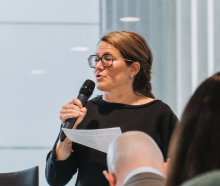
On 11-12 May 2025, Belgian Minister for Asylum and Migration Anneleen Van Bossuyt visited Chisinau to emphasise that asylum applications from Moldovan nationals—coming from a country considered safe—are processed through an accelerated procedure in Belgium. She also announced the immediate discontinuation of the return incentive, which is seen as encouraging misuse of the asylum system.
Read more
Main theme: International Protection, Irregular Migration
Keywords: unfounded asylum application, moldova, safe country of origin, return incentive
Publication date:
In 2024, 19.435 people participated in the Social Orientation (Maatschappelijke Oriëntatie, MO) course in Flanders. This marks a significant increase in participation. Alongside the rising numbers of participants in the Social Orientation course, the demand for Dutch as a Second Language (NT2) courses also remains high, as evidenced by recent reports from AMAL vzw, Atlas Antwerp, and the Agency for Integration and Civic Integration.
Read more
Main theme: Integration
Keywords: civic integration course, Agency for Integration and Civic Integration, language learning, language course

Publication date:
On 7 May 2025, the Court of First Instance of West Flanders, Bruges division, sentenced the Vietnamese national, N. Van Kim (34), in absentia to twelve years’ imprisonment and a fine of €616,000 for human smuggling under aggravating circumstances. The court also ordered the deprivation of his civil rights for ten years and issued a warrant for his immediate arrest.
Read more
Main theme: Smuggling & Trafficking
Keywords: Essex lorry tragedy, Bruges criminal court, Vietnamese migrants, smuggling network, migrant death
Publication date:
On the occasion of Labour Day, Fedasil published new figures on the professional activity of applicants for international protection residing in reception centres. In 2024, 41% of those allowed to work were active on the Belgian labour market. The data show differences in employment rates depending on gender, age, and nationality.
Read more
Main theme: Integration
Keywords: applicant for international protection, access to employment, labour market access
Publication date:
Myria, the Federal Migration Centre, warns that the measures announced by the federal government in its "Easter Agreement" violate the right to family life. The institution announced in a press release published on Tuesday that it had shared its observations with the government and expressed hope for a constructive dialogue.
Read more

Publication date:
On 28 April 2025, Samusocial launched a new shelter dedicated to unaccompanied foreign minors living on the streets, often referred to as “wandering” minors. This centre aims to provide a safe and supportive space for young people with complex needs who do not have access to existing aid structures.
Read more
Main theme: Vulnerable groups
Keywords: unaccompanied foreign minor, mental health, risk of exploitation, shelter
Publication date:
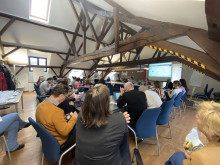
During a lunch & learn session, the EMN Belgium team met with around 30 Fedasil staff members to present the work of the European Migration Network, encourage active participation in the national network, and provide updates on recent and upcoming publications and activities.
Read more
Main theme: Reception

Publication date:
On 23 April 2025, the Office of the Commissioner General for Refugees and Stateless Persons (CGRS) announced an extension of the suspension of the processing of applications for international protection from Syrian nationals. The suspension, initially introduced on 9 December 2024, will remain in place until at least the end of July 2025.
Read more
Main theme: International Protection
Keywords: application for international protection, Syria
Publication date:
This data comes from Bruss’help’s eighth count, carried out through a large-scale collaboration across sectors and indicating a worsening trend of homelessness in Brussels. For the first time, data from reception centres for applicants for international protection were collected. Out of 5.135 individuals, 17 were required to leave their centre within 30 days without any housing solution, while 94 remained beyond their expected departure due to the lack of stable housing options.
Read more
Main theme: Vulnerable groups
Keywords: homelessness, homeless, housing shortage, emergency shelter
Publication date:
Recent data requested by Green party MP Matti Vandemaele from the Minister for Asylum and Migration, Anneleen Van Bossuyt (N-VA), indicate a notable increase in the time taken to process applications for international protection. This trend has implications for applicants, who remain in prolonged uncertainty, and for the national reception system, which continues to face significant pressure.
Read more
Main theme: International Protection
Keywords: application for international protection, processing time, backlog, reception centre
Publication date:
According to Statbel, the Belgian statistical office, 5.353 persons obtained Belgian nationality in January 2025. The main countries of origin of people who acquired Belgian nationality in January are Morocco, Romania, Syria, Italy and Turkey.
Read more
Main theme: Citizenship & Nationality
Keywords: Belgian nationality, access to nationality
Publication date:
On 11 April 2025, the Belgian Council of Ministers agreed on a package of crisis measures aimed at addressing key issues in the field of asylum and migration. The measures include limitations on reception for asylum seekers, restrictions on subsequent applications for international protection, stricter family reunification conditions, and the termination of integration income for asylum seekers. The four draft bills and the draft royal decree have been submitted to the Council of State for review.
Read more
Publication date:
The Education Department of Caritas International Belgium, in collaboration with the non-profit organisation Sankaa, has launched "Building Bridges", an educational resource for secondary school teachers. This resource helps educators address key topics such as identity, prejudice, racism, and media representation. At its core, "Building Bridges" explores the central question: How can we create a more supportive and inclusive society where everyone has a place?
Read more
Main theme: Integration
Keywords: inclusion, secondary school, diversity, migratory background, discrimination
Publication date:
Last year, Fedasil’s mobile and multilingual Reach Out team provided information to 1.702 migrants in precarious situations in Brussels and Flanders. Representing more than 75 nationalities, these individuals received counselling on a wide range of topics, from international protection and reception to healthcare, employment, and voluntary return.
Read more
Main theme: Reception
Keywords: migrant, precarious situation, Reach Out Team, counselling
Publication date:
In a new report, Amnesty International urges the Belgian government to ensure that all people seeking asylum are given adequate housing and that they have access to adequate healthcare services, including specialised psychological support, regardless of their housing situation. Belgian authorities are also called to activate the "dispersal plan" outlined in domestic law and implement contingency plans to manage fluctuations in the number of asylum applications.
Read more
Main theme: Reception
Keywords: reception crisis, reception capacity, housing, access to healthcare
Publication date:
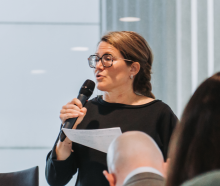
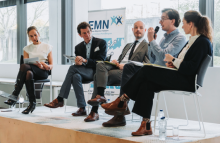
On 27 March 2025, EMN Belgium brought together over 130 key stakeholders in the areas of asylum and migration in Belgium. The Minister for Asylum and Migration addressed this large audience of experts from various fields. Participants examined recent developments as well as current and future challenges related to asylum and migration in Belgium and within the EU context. They then explored key topics in breakout sessions and used informal networking opportunities to strengthen connections and explore new collaborations.