
Publication date:
Due to the numerous amendments to the Aliens Act, the development of a Migration Code has appeared necessary. In this context, a Commission of Independent Experts was established to provide guidance for the drafting of a new Code. Its final report, now publicly available, presents, among other elements, the Commission’s working methodology, key guidelines for codification, a proposed structure for the Code, and its discussions on draft texts.
Read more
Main theme: Cross-sectional
Keywords: Migration Code, commission, report
Publication date:
As of 7 January 2025, 160 additional emergency shelter places are made available for homeless people sleeping on the streets in the Brussels Capital Region, supplementing the existing 2.600 places within the Brussels unhoused shelter network. The emergency shelter places are open to all homeless people, regardless of residence status.
Read more
Main theme: Vulnerable groups
Keywords: homeless shelter, extreme cold plan, homelessness

Publication date:
From 1 January 2025 until 31 December 2026, the European Union Agency for Asylum (EUAA) will support Belgium to increase the capacities of the national asylum and reception authorities. Asylum support teams will be deployed to support the registration and processing of cases as well as the design, update and implementation of specific systems and tools.
Read more
Main theme: Asylum
Keywords: EUAA, operational plan, operational assistance, technical assistance
Publication date:
On 19 December 2024, Myria published the sixth thematic section of its 2024 annual report. In this section, entitled « Nationality », Myria pays particular attention inter alia to the sums to be paid to become Belgian and analyses the impact of such costs on fundamental rights and on women's access to nationality.
Read more
Main theme: Citizenship & Nationality
Keywords: access to nationality, Belgian nationality, registration fee, women

Publication date:
As of 9 December 2024, the Office of the Commissioner General for Refugees and Stateless Persons will temporarily suspend processing cases of applicants originating from Syria. Planned personal interviews will be cancelled and assessments will be temporarily put on hold.
Read more
Main theme: International Protection
Keywords: application for international protection, Syria
Publication date:
On the occasion of International Volunteer Day, Fedasil highlights the importance of volunteers who give their time to residents in reception centres and of sponsors who create links with these residents outside of the centres. If you have free time, join them and contact a reception centre in your neighbourhood!
Read more
Main theme: Reception
Keywords: reception centre, volunteer
Publication date:
On the occasion of the 70th anniversary of the International Convention relating to the Status of Stateless Persons, UNHCR and NANSEN organise a study day on statelessness. Particular emphasis will be placed on the rights of stateless persons and the specific procedures applicable in Belgium, in particular the new residence procedure for stateless persons.
Read more
Main theme: Statelessness
Keywords: stateless persons, residence procedure, access to rights
Publication date:
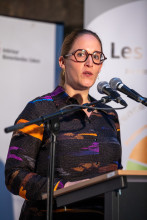
The Secretary of State for Asylum and Migration has announced that she would use all possible means to reduce the number of applications from persons who already have protection in another EU Member State. She intends to oppose the Council for Aliens Law Litigation's rulings leading to the admissibility of these applications and the recognition of a protected status.
Read more
Main theme: International Protection
Keywords: applicant for international protection, refugee, protection status
Publication date:
Myria has published the fifth thematic section of its 2024 annual report. In this section, entitled « International protection », Myria pays particular attention inter alia to the new residence procedure for stateless persons. The Federal Migration Centre underlines that the new procedure is subject to strict conditions and that it provides reduced procedural guarantees for stateless persons.
Read more
Main theme: Statelessness
Keywords: stateless persons, residence procedure, procedural guarantee, equal treatment, interview

Publication date:
EMN Belgium visited the team of DEI Belgium - ECPAT to better understand each other's activities and deepen exchanges and opportunities for cooperation. EMN Belgium, for example, learned more about their work to protect migrant children and their parents in reception centres.
Read more
Main theme: Vulnerable groups
Keywords: migrant child, sexual abuse, sexual exploitation

Publication date:
The Federal Public Service Justice is currently able to assign a guardian to an unaccompanied foreign minor within the normal period of 8 weeks. However, the demand for guardians remains high in Limburg, Antwerp and Brussels, and the Guardianship Service is still urgently looking for additional guardians.
Read more
Main theme: Vulnerable groups
Keywords: unaccompanied minors, guardianship

Publication date:
The Federal Institute for Human Rights launched an investigation into "the growing tendency of Belgian authorities not to implement court decisions that condemn them", inter alia regarding the reception of applicants for international protection. The report following the investigation will be sent to the Chamber of Representatives.
Read more
Main theme: Reception
Keywords: reception crisis, court decision, non-compliance
Publication date:
According to Statbel, the Belgian statistical office, 4.048 persons obtained Belgian nationality in August 2024. The main countries of origin of people who acquired Belgian nationality in August are Morocco, Romania, Syria, Italy and France.
Read more
Main theme: Data & Statistics
Keywords: access to nationality, Belgian nationality
Publication date:
Fedasil announced that the Belgian reception network has now a higher capacity than that recorded during the asylum crisis of 2015-2016. However, this capacity is insufficient to accommodate all applicants for international protection who are entitled to reception. At present, 2.650 single men are still on the waiting list for a reception place.
Read more
Main theme: Reception
Keywords: reception capacity, reception centre, shortage
Publication date:
Fedasil announced that it can temporarily make use of centres in Bredene (Flanders) and in Theux (Wallonia) to accommodate applicants for international protection until March 2025. Both sites have already been used by Fedasil in the past, each time for a period of a few months.
Read more
Main theme: Reception
Keywords: reception capacity, reception centre, shortage
Publication date:
From 2014 to 2023, Esperanto provided shelter and support to 156 foreign minors victims of human trafficking and/or aggravated smuggling. According to Myria, who analysed the figures, just over half of these 156 young people were victims of sexual exploitation or were forced to commit criminal acts.
Read more
Main theme: Smuggling & Trafficking
Keywords: child victim of trafficking, sexual exploitation, economic exploitation, exploitation of begging, Esperanto
Publication date:
Nicole de Moor said that applications relating to 859 persons have already been processed in accelerated procedure since February 2024. In 96 % of cases, applicants were not granted protection status. Ms de Moor wants to focus more on prevention to prevent people who do not need protection from applying for international protection in Belgium.
Read more
Publication date:
As of 24 October 2024, the centre for registering applications for international protection is located at rue Belliard 68 in 1000 Brussels. Applications can still be registered in the Pacheco building until Wednesday, 23 October 2024.
Read more
Main theme: International Protection
Keywords: applicant for international protection, registration, registration centre
Publication date:
According to Statbel, the Belgian statistical office, 5.806 persons obtained Belgian nationality in July 2024. The main countries of origin of people who acquired Belgian nationality in July are Morocco, Romania, Syria, Afghanistan and Italy.
Read more
Main theme: Data & Statistics
Keywords: access to nationality, Belgian nationality

Publication date:
What does the EU Pact on Migration and Asylum actually mean for Belgian migration and asylum procedures? This study day will allow lawyers, magistrates and all legal practitioners to consider this question, benefiting from the contributions and insights of experts from national migration and asylum authorities, various non-governmental organisations, and several universities.
Read more
Main theme: Cross-sectional
Keywords: New Pact on Migration and Asylum, asylum procedure, right of residence
Publication date:
Fedasil has a budget for financing specific projects relating to the reception of asylum seekers (and other reception beneficiaries). The Agency has launched its call for projects for the year 2025. In 2025, the focus will be on projects that focus on support, activation, and housing.
Read more
Main theme: Reception
Keywords: call for projects, applicant for international protection, support, activation, housing

Publication date:
The Office of the Commissioner General for Refugees and Stateless Persons (CGVS) announced on 2 October 2024 that the notification of decisions granting or refusing subsidiary protection status to applicants from Lebanon is suspended until the CGRS has sufficient objective information to assess the security situation in Lebanon.
Read more
Main theme: International Protection
Keywords: applicant for international protection, Lebanon, refugee status, subsidiary protection status

Publication date:
On 1 October 2024, Nicole de Moor stated that proportionally speaking, more Palestinian applicants for international protection come to Belgium than to other European Member States. She also confirmed that the protection rate for Palestinian applicants had increased in recent years.
Read more
Main theme: International Protection
Keywords: Palestinian, applicant for international protection, New Pact on Migration and Asylum
Publication date:
Myria has published the fourth thematic section of its 2024 annual report. In this section, entitled « Economic migration, free movement and students » Myria notes that more third-country nationals were posted to Belgium in 2023 than in 2022. Posted workers from third countries are more vulnerable to exploitation than EU-based posted workers. Therefore, they urgently need increased legal protection, according to Myria.
Read more
Main theme: Economic migration
Keywords: migrant worker, posted worker, exploitation
Publication date:
After nearly two years of closure, Fedasil’s Info Point reopened on 27 September 2023, at its new location in rue Héger-Bordet, 3. The Info Point offers information and counseling for applicants for international protection living outside the reception network, but also migrants in transit and persons without a residence permit.