According to the Court of Justice of the EU, European Union law precludes national legislation which requires, without exception, that an application for family reunification be submitted in person at a competent diplomatic post.
07/04/2023
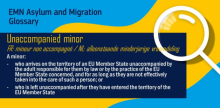
The European Migration Network (EMN) Glossary is an essential resource, which offers an EU-wide multidisciplinary vocabulary of approximately 500 terms and concepts related to asylum and migration. Let's focus today on the term "unaccompanied minor" to make sure we have a common understanding and use of the term!

30/03/2023
You are from Liège and you want to give your time to unaccompanied foreign minors? Caritas is looking for volunteers who want to meet them and exchange, either by doing activities or by supporting them at school.
13/03/2023
The DRC Global Displacement Forecast 2023 Report, projects that the total number of people displaced will increase by 1.9 million in 2023 and an additional 3.5 million in 2024. This means that by 2024, the number of displaced people will have more than doubled since 2015 and increased by more than 50 million.
03/03/2023
The Dutch National Contact Point (NCP) to the European Migration Network launched an ad hoc query on the existing data on unaccompanied minors (UAMs) outside of international protection procedures in other Member Countries. With this query, the Dutch NCP wanted to get a better picture of the total influx of UAMs in a European perspective.
Theme:
Publication type:
Keywords:
02/03/2023
In the Czech Republic, a marriage can, under the current legislation, only take place if both parties have legal residence on the territory. By launching this ad hoc query, the Czech National Contact Point (NCP) to the European Migration Network (EMN) wanted to know more about the existing practices in other Member Countries.
Theme:
Publication type:
Keywords:
10/02/2023
Ahead of the Family Reunification Directive’s 20th anniversary, this new comparative report provides a comprehensive overview of the current implementation of the Directive and other forms of realisation of family unity for individuals in need of protection across 23 European countries based on ECRE’s Asylum Information Database (AIDA).
Theme:
Type:
Keywords:
22/12/2022
This ad hoc query, launched by Luxembourg, examines what guidelines, procedures, and possible best practices are in place when LGBTIQ+ individuals are detained.
Theme:
Publication type:
Keywords:
24/11/2022
What measures, structures and systems are in place in the EU Member States and Norway to provide transitional support to unaccompanied minors after reaching the age of majority? This new EMN inform investigates the transition that unaccompanied minors face as they age out of care systems in the EU and Norway.
18/11/2022
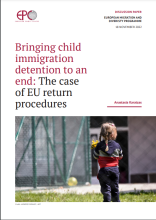
This discussion paper stands against the immigration detention of minors, even used as a measure of last resort, and calls for implementing meaningful alternatives to detention during return procedures. It also recommends mandating the collection of data on this matter.
Theme:
Publication type:
Keywords:
17/11/2022
The Court of Justice of the European Union interpreted Article 2(f) and Article 10(3)(a) of the Family Reunification Directive in its decision from 17 November 2022 in the case X v Belgium. An unaccompanied refugee minor residing in a Member State does not have to be unmarried to enjoy the right to family reunification with first-degree relatives in direct ascending line.
Theme:
Type:
Keywords:
25/10/2022
Unaccompanied minors who have little or no perspective of receiving a residence permit within EU Member States, may have co-existing problems such as mental health issues or substance addiction. This ad hoc query examines how EU Member States deal with this specific group and how they could improve the reception and supervision of these young persons.
Theme:
Publication type:
Keywords:
14/08/2022
Do Member States grant access to the labour market to family members of international students and, if so, to which family members and under which conditions? This ad hoc query launched by Belgium shows that policies and practices in this matter still vary among Member States.
Theme:
Publication type:
Keywords:

02/02/2022
How do Member States and Norway ensure the care and protection of children who arrive in their countries, and what measures are in place in relation to guardianship, education, access to justice, and more? This new report from the European Migration Network (EMN) provides an overview of the progress made during 2020 in the implementation of the recommendations laid out in the 2017 Communication on the protection of children in migration and is the second edition of a series of reports developed by the EMN.
Theme:
Publication type:

10/05/2021
On 5 May 2021, the Committee of Ministers of the Council of Europe adopted the Action Plan on Protecting Vulnerable Persons in the Context of Migration and Asylum in Europe (2021-2025) to increase cooperation among member states to protect the most vulnerable persons.
Theme:
10/03/2021
How do Member States ensure the protection of children in migration procedures, and what measures are in place in relation to guardianship, accommodation, transition into adulthood, and many more? This report from the European Migration Network (EMN), published on 10 March 2021, maps the state of implementation in 2019 of the recommendations laid down in the 2017 European Commission Communication on the protection of children in migration.
Theme:
Publication type:
Keywords:
24/09/2020
24 Member States provided information on national laws and practices regarding the detention of families with children in migration procedures, the possibility to detain one of the parents and detention in the context of the age assessment process.
Theme:
Publication type:
Keywords:
26/05/2020
These studies explore the types of national protection statuses existing in Belgium and the EU, as well as their key characteristics in terms of procedures and rights.
Theme:
Publication type:
Keywords:
08/04/2020
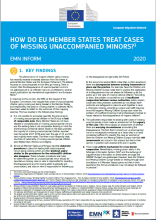
The phenomenon of unaccompanied migrant children going missing has increasingly been in the focus of public attention in the EU. Several international organisations and European NGOs have raised concerns that the disappearance of unaccompanied minors is not always addressed in an effective manner. What policies and procedures are in place to register and follow up on cases of missing children, and how is data on missing children collected in EU Members States, Norway and the UK? The new Inform from the European Migration Network (EMN), in collaboration with international organisations, EU agencies and NGOs, offers a comprehensive picture of how the phenomenon is tackled currently in the EU.
02/04/2020
21 Member States provided information on national laws and practices regarding the time limits for decisions on family reunification and the consequences of exceeding these limits.

12/12/2019
The PROTECT – Preventing sexual and gender-based violence against migrants and strengthening support to victims project aims to support the coordination and/or adaptation of support services for sexual and gender-based violence victims and potential victims among refugees, migrants and asylum seekers (children and adults, including LGBTQI people). It is funded by the European Union's Rights, Equality and Citizenship Programme (2014-2020).
01/10/2019
The United Nations High Commissioner for Refugees (UNHCR) published a report on the protection of unaccompanied and separated children in Belgium. The report describes the current state of affairs and provides policy recommendations to reinforce the protection of this vulnerable category of foreign nationals.
05/04/2019
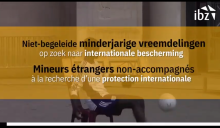
The Federal Public Service Interior has made a short video about foreign unaccompanied minors seeking international protection in Belgium.
17/12/2018
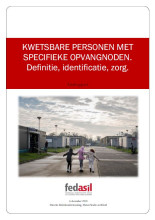
This final report, realised by the Study and Policy Unit of the Federal Agency for the Reception of Asylum Seekers (Fedasil), describes the reception of vulnerable applicants for international protection with specific needs. It discusses how (field) staff define, identify and respond to vulnerability in practice. The objective is to develop a better understanding of the way in which Fedasil and its reception partners fulfill the requirement of Belgian and European legislation to meet the specific needs of applicants for international protection.

25/10/2018
The ChildMove project represents a unique attempt to follow young refugees and migrants as they travel from Libya and Turkey to European shores and onwards, and to allow young people themselves to speak of what it means to be on the move.
Join the Migration Policy Institute Europe and Ghent University for a morning coffee and discussion of this ground-breaking study of the experiences of young refugees and migrants who have travelled across Europe, unaccompanied by their families