
The Belgian Council of State has suspended the decision of the Minister of Asylum and Migration to limit material reception conditions for applicants for international protection who have already obtained protection in another EU Member State. In its judgment No. 267.364 of 8 July 2026, the Council of State suspended the measure following an urgent appeal introduced by several organisations active in the field of asylum and migration. The decision concerns a measure adopted following the entry into application of the European Pact on Migration and Asylum on 12 June 2026.
08/07/2026
04/06/2026
This Inform, covering developments across 22 EMN Member Countries, as well as Norway and Serbia, explores the use of alternatives to providing in-kind housing for applicants for international protection between January 2020 and October 2025. It examines how such measures were implemented while respecting legal obligations and supporting applicants’ autonomy, addressing their vulnerability, and promoting their integration into society. The Inform focuses on financial allowances and vouchers as alternatives to accommodation provided directly by the state and highlights national approaches and innovative solutions identified across participating countries.
Theme:
Publication type:
Keywords:
27/05/2026
This ad hoc query examines whether EMN Member and Observer Countries experience irregular occupancy within their reception systems. It explores whether countries have mechanisms that allow individuals in the reception system to save part of their income to facilitate access to independent housing, or whether direct financial support is provided. The query also considers whether countries have mechanisms for individuals who unjustifiably refuse to leave the reception system, as well as any financial reimbursement mechanisms for costs incurred when an individual remains irregularly.
Theme:
Publication type:
Keywords:
09/04/2026
On 9 April 2026, the European Court of Human Rights delivered its judgment in M.V. and Others v. Belgium and held that Belgium had violated several provisions of the European Convention on Human Rights in relation to the reception conditions of four applicants for international protection.
28/03/2026
The Fedasil Pondrôme reception centre will host a photo exhibition featuring the work of unaccompanied and accompanied minors. The images were created over an eighteen-month project led by CIDJ Rochefort–Beauraing. The exhibition provides insight into the daily lives, experiences, and identities of the young participants. The event is free, open to all, and offers an opportunity to meet the creators.

27/03/2026
The Belgian Council of State has suspended a ministerial instruction that systematically limited material assistance to international protection applicants who had already obtained protection in another EU Member State. The court ruled that the instruction exposed these individuals to the risk of severe hardship and potential homelessness. It also noted that, due to its regulatory character, the instruction should have been submitted for review by the Council of State’s Legislation Section.
Theme:
Type:
Keywords:

20/03/2026
Belgium plans to progressively return several defence sites used for the reception of applicants for international protection to military use as part of a broader plan to expand defence infrastructure towards 2040. The measure concerns around 4.000 reception places located on military premises across the country. Authorities state that the reduction in capacity can be absorbed within the existing reception network. The transition will take place gradually, with closures scheduled at different times depending on the site.

18/03/2026
The Netherlands has decided to resume Dublin transfers of single, non-vulnerable male asylum seekers to Belgium, following a period in which such transfers were suspended after a Dutch court ruling. In April 2025, the District Court of The Hague, sitting in Groningen, found that single male asylum seekers risked being deprived of adequate reception conditions in Belgium, which could expose them to inhumane or degrading treatment. The ruling led to a halt in transfers under the EU Dublin system.
Theme:
Type:
Keywords:
13/03/2026
Myria, the Federal Migration Centre, has advised against a draft law proposing to remove the legal possibility of activating a mandatory distribution plan for reception places in times of crisis. The plan allows the federal government to require municipalities to provide local reception initiatives according to objective allocation criteria. Myria stresses that this mechanism is important to safeguard human dignity and the right to reception, particularly during periods of structural shortages.
13/03/2026
CIRÉ, together with partner organisations, has lodged an urgent appeal at the Council of State challenging a ministerial instruction that continues to exclude asylum seekers who have already been granted protection in another EU member state from reception facilities. The move follows a recent temporary suspension of the measure by the Constitutional Court. CIRÉ argues the instruction undermines judicial authority and the rule of law.
Theme:
Type:
Keywords:
03/03/2026
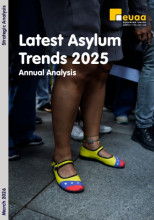
According to the Latest Asylum Trends 2025 published by the European Union Agency for Asylum (EUAA), EU+ countries received approximately 822.000 applications for international protection in 2025, representing a 19 % decrease compared to 2024. Despite the overall decline, demand for protection remained significant in some groups and countries.
03/03/2026
The Latest Asylum Trends 2025 provides an annual overview of asylum activity in EU+ countries, covering asylum applications (per capita), the main nationalities of applicants, the top receiving countries, recognition rates, pending cases and the number of beneficiaries of temporary protection following the war in Ukraine. It also reviews policy developments in the EU+ and provides a 2026 outlook, examining, inter alia, geopolitical uncertainty and latent displacement risks.
Theme:
Publication type:
Keywords:

26/02/2026
The Belgian Constitutional Court has temporarily suspended legislative measures introduced in 2025 that tightened rules on material reception conditions for asylum seekers and family reunification for beneficiaries of subsidiary protection. The suspensions concern two separate laws, and the Court has referred several preliminary questions to the Court of Justice of the European Union (CJEU) to clarify their compatibility with EU law.
24/02/2026
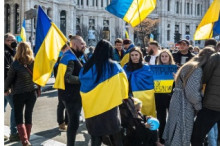
Four years after Russia launched its full-scale invasion of Ukraine on 24 February 2022, Belgium has granted more than 101.500 temporary protection certificates to people fleeing the conflict. Today, around 70.600 of these displaced Ukrainians remain in the country. While the temporary protection scheme has been extended until March 2027, uncertainty remains over what will happen afterwards, raising questions for both the authorities and Ukrainian beneficiaries.
21/02/2026
This ad hoc query examines whether accommodation centres are included in spatial planning regulations in EMN Member and Observer Countries, and whether exceptions apply during periods of significant increases in asylum applications. It also looks at possible exceptions to zoning rules, environmental impact assessments, and the duration of construction and operative permits. Finally, it explores whether countries have formal guidance or standards for establishing such centres, including aspects like room sizes or site location.
Theme:
Publication type:
Keywords:
19/02/2026
On 19 February 2026, EMN Belgium attended a Mutual Learning Seminar organised by ECRE (European Council on Refugees and Exiles) within the framework of the INNOVATE project, supported by EU funding under the Horizon 2020 programme.Held in Brussels, the seminar brought together experts, civil society representatives and policymakers to assess the state of preparedness across EU Member States for transitioning out of temporary protection under the Temporary Protection Directive, currently extended until March 2027.
Theme:
Type:
Keywords:
12/02/2026
Fedasil has released its management plan for 2025–2030. Approved in December 2025 and submitted by Director General Pieter Spinnewijn to the Minister for Asylum and Migration, the plan sets out the Agency’s priorities, including restoring the core functioning of the reception system, strengthening its capacity to respond to fluctuations in the number of applicants to be accommodated, and improving the quality, resilience, and effectiveness of services.
19/01/2026
This ad hoc query examines whether EMN Member Countries are developing or considering initiatives to maintain and strengthen the connections between beneficiaries of temporary protection displaced from Ukraine and their country of origin. It aims to map projects that support continued engagement with Ukraine, including information provision to enable informed decisions about possible return. The query also explores whether such initiatives contribute to future recovery and sustainable reintegration.
Theme:
Publication type:
Keywords:
21/12/2025
This ad hoc query maps EMN Member Countries’ intended waiting periods for access to the labour market following the implementation of the recast Reception Conditions Directive. It aims to provide a comparative overview of planned national approaches under the EU Asylum and Migration Pact.
Theme:
Publication type:
Keywords:
18/12/2025
In a judgment delivered in Case C-184/24 (Sidi Bouzid), the Court of Justice of the European Union has clarified the limits of sanctions that may be imposed on applicants for international protection who refuse to be transferred to another accommodation centre. The Court found that such a refusal cannot justify the withdrawal of all material reception conditions. While Member States may impose sanctions for serious breaches of reception rules, these must remain proportionate and respect the applicant’s dignity.
Theme:
Type:
Keywords:
16/12/2025
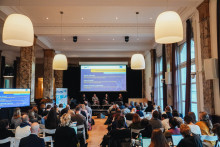
On 15 and 16 December 2025, EMN Belgium organised a conference in Brussels bringing together stakeholders from Belgium, EMN Member and Observer Countries, as well as European and international organisations. The event provided a forum to examine reception and support for applicants for international protection other than in-kind from legal, policy, and operational perspectives, exploring how these forms of support are organised, implemented, and linked to broader reception systems.

25/11/2025
The EMN Hungary Conference will explore how EU temporary protection frameworks are evolving and how these changes are implemented in practice across Central Europe. It aims to connect high-level policy developments with on-the-ground realities for displaced persons and host communities. The conference will examine potential transitions from the EU temporary protection regime and highlight regional practices, challenges, and successful approaches.
Theme:
Type:
Keywords:
26/11/2025
On 26 November 2025, several civil society organisations, including Caritas International and Vluchtelingenwerk Vlaanderen, published a statement warning about rising refusals of temporary protection applications. Between January and October, 2.380 applications were rejected, compared with 1.578 in 2022. The organisations highlighted difficulties in accessing accommodation and support for displaced persons affected. Authorities attribute the increase to changes in European rules and stricter administrative requirements.

20/11/2025
On 20 November 2025, EMN Belgium attended the launch of the annual report "Rechten op de drempel" by the Flemish Children’s Rights Commissioner, on the occasion of International Children’s Rights Day. The report highlights persistent challenges affecting foreign children and young people in reception centres, including disparities in living conditions, safety, hygiene, and access to basic needs.
Theme:
Type:
Keywords:
15/11/2025
This ad hoc query examines whether countries have implemented alternatives to provide housing in kind (for instance, financial support) for applicants for international protection between 2020 and 2025, and if so, under which circumstances and for which target group. The query further explores the implementation of such alternatives, such as the systems put in place to ensure the mandatory provision of services (e.g., legal support, healthcare), and the specific measures to support vulnerable groups. Finally, the query examines whether these alternatives were evaluated through an established evaluation system, and if so, what the key results of these evaluations were.