This ad hoc query examines whether accommodation centres are included in spatial planning regulations in EMN Member and Observer Countries, and whether exceptions apply during periods of significant increases in asylum applications. It also looks at possible exceptions to zoning rules, environmental impact assessments, and the duration of construction and operative permits. Finally, it explores whether countries have formal guidance or standards for establishing such centres, including aspects like room sizes or site location.
12/02/2026
Fedasil has released its management plan for 2025–2030. Approved in December 2025 and submitted by Director General Pieter Spinnewijn to the Minister for Asylum and Migration, the plan sets out the Agency’s priorities, including restoring the core functioning of the reception system, strengthening its capacity to respond to fluctuations in the number of applicants to be accommodated, and improving the quality, resilience, and effectiveness of services.
05/02/2026
The European Parliament has approved new EU asylum rules to enable faster processing of asylum requests. The reform establishes a common list of safe countries of origin while allowing Member States to maintain or designate additional safe countries at national level. It also clarifies the conditions under which Member States can apply the safe third country concept. While the legislation has now passed Parliament, it still needs to be formally adopted by the Council before entering into force.
Theme:
Type:
Keywords:
27/01/2026
This EMN Inform provides an overview of the border procedures currently applied by EMN Member Countries under the Asylum Procedures Directive. It mainly examines the types of procedures, authorities involved, processing times, types of decisions taken, and safeguards for applicants with special needs. The Inform highlights differences in national practices and presents them as they exist prior to the implementation of the mandatory Asylum Border Procedure under the Pact on Migration and Asylum.
Theme:
Publication type:
Keywords:

27/01/2026
In 2025, Belgium received 34.439 applications for international protection, a decline compared with 2024. The Office of the Commissioner General for Refugees and Stateless Persons (CGRS) took decisions on 31.457 people, with a protection rate falling to its lowest level in over a decade. Key factors behind this trend include the suspension of the processing of Syrian cases in the first ten months of 2025 and prioritisation of applications from individuals already protected in other EU Member States.
Theme:
Type:
Keywords:

15/01/2026
The Office of the Commissioner General for Refugees and Stateless Persons (CGVS) announced on 15 January 2026 that it is temporarily suspending the processing of applications for international protection from Iranian nationals. The CGVS stated that, given the current situation in Iran and the difficulty in obtaining sufficiently reliable and up-to-date information, it is currently unable to assess the need for protection accurately.
Theme:
Type:
Keywords:
08/01/2026
On 8 January 2026, the Resettlement Coalition issued a joint statement expressing concern over the European Union’s newly adopted Union Resettlement and Humanitarian Admission Plan (URP) for 2026–2027. While welcoming the plan’s adoption as a step towards embedding resettlement in EU migration policy, the coalition highlighted that the number of pledges is dramatically lower than previous commitments and that the eligibility criteria are narrow. The statement calls on EU Member States to increase their contributions and ensure that protection needs remain central to resettlement efforts.
21/12/2025
This ad hoc query maps EMN Member Countries’ intended waiting periods for access to the labour market following the implementation of the recast Reception Conditions Directive. It aims to provide a comparative overview of planned national approaches under the EU Asylum and Migration Pact.
Theme:
Publication type:
Keywords:
18/12/2025
In a judgment delivered in Case C-184/24 (Sidi Bouzid), the Court of Justice of the European Union has clarified the limits of sanctions that may be imposed on applicants for international protection who refuse to be transferred to another accommodation centre. The Court found that such a refusal cannot justify the withdrawal of all material reception conditions. While Member States may impose sanctions for serious breaches of reception rules, these must remain proportionate and respect the applicant’s dignity.
Theme:
Type:
Keywords:
16/12/2025
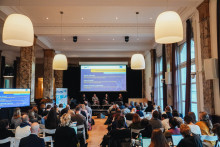
On 15 and 16 December 2025, EMN Belgium organised a conference in Brussels bringing together stakeholders from Belgium, EMN Member and Observer Countries, as well as European and international organisations. The event provided a forum to examine reception and support for applicants for international protection other than in-kind from legal, policy, and operational perspectives, exploring how these forms of support are organised, implemented, and linked to broader reception systems.
14/12/2025
This ad hoc query examines whether national procedures allow asylum applicants to respond to an intended negative first-instance decision before it is officially finalised, and whether there are administrative mechanisms to object to a first-instance decision before filing a judicial appeal.
Theme:
Publication type:
Keywords:
08/12/2025
The Council of the European Union has agreed its position on two key proposals to strengthen the use of safe country concepts in EU asylum rules. One addresses the safe third country concept, and the other establishes the first EU‑wide list of safe countries of origin. They aim to accelerate asylum procedures and improve the management of applications from those unlikely to require protection. Negotiations with the European Parliament, which has also endorsed the list, will follow to agree on the final texts.
Theme:
Type:
Keywords:

02/12/2025
During a session of the Chamber of Representatives’ Interior Committee on 2 December 2025, Minister Anneleen Van Bossuyt outlined the government’s decision regarding the list of safe countries of origin. She specified which countries are included in the 2025 list and explained that Morocco was added due to improvements in its human rights situation and the low recognition rate for asylum applications from Moroccan nationals.
28/11/2025
This EMN Inform provides an overview of how EMN Member and Observer Countries ensure access to vocational education and training (VET) for beneficiaries of international protection and applicants for international protection. It examines existing procedures, the incentive mechanisms used to encourage enrolment, and the main challenges and good practices identified across countries.
20/11/2025
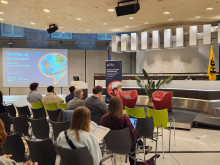
On 20 November 2025, EMN Belgium attended the launch of the annual report "Rechten op de drempel" by the Flemish Children’s Rights Commissioner, on the occasion of International Children’s Rights Day. The report highlights persistent challenges affecting foreign children and young people in reception centres, including disparities in living conditions, safety, hygiene, and access to basic needs.
Theme:
Type:
Keywords:
15/11/2025
This ad hoc query examines whether countries have implemented alternatives to provide housing in kind (for instance, financial support) for applicants for international protection between 2020 and 2025, and if so, under which circumstances and for which target group. The query further explores the implementation of such alternatives, such as the systems put in place to ensure the mandatory provision of services (e.g., legal support, healthcare), and the specific measures to support vulnerable groups. Finally, the query examines whether these alternatives were evaluated through an established evaluation system, and if so, what the key results of these evaluations were.
Theme:
Publication type:
Keywords:
13/11/2025
On 13 November 2025, several civil society organisations held a silent protest outside the Palais de Justice in Brussels to draw attention to the shortage of reception places for third-country nationals. Participants, including advocates, volunteers, and citizens, brought sleeping bags to symbolise people forced to sleep outdoors. The demonstration called for urgent measures to ensure that all individuals entitled to accommodation can access it.
Theme:
Type:
Keywords:
07/11/2025
This ad hoc query examines the approaches taken by EMN Member Countries regarding potential changes to support measures for beneficiaries of temporary protection (BoTPs) with respect to accommodation and social welfare. It examines whether changes were applied retroactively and whether different levels of support persist across groups. The query investigates the existence of differentiated support for vulnerable BoTPs and how vulnerability is defined and assessed.
Theme:
Publication type:
Keywords:

01/11/2025
The Office of the Commissioner General for Refugees and Stateless Persons (CGRS) is resuming the processing of applications for international protection from Syrian nationals from 1 November 2025. The suspension, in place since 9 December 2024, was implemented to gather sufficient information on the security situation in Syria.
Theme:
Type:
Keywords:
24/10/2025
This ad hoc query seeks to gather information on how EU Member States implement the procedures for making, registering and lodging applications for international protection under the Asylum Procedures Directive (2013/32/EU). It addresses how the process is organised in law and practice, the accessibility of registration centres, and the assessment of applicants’ vulnerabilities. The query also covers the use of extended registration deadlines, difficulties in meeting registration timelines, and measures taken when applicants cannot be registered on time.
Theme:
Publication type:
Keywords:
11/10/2025
This ad hoc query examines where applicants for international protection (and beneficiaries of temporary protection) with special needs are accommodated. When accommodated in regular reception centres, the query explores the services provided in-house and the professionals employed in this regard. When applicants are accommodated in specialised facilities, the placement procedure is examined, including which stakeholders are involved and their respective roles and responsibilities. It also covers how these financial costs are borne.
Theme:
Publication type:
Keywords:
30/09/2025
On 30 September 2025, seven organisations, including humanitarian groups, published the fifth edition of their Belgian report on the country’s non-reception policy and its effects on asylum seekers. The report provides data on reduced access to accommodation and essential services during the first half of 2025, following policy changes introduced by the coalition government formed in January. It documents impacts on housing, healthcare, mental health, and legal support for people seeking international protection.
27/09/2025
This ad hoc query, which informed the preparation of an EMN Inform, collected information on national lists of safe countries of origin and safe third countries, including their adoption and use. It examined exceptions for specific regions or categories of applicants and the procedures applied to their claims. It also explored the application of the safe third country concept, including assessments, safeguards and practical challenges. Finally, it gathered information on sources used, case law, good practices and planned adaptations to the new Asylum Procedure Regulation.
Theme:
Publication type:
Keywords:
26/09/2025
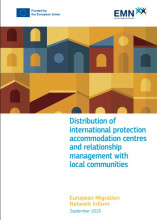
This Inform examines how international protection applicants and accommodation centres are distributed across 23 EMN Member Countries and Serbia, and how such policies are governed and managed. It compares approaches, criteria and mechanisms used by different countries, highlighting both challenges and good practices. The study also looks at how local communities and stakeholders are informed and engaged in the process. Finally, it identifies opportunities for further collaboration to support effective reception and integration.
Theme:
Publication type:
Keywords:

18/09/2025
This ad hoc query examines the systems and processes used by EMN Member and Observer Countries for scheduling and confirming interviews for applicants for international protection. It investigates the extent of automation used in coordinating the schedules of all participants (applicants, interviewers, interpreters, and legal representatives) and identifies recent developments in booking procedures.