
Eurostat published today data referring to the attribution of temporary protection status based on the Council Implementing Decision 2022/382 of 4 March 2022. On 31 August 2023, almost 4.2 million non-EU citizens, who fled Ukraine as a consequence of the Russian invasion on 24 February 2022, had temporary protection status in EU countries.

21/09/2023
In its judgment in Case C-143/22 | ADDE and Others, the Court of Justice of the European Union ruled today that the Return Directive applies to any third-country national who has entered the territory of a Member State without fulfilling the conditions of entry, stay or residence. That also applies when the person concerned has entered that territory even before crossing a border crossing point where such checks are carried out.
19/09/2023
The European Commission is proposing today to further extend the temporary protection for people fleeing Russia's aggression against Ukraine from 4 March 2024 to 3 March 2025. This Commission proposal will now have to be adopted by the Council.

06/09/2023
In its judgment in Case T-600/21 | WS and Others v Frontex, the General Court dismissed today the action of a number of Syrian refugees who had brought a claim for compensation before the General Court of the European Union. The applicants claimed that Frontex engaged in improper conduct with regard to them.
05/09/2023
The Swedish government has established a committee to review aspects of Swedish legislation concerning the return procedures for third-country nationals. The committee's goal is to propose new measures and revisions to existing laws to enhance the effectiveness of the return process. Consequently, they initiated an ad hoc query to gather information about the regulations related to the limited validity period of return decisions and the duration of entry bans.
11/04/2023
Frontex is launching a new open call for proposals aimed at concluding new framework partnership agreements to provide post-arrival and post-return assistance in 39 countries of origin, with qualified service providers from the non-profit sector, international organisations and national authorities from EU Member States and Schengen Associated Countries for a period of two and a half years.

25/04/2023
In the first three months of this year, 959 irregularly staying third-country nationals were subject to forced return from Belgium. That is twice as many as in the same period last year, when it concerned 502 persons.
Theme:
Type:
Keywords:

05/04/2023
The Secretary of State for Asylum and Migration Nicole de Moor is on a mission to Vietnam to strengthen cooperation with that country regarding the prevention of irregular migration and return.
16/03/2023
At the beginning of 2023, a coordination meeting of the directors of the Belgian closed detention centers was held. At this meeting, they expressed their concern about the significant increase in the trafficking of drugs inside their centers. That’s why EMN Belgium was asked to launch an ad hoc query in order to gather information on how this issue is addressed in the other Member States.
Theme:
Publication type:
Keywords:

13/03/2023
The meeting put institutional stakeholders and the private sector around the table, to exchange experiences and knowledge regarding the future EU Talent Pool and other databases.
Theme:
Type:
Keywords:
08/03/2023
This Communication takes stock of the Directive's implementation over the last year, draws the lessons learned and identifies priority areas where continued efforts are needed.
06/03/2023
In response to the large influx of Ukrainian refugees, the Estonian Ministry of Culture is looking into setting up new possibilities for e-learning the local language. The objective of this query is to map other EMN Member and Observer Countries’ experience with technologies such as artificial intelligence, virtual reality, and augmented reality, to develop an offer of virtual language learning.
Theme:
Publication type:
Keywords:

07/02/2023
This MPI Europe webinar aims to examine what has been done to foster the integration of those staying long(er) in host societies, to organize first reception services for any additional newcomers, and to prepare the return of those set on going home and rebuilding Ukraine.

10/02/2023
In 2022, 2,673 persons voluntarily returned to their country of origin. The number is higher than before the corona period, when 2,426 persons returned voluntarily in 2019.

02/02/2023
Many cities throughout the European Union hosted people fleeing Russia’s war of aggression against Ukraine. To gauge how cities addressed Europe largest humanitarian crisis since World War II, the EU Agency for Fundamental Rights (FRA) approached selected cities in the EU.
13/01/2023
In a policy note published this week, ECRE analyses EU Member States’ policies and practices on “pendular” movement to and from Ukraine and makes recommendations to ensure security of status and rights for people covered by the TPD regime.
04/01/2023
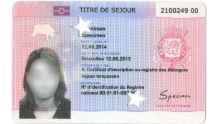
As from 4 January 2023, beneficiaries of temporary protection with an A card valid until 4 March 2023 can present themselves to the municipality to request a new one valid until 4 March 2024.
22/12/2022
This ad hoc query, launched by Luxembourg, examines what guidelines, procedures, and possible best practices are in place when LGBTIQ+ individuals are detained.
Theme:
Publication type:
Keywords:
04/12/2022
Have Member States planned to extend or issue new documents certifying the right of residence to beneficiaries of temporary protection whose certificates/visas/residence permits issued in 2022 are going to expire on 4 March 2023? This ad hoc query explores how Member States will address this, taking into account the large number of Ukrainians concerned.
Theme:
Publication type:
Keywords:

23/11/2022
According to the United Nations High Commissioner for Refugees (UNHCR), as of 15 November 2022, more than 7.8 million people have left Ukraine in search of safety, arriving primarily in neighbouring European Union (EU) and third countries. These Informs analyse the arrangements European Union (EU) Member States have put in place for accommodation and housing and access to specific services namely social benefits, education, employment, and healthcare for beneficiaries of temporary protection, in the context of the activation of the Temporary Protection Directive (TPD) (2001/55/EC), triggered in response to Russia’s invasion of Ukraine on 24 February 2022.
Theme:
Publication type:
Keywords:
26/10/2022
Are the Member States providing any support measures to Ukrainian citizens wishing to go back to Ukraine on a voluntary basis? This ad hoc query launched by Estonia examines the current measures as well as possible plans, including to develop long-term support measures/programs for Ukrainians who wish to voluntarily go back to Ukraine.

16/09/2022
What bilateral readmission agreements exist between EU Member States, Norway and third countries to facilitate the return of migrants staying irregularly on the EU territory? This EMN inform aims to map these agreements and understand how they work.
Theme:
Publication type:
24/08/2022
In the context of migration, detention is permitted and regulated by a strict European legislative framework. Recognising the severity of the measure against the right to liberty and in order to enhance the safeguards for vulnerable persons, Member States rely increasingly on alternatives to detention. Alternatives to detention are often considered to be less resource-intensive, less intrusive for the individual, and more effective at reducing pressure on national detention systems, but their implementation comes with a series of challenges.

08/07/2022
What incentives and motives exist that impact a third-country national’s decision to depart voluntarily? This EMN inform focuses on the issue of voluntary departures from EU Member States and Norway, in compliance with - or in anticipation of - a return decision.
Theme:
Publication type:
01/02/2021
The impact of the COVID-19 pandemic on return procedures had been significant across EU countries as well as OECD countries in and outside Europe since March 2020. This Inform looks into the impact of the COVID-19 pandemic on voluntary and forced return procedures and on policy responses.