This ad hoc query examines whether third-country nationals (TCNs) who are subject to national entry bans or are included in "Stop Lists" are removed from these lists upon marriage to an EU citizen. It further maps the specific procedures, required documentation, and assessment criteria used by EMN Member Countries to distinguish genuine relationships from marriages of convenience.
04/06/2026
This Inform, covering developments across 22 EMN Member Countries, as well as Norway and Serbia, explores the use of alternatives to providing in-kind housing for applicants for international protection between January 2020 and October 2025. It examines how such measures were implemented while respecting legal obligations and supporting applicants’ autonomy, addressing their vulnerability, and promoting their integration into society. The Inform focuses on financial allowances and vouchers as alternatives to accommodation provided directly by the state and highlights national approaches and innovative solutions identified across participating countries.
Theme:
Publication type:
Keywords:
27/05/2026
This ad hoc query examines whether EMN Member and Observer Countries experience irregular occupancy within their reception systems. It explores whether countries have mechanisms that allow individuals in the reception system to save part of their income to facilitate access to independent housing, or whether direct financial support is provided. The query also considers whether countries have mechanisms for individuals who unjustifiably refuse to leave the reception system, as well as any financial reimbursement mechanisms for costs incurred when an individual remains irregularly.
Theme:
Publication type:
Keywords:
15/05/2026
This ad hoc query examines the ways in which EMN Member and Observer Countries calculate periods of absence in the context of applications for an EU Long-Term Residence Status, which requires 5 years of continuous residence. Additionally, this ad hoc query inquires about the use of Artificial Intelligence (AI) or Optical Character Recognition (OCR) in EMN Member and Observer Countries, or any future plans to do so.
Theme:
Publication type:
Keywords:
12/05/2026
This Inform examines how digital services in legal migration procedures are designed and implemented in EMN Member and Observer Countries to ensure accessibility and inclusion for applicants with disabilities and digitally disadvantaged applicants. It looks at how authorities have adapted applications, document submission, appointment booking, communication and information exchange, and case-tracking services in the context of the ongoing digitalisation of legal migration procedures. The analysis is based on contributions from 25 EMN Member and Observer Countries.
Theme:
Publication type:
Keywords:
10/04/2026
This ad hoc query examines the extent to which EMN Member and Observer Countries require medical certificates in the context of applications for temporary and permanent residence permits. More specifically, it inquires at what stage in the procedure the medical certificate is requested and what medical conditions are examined.
Theme:
Publication type:
Keywords:
27/02/2026
This ad hoc query shines light on the practices applicable in EMN Member Countries regarding applications for family reunification by third-country nationals and their family members who enjoy visa-free travel for short-stays in the EU, in the context of the implementation of the Family Reunification Directive (2003/86/EC).
Theme:
Publication type:
Keywords:
21/02/2026
This ad hoc query examines whether accommodation centres are included in spatial planning regulations in EMN Member and Observer Countries, and whether exceptions apply during periods of significant increases in asylum applications. It also looks at possible exceptions to zoning rules, environmental impact assessments, and the duration of construction and operative permits. Finally, it explores whether countries have formal guidance or standards for establishing such centres, including aspects like room sizes or site location.
Theme:
Publication type:
Keywords:
18/01/2026
This ad hoc query provides an overview of which EMN Member and Observer Countries require criminal record certificates in order to issue long-stay visas or residence permits. Details are provided on the categories of third-country nationals exempted from this requirement, the countries from which these certificates are required (country of origin and/or of previous residence), the other types of documents that may be accepted in lieu of a certificate (such as an affidavit), and more.
Theme:
Publication type:
Keywords:
21/12/2025
This ad hoc query maps EMN Member Countries’ intended waiting periods for access to the labour market following the implementation of the recast Reception Conditions Directive. It aims to provide a comparative overview of planned national approaches under the EU Asylum and Migration Pact.
Theme:
Publication type:
Keywords:
14/12/2025
This ad hoc query, which informed the preparation of an EMN Inform, collected information on how EMN Member and Observer Countries have adapted digital services in legal migration procedures to ensure accessibility and inclusion for applicants with disabilities and digitally disadvantaged applicants. It examined compliance with relevant EU and international frameworks, as well as national legislation. It also explored additional accessibility measures, support for users with special needs, GDPR safeguards, user involvement in service design, and approaches to digital disadvantage, alongside challenges and good practices identified by countries.
This ad hoc query, which informed the preparation of an EMN Inform, collected information on how EMN Member and Observer Countries have adapted digital services in legal migration procedures to ensure accessibility and inclusion for applicants with disabilities and digitally disadvantaged applicants. It examined compliance with relevant EU and international frameworks, as well as national legislation. It also explored additional accessibility measures, support for users with special needs, GDPR safeguards, user involvement in service design, and approaches to digital disadvantage, alongside challenges and good practices identified by countries.
Theme:
Publication type:
Keywords:
15/11/2025
This ad hoc query examines whether countries have implemented alternatives to provide housing in kind (for instance, financial support) for applicants for international protection between 2020 and 2025, and if so, under which circumstances and for which target group. The query further explores the implementation of such alternatives, such as the systems put in place to ensure the mandatory provision of services (e.g., legal support, healthcare), and the specific measures to support vulnerable groups. Finally, the query examines whether these alternatives were evaluated through an established evaluation system, and if so, what the key results of these evaluations were.
Theme:
Publication type:
Keywords:
10/11/2025
This ad hoc query examines whether national procedures allow or require immigration officers to request missing or additional information from applicants for legal migration after an initially incomplete application, and, if so, under what circumstances, to what extent, and within which deadlines.
Theme:
Publication type:
Keywords:
07/11/2025
This ad hoc query examines the approaches taken by EMN Member Countries regarding potential changes to support measures for beneficiaries of temporary protection (BoTPs) with respect to accommodation and social welfare. It examines whether changes were applied retroactively and whether different levels of support persist across groups. The query investigates the existence of differentiated support for vulnerable BoTPs and how vulnerability is defined and assessed.
Theme:
Publication type:
Keywords:
11/10/2025
This ad hoc query examines where applicants for international protection (and beneficiaries of temporary protection) with special needs are accommodated. When accommodated in regular reception centres, the query explores the services provided in-house and the professionals employed in this regard. When applicants are accommodated in specialised facilities, the placement procedure is examined, including which stakeholders are involved and their respective roles and responsibilities. It also covers how these financial costs are borne.
Theme:
Publication type:
Keywords:
06/10/2025
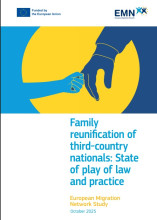
This study provides an overview of legal and policy developments related to the implementation of the Family Reunification Directive since 2017. It examines the current state of national legislation, policies, and practices following two decades of the Directive’s application, incorporating relevant case law and highlighting both challenges and best practices. It also presents data on the scale and evolution of family reunification between 2017 and 2023 (and 2024 where available), drawing on both Eurostat and national sources.
Theme:
Publication type:
Keywords:
26/09/2025
This Inform examines how international protection applicants and accommodation centres are distributed across 23 EMN Member Countries and Serbia, and how such policies are governed and managed. It compares approaches, criteria and mechanisms used by different countries, highlighting both challenges and good practices. The study also looks at how local communities and stakeholders are informed and engaged in the process. Finally, it identifies opportunities for further collaboration to support effective reception and integration.
Theme:
Publication type:
Keywords:
28/04/2025
This ad hoc query compares the existing legislation in EMN Member and Observer Countries regarding the granting of protection statuses to family members of beneficiaries of international protection, as well as recent changes in practices in light of the regime change in Syria.
Theme:
Publication type:
Keywords:
16/02/2025
This ad hoc query examines whether EMN Member and Observer Countries use mechanisms to verify that applicants are genuinely residing in the allocated accommodation. It explores how these mechanisms are implemented, whether vulnerability criteria are considered, and the rules for determining if accommodation has been abandoned and if residents can challenge such assessments. It also looks into whether these mechanisms have led to legal challenges, particularly regarding data protection.
Theme:
Publication type:
Keywords:
05/01/2025
This ad hoc query maps the existence of language requirements prior to entry for family members of beneficiaries of international protection. Responding countries also report on experiences with pre-entry language requirements for other categories of residence permits, when applicable.
Theme:
Publication type:
Keywords:
21/12/2024
This ad hoc query explores the legal frameworks and practices of EMN Member Countries to understand how they link reception conditions to whether an asylum seeker is legally employed.
Theme:
Publication type:
Keywords:
06/12/2024
This ad hoc query looks into which countries verify that the sponsor who applies for family reunification is not a threat to public order when examining the application for family reunification.
Theme:
Publication type:
Keywords:
01/11/2024
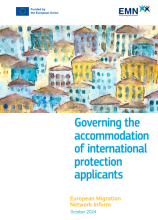
This inform provides insights into the governance and processes of accommodation for applicants for international protection in EMN Member and Observer Countries. This governance of accommodation is crucial for responding to challenges, such as fluctuating asylum applications, limited housing capacity, and community relations.
Theme:
Publication type:
Keywords:
04/08/2024
This ad hoc query examines the approach taken by EMN Member and Observer countries in relation to applications for family reunification from third-country national workers, in particular with regards to the level of resources and the quality of accommodation required by those applying for family reunification, as well as the possible obligation to provide for medical insurance in the context of such applications.
Theme:
Publication type:
Keywords:
21/06/2024
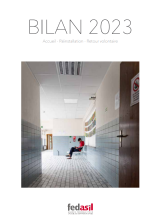
In its 2023 Annual Report, Fedasil reviews the key events of the year and provides an overview of the reception network for international protection applicants, the resettlement of refugees, and voluntary returns. The report also presents key statistics that offer valuable insights into these areas, helping to illustrate both the challenges faced and the progress made.