This seminar will examine new findings on how Schengen emerged, how its current design was shaped and which topics are likely to dominate the future political agenda.
Other government information and services: belgium.be
This seminar will examine new findings on how Schengen emerged, how its current design was shaped and which topics are likely to dominate the future political agenda.
Today, the Commission adopted a Communication on the monitoring of the EU's visa-free travel regimes setting out a consultation process. To address challenges and prevent risks effectively, existing rules concerning the monitoring of the functioning of visa-free regimes with third countries and the suspension of visa exemptions should be re-assessed and improved.
This report is part of the Commission's initiative to further reinforce the Schengen governance through a yearly reporting exercise presenting the state of Schengen, identifying challenges and best practices, as well as priority areas for action. The State of Schengen Report 2023 will serve as basis for political discussions and steer at the Council on 8 June 2023.
Myria has published the first thematic section of its 2023 annual report. This section entitled "Access to the territory" presents the main key figures relating to short and long-stay visas as well as the different reasons and nationalities that stood out in 2022.
Ahead of the Artificial Intelligence Act vote in the European Parliament, a coalition of human rights organisations is calling on EU lawmakers to include provisions in the proposed EU AI Act to protect people from AI surveillance technologies used in migration.
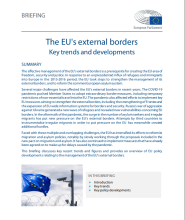
Several major challenges have affected the EU's external borders in recent years, including the COVID-19 pandemic and Russia's war of aggression against Ukraine. These multiple challenges impacted figures and trends and urged policy developments which are clearly presented in a briefing released today by the European Parliament.
This briefing discusses key recent trends and figures and provides an overview of EU policy developments relating to the management of the EU's external borders.
Today, the Commission adopted a Communication that presents the strategic framework for European integrated border management (EIBM) for 5 years and a Recommendation to Member States on the mutual recognition of return decisions and expediting returns.
Today the upgraded Schengen Information System (SIS) enters into operation to enhance security and border management in Europe. The renewed SIS is being enhanced to include new categories of alerts, biometrics such as palm prints, fingermarks, and DNA records for missing persons, and additional tools to combat crime and terrorism.
The 2nd European Border Managament Conference was held in Athens on 23 and 24 February 2023. Participating Member States inter alia underlined the importance of effective control of EU's external borders and required legal, financial, operational and technical measures as well as a whole-of-the-route approach to ensure this.
People affected by the earthquake in Turkey and Syria who wish to travel to Belgium to receive support from their families will have their visa application handled faster.
The Commission is proposing two new Regulations to strengthen the use of advanced passenger information. The new rules, that will replace the 2004 API Directive, will enhance external border controls and the fight against serious crime and terrorism within the EU.
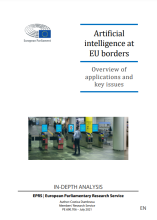
This paper provides an overview of EU initiatives on developing and deploying artificial intelligence (AI) technologies to improve border control and border security.
The Academy of European Law (ERA) organizes its annual conference on EU Border Management between 9 June 2021 and11 June 2021.
On 2 June 2021, the European Commission presented its new Schengen Strategy, which was accompanied by a proposal to revise the Schengen evaluation and monitoring mechanism.
On the 9th of May, the European Union celebrates 'Europe Day'. This day commemorates the date of the Schuman Declaration, which was the starting point for today’s European Union.
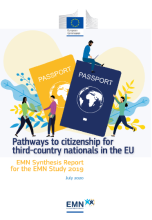
Integration through acquisition of citizenship has become an important topic in many EU Member States in recent years, as the number of new migrants arriving in the EU has increased in recent years. The EMN study found that citizenship is seen by Member States as either the culmination of the integration process or as facilitating the integration process. However, in most Member States, third-country nationals are not actively encouraged to apply for citizenship.
On 10 December 2019, EMN Belgium organises its annual asylum and migration policy event in which recent national and EU developments in the field of international protection, legal migration and integration and irregular migration and return will be discussed.
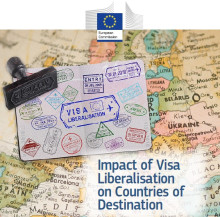
This EMN study aims to identify challenges, best practices and positive experiences in different Member States and Norway on the impact of visa liberalisation. The study covers Western Balkan and Eastern Partnership countries which have successfully concluded visa liberalisation dialogues according to the relevant action plans and roadmaps.
Today, the Commission is expanding on the concept of controlled centres as well as short-term measures that could be taken to improve the processing of migrants being disembarked in the EU, and giving a first outline of the possible way forward for the establishment of regional disembarkation arrangements with third countries.
In this annual report Myria analyses the current migration and tests policy and practice against respect for fundamental rights. Myria draws conclusions and formulates policy recommandations.
On the 31st of May and 1st of June, the Bulgarian Contact Point of the EMN - in the framework of the Bulgarian Presidency of the Council - organized the EMN Annual Conference. The conference was dedicated to challenges and success factors in managing migration flows.
On the 31st of May and 1st of June, the Bulgarian Contact Point of the EMN - in the framework of the Bulgarian Presidency of the Council - organizes the EMN Annual Conference. The conference will be dedicated to the following topic: challenges and success factors in managing migration flows.
This publication takes stock of recent EU developments in the area of asylum, borders and external cooperation on migration.