In the Czech Republic, a marriage can, under the current legislation, only take place if both parties have legal residence on the territory. By launching this ad hoc query, the Czech National Contact Point (NCP) to the European Migration Network (EMN) wanted to know more about the existing practices in other Member Countries.
27/02/2023
This Inform explores which national strategies, successful programmes and initiatives have been implemented in the EMN Member Countries to enhance the prospects for displaced persons in non-EU first reception and transit countries, and how these strategies have been integrated within existing EU and international frameworks and agreements.
Theme:
Publication type:
Keywords:
27/01/2023
Have Member States created municipal level centres where foreigners can receive the main migration and integration services in one place? This ad hoc query examines who are the actors involved and the services offered and to what extent foreigners are satisfied about such services.
Theme:
Publication type:
Keywords:
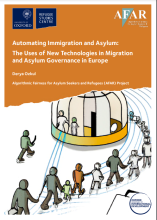
23/01/2023
This report maps out the existing uses of new technologies across European immigration and asylum systems both at the national and the EU level. It is the first outcome of the Algorithmic Fairness and Asylum Seekers and Refugees (AFAR) Project, funded by the Volkswagen Foundation.

20/01/2023
Most EMN Member and Observer Countries reported pressures and challenges in housing applicants for international protection between 2017 and 2021. This inform highlights the challenges encountered and best practices for responding to the emergency.
Theme:
Publication type:
Keywords:
18/01/2023
ICMPD’s Migration Outlook presents a brief analysis of recent migration and policy trends and provides an outlook on developments and events to watch out for in 2023. In particular, it highlights ten migration issues to look out for in 2023.
Theme:
Publication type:

22/12/2022
How do medium-sized cities deal with the newcomers, the “international talent”? This book focuses on “incoming” internationalization driven by the attraction, facilitation, and integration of skilled migrants in urban settings, taking a policy perspective.
22/12/2022
This ad hoc query, launched by Luxembourg, examines what guidelines, procedures, and possible best practices are in place when LGBTIQ+ individuals are detained.
Theme:
Publication type:
Keywords:
20/12/2022
Fedasil, the Belgian Reception Agency, aims to harmonise the use of interpreters in its reception facilities. This ad hoc query examines if Member States have established guidelines or instructions on the use of interpreting services and how these services are provided in reception facilities.
07/12/2022
Myria, the Federal Migration Centre and independent national rapporteur on trafficking in human beings, published its independent and public annual report "Trapped by debt" on 7 December 2022.
Theme:
Publication type:
04/12/2022
Have Member States planned to extend or issue new documents certifying the right of residence to beneficiaries of temporary protection whose certificates/visas/residence permits issued in 2022 are going to expire on 4 March 2023? This ad hoc query explores how Member States will address this, taking into account the large number of Ukrainians concerned.
Theme:
Publication type:
Keywords:
24/11/2022
What measures, structures and systems are in place in the EU Member States and Norway to provide transitional support to unaccompanied minors after reaching the age of majority? This new EMN inform investigates the transition that unaccompanied minors face as they age out of care systems in the EU and Norway.
23/11/2022
According to the United Nations High Commissioner for Refugees (UNHCR), as of 15 November 2022, more than 7.8 million people have left Ukraine in search of safety, arriving primarily in neighbouring European Union (EU) and third countries. These Informs analyse the arrangements European Union (EU) Member States have put in place for accommodation and housing and access to specific services namely social benefits, education, employment, and healthcare for beneficiaries of temporary protection, in the context of the activation of the Temporary Protection Directive (TPD) (2001/55/EC), triggered in response to Russia’s invasion of Ukraine on 24 February 2022.
Theme:
Publication type:
Keywords:
18/11/2022
This discussion paper stands against the immigration detention of minors, even used as a measure of last resort, and calls for implementing meaningful alternatives to detention during return procedures. It also recommends mandating the collection of data on this matter.
Theme:
Publication type:
Keywords:
18/11/2022
This 40th Quarterly (used to be named Bulletin) of the European Migration Network (EMN) offers an overview of EU and national developments in asylum and migration policy as well as an overview of key statistics, plus related EMN outputs and developments for the period July to September 2022.
Theme:
Publication type:
26/10/2022
Are the Member States providing any support measures to Ukrainian citizens wishing to go back to Ukraine on a voluntary basis? This ad hoc query launched by Estonia examines the current measures as well as possible plans, including to develop long-term support measures/programs for Ukrainians who wish to voluntarily go back to Ukraine.
25/10/2022
Unaccompanied minors who have little or no perspective of receiving a residence permit within EU Member States, may have co-existing problems such as mental health issues or substance addiction. This ad hoc query examines how EU Member States deal with this specific group and how they could improve the reception and supervision of these young persons.
Theme:
Publication type:
Keywords:
20/10/2022
In 2022, Belgium was subject to the third evaluation round of the implementation of the Council of Europe Convention on Action against Trafficking in Human Beings. This report analyses in detail how the Belgian authorities ensure access to justice and effective remedies for victims of trafficking in human beings.
Theme:
Publication type:
Keywords:
19/10/2022
How do other EU Member States, and Georgia, recognise diplomas obtained in third countries? This ad hoc query, that Belgium launched in July 2022, focused on the (i) institutional landscape for diploma recognition throughout Europe, (ii) the role of Public Employment Services in this recognition and (iii) best practices that the responding States wanted to share regarding their diploma recognition practices, specifically in the context of the Ukrainian crisis. 20 countries answered the query.
20/09/2022
This ad hoc query mainly collects information on calculation methods used to determine the necessary reception capacity for applicants for international protection and on the flexibility measures developed in case of shortage or surplus. It also examines how EMN Member and Observer Countries organise the outflow of beneficiaries of international protection and rejected applicants for international protection to housing and other forms of accommodation.
Theme:
Publication type:
Keywords:

16/09/2022
What bilateral readmission agreements exist between EU Member States, Norway and third countries to facilitate the return of migrants staying irregularly on the EU territory? This EMN inform aims to map these agreements and understand how they work.
Theme:
Publication type:
12/09/2022
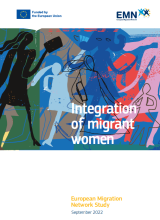
To what extent do Member States consider the distinct situation of migrant women in their integration policies and measures? This study focuses on the main areas covered by the EU Action plan on Integration and Inclusion 2021-2027 that support the integration of migrant women for example in education and training, employment and skills, health and housing as these are considered by the Action Plan the base for societal integration.
08/09/2022
How do Member States regulate the mobility and residence of persons already granted international protection status in another Member State? What are the applicable rules for transfer of responsibility of a beneficiary of international protection?
Theme:
Publication type:
24/08/2022
In the context of migration, detention is permitted and regulated by a strict European legislative framework. Recognising the severity of the measure against the right to liberty and in order to enhance the safeguards for vulnerable persons, Member States rely increasingly on alternatives to detention. Alternatives to detention are often considered to be less resource-intensive, less intrusive for the individual, and more effective at reducing pressure on national detention systems, but their implementation comes with a series of challenges.
19/08/2022
The Country Factsheet provides a brief summary of the main developments in migration and international protection in Belgium in 2021, including the latest statistics.