The European Union Agency for Asylum (EUAA) has published its Asylum Report 2026, providing an overview of asylum-related developments across EU+ countries in 2025 and early 2026. The report examines key policy, legislative and operational changes in the field of asylum against a backdrop of ongoing conflicts and geopolitical developments. It also analyses how EU+ countries prepared for the implementation of the Pact on Migration and Asylum.
Main Theme: Asylum
Keywords: asylum applications, asylum decisions, asylum trend

On 26 May 2026, EMN Belgium gathered over 130 key stakeholders in the fields of asylum and migration. This event also marked the launch of the Belgian Asylum and Migration Overview 2025, which highlights the principal developments in asylum and migration in Belgium over the previous year. The diverse audience of experts engaged in reflection and discussion on recent trends in the field, as well as on strengthened cooperation within the Belgian asylum and migration system. The day also included breakout session on key topics, alongside informal networking to build connections and inspire new collaborations.
Main Theme: Cross-sectional, Asylum, Migration
Keywords: annual EMN policy event
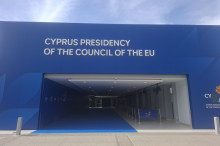
EMN Belgium participated in the EMN Cyprus High-Level Presidency Conference, “Taking stock of the Pact on Migration and Asylum: turning strategy into reality”, held in Nicosia on 19 and 20 May 2026.
The European Commission has updated its assessment of preparations for the Pact on Migration and Asylum ahead of its full application in June 2026. While most Member States have made progress in adapting legal and operational frameworks, significant gaps remain in key areas. These include border procedures, reception capacity, asylum processing, return systems and solidarity mechanisms. The Commission stresses that sustained efforts will be required beyond June to ensure full operational readiness.
Main Theme: Cross-sectional, Asylum, Migration
Keywords: New Pact on Migration and Asylum, implementation

On 6 May, the United Nations Human Rights Council reviewed Belgium under the Universal Periodic Review (UPR), a peer-review mechanism assessing the human rights situation in all UN Member States. The review examined the implementation of previous recommendations and the current situation across a range of policy areas, including asylum, migration and detention.
Main Theme: Cross-sectional, Asylum, Migration
Keywords: Universal Periodic Review, Belgium, human rights
On 22 April 2026, the Belgian Federal Ombudsman published its annual report for 2025. The institution recorded a further increase in the number of cases handled, with migration-related issues remaining the main source of complaints. The report highlights recurring concerns linked to administrative procedures, in particular in the field of visas and residence-related decisions.
Main Theme: Cross-sectional, Asylum, Migration
Keywords: federal ombudsman, complaint, visa, family reunification

Belgium is advancing plans to consolidate its asylum and migration services under a single Federal Public Service (FPS) Migration. The initiative aims to create a unified administrative framework for managing asylum and migration processes. The governance model for the new service was approved by the Council of Ministers to structure its internal organisation.
Main Theme: Cross-sectional, Asylum, Migration
Keywords: Federal Public Service Migration, Belgium, coordination, centralisation

The Council of Ministers approved, at second reading, two draft bills aimed at implementing the European Pact on Migration and Asylum in Belgian law. The texts were adopted with a view to their submission to the Chamber of Representatives of Belgium under an urgent procedure. The first draft bill aims to apply or transpose eight legislative instruments of the Pact into Belgian law, while the second concerns procedures before the Council for Alien Law Litigation.
Main Theme: Cross-sectional, Asylum, Migration
Keywords: New Pact on Migration and Asylum, implementation, transposition, Belgian law
The medical office run by Médecins du Monde within the Humanitarian Hub in Brussels will cease its activities on 31 March 2026. The closure follows the recent shutdown of the Athena Medical Centre. According to the organisation, this will further reduce access to primary healthcare for vulnerable groups in the capital. Médecins du Monde has warned of likely consequences for emergency services and for people with limited access to care.
Main Theme: Vulnerable groups, Asylum, Migration
Keywords: Humanitarian Hub, Brussels, access to healthcare, vulnerable persons

The Council of Europe’s Division on Migration and Refugees published a Frequently Asked Questions document on 12 February 2026, explaining how the European Convention on Human Rights (ECHR) applies to migration issues. It clarifies which rights are relevant to non-nationals, how national authorities retain discretion over entry and stay, and the limited circumstances under which the European Court of Human Rights (ECHR) may intervene. The document also provides data on immigration-related cases processed over the past decade.
On 9 February 2026, the Minerva think tank published a report assessing the economic and demographic impacts of current asylum and migration policies in Belgium, while also considering comparative cases in other European countries. It examines how policy choices in this field interact with labour market needs, demographic trends and public finances, and explores potential medium- to long-term effects associated with different policy approaches. The publication contributes to the broader policy debate by presenting available data and modelling selected scenarios.
Main Theme: Cross-sectional, Asylum, Migration
Keywords: asylum policy, migration policy, labour market, demography, population ageing, welfare
On 4 February 2026, Human Rights Watch published World Report 2026, its annual review of human rights worldwide. In a chapter on the European Union, the report highlights concerns that EU policies and Member State actions may undermine the rights of migrants, refugees, and asylum seekers. It notes, inter alia, restrictions on access to asylum, measures aimed at increasing removals, and the transfer of responsibility to third countries. The report also draws attention to human rights issues at EU borders and deaths at sea.
Main Theme: Cross-sectional, Asylum, Migration
Keywords: asylum policy, migration policy, return regulation, human rights, rights violations
On 29 January 2026, the European Commission presented the first European Asylum and Migration Management Strategy, setting out the Union’s objectives on asylum and migration for the next five years. The Strategy identifies three overarching objectives: preventing irregular migration and disrupting smuggling networks; protecting people fleeing conflict and persecution while preventing abuse of the asylum system; and attracting talent to support the EU economy. It also outlines a set of priorities to guide EU action in the coming years.
On 1 January 2026, Cyprus assumes the Presidency of the Council of the European Union for six months. The Presidency’s programme includes the implementation of the EU Pact on Migration and Asylum, the efficiency of asylum and return systems, and cooperation with third countries. International organisations have issued recommendations to the Cyprus Presidency on migration and asylum.
Main Theme: Cross-sectional, Asylum, Migration
Keywords: Cyprus, presidency, Council of the European Union

As 2025 comes to a close, the EMN Belgium team warmly thanks you for your continued interest in and engagement with the work of the European Migration Network. Your active participation has been essential in supporting exchanges and fostering a shared understanding of key developments and challenges in asylum and migration.
Main Theme: Cross-sectional, Asylum, Migration
Keywords: holiday season greetings, EMN Belgium, New Year wishes

The Belgian Council of Ministers has taken note of a strategic vision for the reorganisation and centralisation of the federal administrative landscape. The plan foresees the regrouping of asylum and migration services under a dedicated Federal Public Service (FPS) Migration. The Council of Ministers has approved a timeline for the reorganisation and centralisation and has tasked the Minister for Public Administration with overseeing its implementation.
Main Theme: Cross-sectional, Asylum, Migration
Keywords: federal administration, Belgium, Federal Public Service Migration
The Council of the European Union has formally adopted the Annual Solidarity Pool for 2026 under the EU Pact on Migration and Asylum. The mechanism aims to support Member States under migratory pressure through relocation of asylum seekers, financial contributions and alternative solidarity measures. Belgium has committed around €12.9 million to the pool.
Main Theme: Cross-sectional, Asylum, Migration
Keywords: solidarity pool, New Pact on Migration and Asylum, relocation, financial contribution
EU Home Affairs Ministers have reached a political agreement on the 2026 solidarity pool, a central component of the Pact on Migration and Asylum. The deal sets binding targets of 21.000 relocations or €420 million in contributions, aimed at supporting Member States under migratory pressure. Greece, Cyprus, Italy and Spain are identified as beneficiaries once the Pact becomes applicable in June 2026. The agreement marks a step forward for the solidarity dimension of the Pact, although its practical impact will depend on future implementation.
Main Theme: Cross-sectional, Asylum, Migration
Keywords: solidarity pool, New Pact on Migration and Asylum, migratory pressure, relocation, financial contribution
The EMN Steering Board has voted on the topics to be analysed in studies and informs in 2026. In total, two studies and eight Informs will be developed next year. A Belgian proposal entitled "Enhancing Identity Management and Fraud Prevention in Migration Processes" was ranked first following the vote.
Main Theme: Cross-sectional, Asylum, Migration
Keywords: European Migration Network, study topic
The European Commission has launched the first Annual Migration Management Cycle under the Pact on Migration and Asylum. The cycle provides an annual overview of migration and asylum in the EU and identifies pressures on Member States. It includes the European Annual Asylum and Migration Report, a Commission decision on Member States’ migratory situations, and a proposal for the Annual Solidarity Pool.
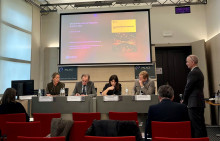
At the occasion of the publication of the 49th edition of the International Migration Outlook, the OECD organised a launch event including a press conference and a high-level panel discussion. Discussions revolved around the key findings of the report and the future outlook of migration in the EU.
Main Theme: Cross-sectional, Asylum, Migration
Keywords: international migration trend

On 30 September 2025, at the invitation of Enabel, EMN Belgium had the opportunity to present the specific features of its network-based approach to representatives from Côte d’Ivoire and Mauritania, who visited Belgium as part of an exchange visit focused on inclusion and (re)integration.
Main Theme: Cross-sectional, Asylum, Migration
Keywords: EMN Belgium, network
The Fedasil Info Point in Brussels has been supporting asylum seekers and other migrants for two years, providing accessible and centralised information in one location. Since reopening on 27 September 2023 at the former Bordet Hospital site, it has welcomed over 22.000 visitors, mostly single men with ongoing asylum procedures. Visitors most frequently ask about accommodation, medical care, legal support, and other practical matters. Partners such as Caritas International and the European Union Agency for Asylum (EUAA) assist in providing guidance and support.
Eurostat data show that in 2024, the EU issued 3.5 million first residence permits to non-EU citizens, marking an 8.3% decrease compared with 2023, which had recorded the highest number to date. Employment remained the main reason for granting residence permits, while student permits continued to increase slightly.
Main Theme: Data & Statistics, Asylum, Migration
Keywords: Eurostat, first residence permit

Myria is hiring a full-time Policy Officer (2-year contract) to support the Belgian Contact Point of the European Migration Network (EMN). The role focuses on economic migration and family reunification. You will contribute to English-language reports, studies, and EU-level policy work. The position is based in Brussels, with Myria as the employer.