During the High Level Forum to protection and resettlement cooperation, 16 EU Member States pledged more than 29.000 places for resettlement and humanitarian admission for 2023, including continued and expanded support to Afghans in need of protection.
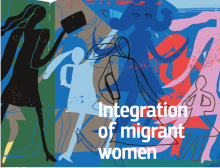
17/11/2022
How to guide migrant women towards integration services and the labour market more effectively? The conference of EMN Finland will tackle the challenges related to employment of migrant women. Solutions will be sought from best practices in Finland and abroad.
23/11/2022
According to the United Nations High Commissioner for Refugees (UNHCR), as of 15 November 2022, more than 7.8 million people have left Ukraine in search of safety, arriving primarily in neighbouring European Union (EU) and third countries. These Informs analyse the arrangements European Union (EU) Member States have put in place for accommodation and housing and access to specific services namely social benefits, education, employment, and healthcare for beneficiaries of temporary protection, in the context of the activation of the Temporary Protection Directive (TPD) (2001/55/EC), triggered in response to Russia’s invasion of Ukraine on 24 February 2022.
Theme:
Publication type:
Keywords:
25/10/2022
Unaccompanied minors who have little or no perspective of receiving a residence permit within EU Member States, may have co-existing problems such as mental health issues or substance addiction. This ad hoc query examines how EU Member States deal with this specific group and how they could improve the reception and supervision of these young persons.
Theme:
Publication type:
Keywords:
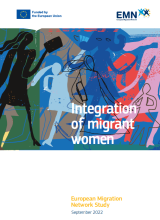
12/09/2022
To what extent do Member States consider the distinct situation of migrant women in their integration policies and measures? This study focuses on the main areas covered by the EU Action plan on Integration and Inclusion 2021-2027 that support the integration of migrant women for example in education and training, employment and skills, health and housing as these are considered by the Action Plan the base for societal integration.
08/09/2022
How do Member States regulate the mobility and residence of persons already granted international protection status in another Member State? What are the applicable rules for transfer of responsibility of a beneficiary of international protection?
Theme:
Publication type:

05/07/2022
What are the challenges migrants face in accessing mental health services, and how are Member States addressing them? This inform maps the policies in place to help legally-residing migrants access mental health services.

06/06/2022
Did Member States suspend decision-making on applications for international protection from Afghan nationals when the Taliban took over the control of Afghanistan in August 2021? This ad hoc query launched by Belgium examines the nature and consequences of such suspension in terms of hearings, protection statuses etc.
10/01/2022
This comparative report provides an overview of the use of digital tools and remote working methods in asylum processes in 23 European countries. It questions the risks and benefits of such use and highlights several fundamental guarantees and procedural safeguards which must continue to apply to ensure that they do not infringe the existing CEAS framework.
01/11/2021
The EMN has collected data on statelessness from across EU Member States and Georgia to assess progress, draw key findings on the state of play, and provide an overview of how statelessness is addressed.

14/10/2021
Theme:

07/05/2021
From 7 until 9 July 2021, the International Migration, Integration and Social Cohesion in Europe (IMISCOE), a European network of scholars in the area of migration and integration, will hold its annual conference. The event, entitled "Crossing borders, connecting cultures", will be held entirely online.
Theme:
Type:

01/07/2020
In 2003, the Council adopted the Long-Term Resident Directive 2003/109/EC in order to promote the integration of third-country nationals in legal stay in the EU. Fourteen years after its entry into force, EMN Luxembourg conducted a study on the implementation of the Directive in 23 EU Member States, including Belgium.

11/06/2020
On 25 June 2020, the European Asylum Support Office (EASO) will launch the 2020 edition of its annual flagship EASO Asylum Report. Due to the COVID-19 situation, this year EASO will be holding an online event to present and discuss the findings of the report, as well as developing asylum trends in the EU.
18/06/2020
Because of the COVID-19 pandemic, personal interviews of applicants for international protection at the CGRS were stopped in March. They were started again in June. To improve the safety of staff and applicants, a video with practical instructions was created.

06/11/2019
On 10 December 2019, EMN Belgium organises its annual asylum and migration policy event in which recent national and EU developments in the field of international protection, legal migration and integration and irregular migration and return will be discussed.
05/11/2019
This study aims to analyse the possible consequences on international protection status for individuals who travel to or contact the authorities in their country of origin.
Theme:
Publication type:
Keywords:

25/10/2019
The conference 'From Tampere 20 to Tampere 2.0: Towards a new programme (2020-2024) for EU migration and asylum policies 20 years after the Tampere conclusions?' was held in Helsinki on the 24th and the 25th of October.

25/10/2019
On 22 October 2019, the Association of Flemish Cities and Municipalities (VVSG) published the results of the survey conducted in the spring of 2019. The results show that especially the search for housing for beneficiaries of international protection is very problematic. The regulations state that, in principle, they must leave the Local Reception Initiative (LOI) within two months. As in the VVSG survey of 2017, half of the respondents do not consider this period to be feasible. For almost 1 in 5, finding housing within this timeframe very exceptionally the case, and only thanks to the possibility to extend the stay in the LOI twice by 1 month.

26/07/2019
This report provides a quantitative overview of migration in rural areas for the entire EU. It contributes to raising awareness of the poorly studied phenomenon of migration to EU rural areas, which is often neglected in research and policies.
Theme:
Publication type:
Keywords:
04/07/2019
EMN Belgium publishes a study on the socio-economic integration of people granted international protection in Belgium between 2001 and 2014. This report links administrative longitudinal data from the National Register and the Data Warehouse Labour Market and Social Protection.
Theme:
Publication type:
Keywords:

07/05/2019
On May 27, the Organisation for Economic Co-operation and Development, European Commission and European Migration Network organise the International Conference “A New European Agenda on Migration?”. During this event, experts will share their views on the achievements, challenges and perspectives of integration and migration policies in Europe.
01/05/2019
This MPI Europe report explores the various forms of predeparture orientation programs offered by resettlement countries. It focuses on important design questions and identifies a set of features shared by effective programs.
Theme:
Publication type:
Keywords:

15/04/2019
A new report published by the Friedrich Ebert Stiftung shows how attitudes across Europe have changed before and after the 2015 migration ‘crisis’ and tries to explain what has driven those changes. Using data from the European Social Survey, the report’s authors find that, overall, perceptions of migration have remained both neutral and stable before and after the ‘crisis’. But there are a few countries that have become significantly more positive about migrants, as well as a few that have become significantly more negative.
26/02/2019
25 (Member) States provided information on inter alia the existence of civic integration policies, whether or not participation in a civic integration programme is compulsory for recognised refugees, and possible sanctions for refusing to follow such a programme.