This ad hoc query examines where applicants for international protection (and beneficiaries of temporary protection) with special needs are accommodated. When accommodated in regular reception centres, the query explores the services provided in-house and the professionals employed in this regard. When applicants are accommodated in specialised facilities, the placement procedure is examined, including which stakeholders are involved and their respective roles and responsibilities. It also covers how these financial costs are borne.
11/10/2025
Theme:
Publication type:
Keywords:
30/09/2025
On 30 September 2025, seven organisations, including humanitarian groups, published the fifth edition of their Belgian report on the country’s non-reception policy and its effects on asylum seekers. The report provides data on reduced access to accommodation and essential services during the first half of 2025, following policy changes introduced by the coalition government formed in January. It documents impacts on housing, healthcare, mental health, and legal support for people seeking international protection.
26/09/2025
This Inform examines how international protection applicants and accommodation centres are distributed across 23 EMN Member Countries and Serbia, and how such policies are governed and managed. It compares approaches, criteria and mechanisms used by different countries, highlighting both challenges and good practices. The study also looks at how local communities and stakeholders are informed and engaged in the process. Finally, it identifies opportunities for further collaboration to support effective reception and integration.
Theme:
Publication type:
Keywords:

17/09/2025
The Committee of Ministers of the Council of Europe examined the execution of the European Court of Human Rights judgment in Camara v. Belgium. The case highlighted a systemic failure to enforce judicial decisions ordering the State to provide accommodation and material support to asylum-seekers. While some progress has been made in freeing up reception places and improving operational support, concerns persist over reductions in capacity and the risk to the rule of law. The Committee urged the Belgian authorities to adopt sustainable measures and provide detailed information on enforcement.
Theme:
Type:
Keywords:
08/08/2025
A European pilot project is underway to improve access to sustainable housing for beneficiaries of international protection and beneficiaries of temporary protection. Running from November 2024 to October 2027, PATHS brings together IOM, Orbit and Fedasil in Belgium, with partners in France and Greece. The initiative focuses on preventing homelessness through housing platforms, stronger intermediary organisations and greater engagement with property owners.
23/07/2025
On 23 July, Belgium officially published two new laws aimed at reducing the burden on international protection procedures and limiting access to reception for certain applicants. In particular, these laws redefine which applications are considered subsequent by including those who have already received protection or a final decision in another EU country, and they limit access to reception facilities and material assistance for this group. The laws reflect the government’s intention to streamline asylum processing and manage reception capacity effectively.
23/07/2025
The Dutch Council of State has ruled that single male asylum seekers may no longer be transferred to Belgium under the Dublin Regulation. The judgment cites systemic failures in Belgium’s reception and legal protection for this group, exposing them to a real risk of inhuman treatment. These individuals must now remain in the Netherlands while their asylum claims are processed.
Theme:
Type:
Keywords:
22/07/2025
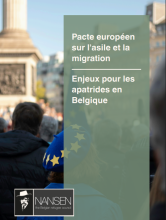
The European Pact on Asylum and Migration, adopted in May 2024, introduces binding obligations for EU Member States, including Belgium, on the identification and protection of stateless persons. The Nansen report highlights the specific challenges faced by stateless persons in Belgium and offers key recommendations to ensure their effective access to international protection.
Theme:
Keywords:
12/06/2025
Fedasil has announced a further reduction in the number of reception places for unaccompanied foreign minors (MENA), with 279 places set to be withdrawn from the network by 1 September 2025. The measure, approved in April, comes in response to the continuing decline in arrivals observed since 2023. Most of the places concerned will be converted into generic reception places.
17/05/2025
On 17 May, the International Day Against Homophobia, Biphobia and Transphobia (IDAHOBIT), the organisation Prisme has disclosed a set of recommendations highlighting the challenges faced by LGBTQIA+ individuals seeking international protection in Belgium. These findings point to several shortcomings in the reception and asylum system and outline measures to ensure more inclusive procedures.
24/04/2025
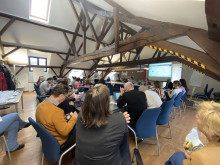
During a lunch & learn session, the EMN Belgium team met with around 30 Fedasil staff members to present the work of the European Migration Network, encourage active participation in the national network, and provide updates on recent and upcoming publications and activities.

11/04/2025
In a judgment issued on 11 April 2025, the District Court of The Hague, sitting in Groningen, found that single, non-vulnerable male asylum seekers face a real risk of being deprived of adequate reception facilities in Belgium, which could lead to inhumane or degrading treatment. This ruling follows previous decisions by Dutch judges who determined that Dublin transfers to Belgium could not be carried out due to insufficient guarantees of proper accommodation.
Theme:
Type:
Keywords:
07/04/2025
Last year, Fedasil’s mobile and multilingual Reach Out team provided information to 1.702 migrants in precarious situations in Brussels and Flanders. Representing more than 75 nationalities, these individuals received counselling on a wide range of topics, from international protection and reception to healthcare, employment, and voluntary return.
02/04/2025
In a new report, Amnesty International urges the Belgian government to ensure that all people seeking asylum are given adequate housing and that they have access to adequate healthcare services, including specialised psychological support, regardless of their housing situation. Belgian authorities are also called to activate the "dispersal plan" outlined in domestic law and implement contingency plans to manage fluctuations in the number of asylum applications.
Theme:
Type:
Keywords:

25/03/2025
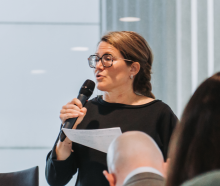
On 25 March 2025, the Belgian Contact Point to the European Migration Network (EMN) participated in a study morning dedicated to the presentation of a new tool: "The Reception Centre as Seen by Children." The new tool provides practical methods for capturing children's experiences, enabling professionals to better understand their needs and enhance the quality of care in these centres.
18/03/2025
The Minister for Asylum and Migration has decided to discontinue the Impuls Fund, which had been established to provide additional support to local authorities in covering the extra costs associated with opening new Local Reception Initiatives. The Minister will now move towards a more collective approach to reception, with existing Local Reception Initiatives being gradually phased out.
17/03/2025
In their report 2024, seven humanitarian and civil society organisations raise concerns over the Belgian government's plan to reduce reception places for applicants for international protection, warning that this measure could increase homelessness, negatively impact individuals' health and integration prospects, and generate significant hidden costs for society.

14/02/2025
The European Network on Statelessness organises an annual webinar to provide participants with a state of play on statelessness in Europe and an opportunity to learn about the latest developments.
16/02/2025
This ad hoc query examines whether EMN Member and Observer Countries use mechanisms to verify that applicants are genuinely residing in the allocated accommodation. It explores how these mechanisms are implemented, whether vulnerability criteria are considered, and the rules for determining if accommodation has been abandoned and if residents can challenge such assessments. It also looks into whether these mechanisms have led to legal challenges, particularly regarding data protection.
Theme:
Publication type:
Keywords:
11/02/2025
Fedasil revealed that Belgium resettled 487 people in 2024, exceeding the 287 resettled in 2023. The refugees resettled in 2024 mainly came from countries such as Syria, Congo, Eritrea and Sudan.
14/01/2025
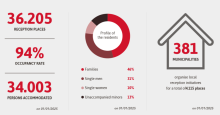
While Belgium continues to face a reception crisis, ongoing since the summer of 2021, the latest figures from Fedasil show that the number of places for asylum seekers made available by municipalities continues to decrease.
Theme:
Type:
Keywords:
21/12/2024
This ad hoc query explores the legal frameworks and practices of EMN Member Countries to understand how they link reception conditions to whether an asylum seeker is legally employed.
Theme:
Publication type:
Keywords:
03/12/2024
On the occasion of the 70th anniversary of the International Convention relating to the Status of Stateless Persons, UNHCR and NANSEN organise a study day on statelessness. Particular emphasis will be placed on the rights of stateless persons and the specific procedures applicable in Belgium, in particular the new residence procedure for stateless persons.
05/12/2024
On the occasion of International Volunteer Day, Fedasil highlights the importance of volunteers who give their time to residents in reception centres and of sponsors who create links with these residents outside of the centres. If you have free time, join them and contact a reception centre in your neighbourhood!
28/11/2024
Myria has published the fifth thematic section of its 2024 annual report. In this section, entitled « International protection », Myria pays particular attention inter alia to the new residence procedure for stateless persons. The Federal Migration Centre underlines that the new procedure is subject to strict conditions and that it provides reduced procedural guarantees for stateless persons.