The Belgian Council of Ministers has approved a draft bill aimed at strengthening rules on labour migration and improving the framework for highly qualified non-EU workers. The proposal includes measures aimed at strengthening the fight against fraud linked to labour migration, while also seeking to make the European Blue Card more attractive for highly qualified workers from outside the European Union. The draft bill also provides for additional protection for workers who are victims of certain social law infringements committed by employers. The text will now be submitted to the Council of State for advice.
07/05/2026
The Court of Justice of the European Union has ruled on the compatibility of a national residence requirement with EU equal treatment rules. The Court examined whether a 10-year residence condition could be applied to beneficiaries of international protection in order to access a social benefit. It found that the measure constitutes indirect discrimination prohibited under EU law.

07/05/2026
DUO for a JOB has launched a national awareness campaign highlighting the persistence of discrimination in recruitment processes in Belgium. The initiative uses the format of the well-known game “Guess Who?” to illustrate how candidates may still be excluded on the basis of appearance, name, origin or accent rather than skills. The campaign is being rolled out in May across public spaces, including stations and metro networks in several Belgian cities.
20/03/2026
On 20 March 2026, the Belgian Council of Ministers approved a draft law that would link the level of social assistance granted to beneficiaries of subsidiary and temporary protection to their participation in integration efforts through the Individual Social Integration Project (ISIP). Under the proposal, the amount of social assistance could be adjusted depending on the efforts made by the beneficiary to integrate.
EU Parliament backs EU Talent Pool to facilitate international recruitment for in-demand occupations
10/03/2026
The European Parliament has endorsed the creation of an EU Talent Pool, a digital platform designed to match job vacancies in participating Member States with job seekers from third countries. The initiative aims to support recruitment in sectors facing labour shortages while remaining subject to national immigration procedures and voluntary participation by Member States. While supporters highlight its potential to strengthen legal pathways for labour migration, trade unions have raised concerns about worker protection and safeguards. The proposal still requires formal adoption by the Council before entering into force.
13/02/2026
Flanders granted around 21.460 work permits to non-EU nationals in 2025, the highest level in recent years. Seasonal work and medium- to high-skilled positions accounted for a large share of the permits. New rules introduced in January 2026 give priority to domestic and EU labour before non-EU recruitment. Stakeholders, including employer organisations and political parties, have expressed differing perspectives on these developments.
29/01/2026
The documents set out key elements of the European Commission’s approach to managing international mobility to the EU. The EU Visa Strategy aims to strengthen the Union’s security and integrity through enhanced visa procedures, modernise the processing and management of visas, and support the EU’s economy and competitiveness by facilitating legitimate travel. Complementing this, the Recommendation on Attracting Talent for Innovation provides guidance to Member States on attracting, admitting, and retaining international students, researchers, highly skilled workers, and innovative entrepreneurs.
Theme:
Type:
Keywords:
01/01/2026
From 1 January 2026, the Onder1Dak project, which promotes co-housing between private homeowners and recognised refugees in Flanders, has restarted following renewed support from the Flemish Minister for Civic Integration and Integration. The initiative aims to facilitate access to housing while supporting the social and professional integration of recognised refugees.
23/12/2025
On 23 December 2025, the Belgian Council of Ministers approved a draft law linking social assistance to integration efforts. For recognised refugees, the draft law foresees that the Individual Social Integration Project (ISIP) should include, at a minimum, participation in an integration path. Other newcomers, including third-country students and economically inactive EU citizens, would now need to have legally resided in Belgium for five years before becoming eligible for social assistance.
Theme:
Type:
Keywords:
18/11/2025
On 18 November, the Council of the European Union and the European Parliament reached an agreement on the creation of a platform designed to facilitate the recruitment of non-European workers. The “EU Talent Pool” will connect employers established in the EU with non-EU jobseekers in sectors where Member States face labour shortages. Participation in the Talent Pool will be voluntary for Member States, and the platform will remain free of charge for both jobseekers and employers.
Theme:
Type:
Keywords:
31/10/2025
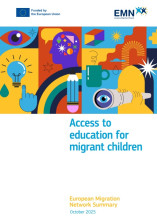
On 31 October 2025, the European Migration Network (EMN) released its latest Inform highlighting how 25 EMN Member and Observer Countries are addressing access to education for migrant children. The report shows that nearly all participating countries have adopted national measures to support linguistic, social, and emotional integration in schools. Despite persistent barriers, such as language difficulties and unequal learning outcomes, good practices are emerging across Europe, according to this Inform.
Theme:
Type:
Keywords:
29/09/2025
The Flemish government has decided that third-country workers – from outside the EU, Iceland, Liechtenstein, Norway and Switzerland – will follow a mandatory tailored integration trajectory from 2027. The initiative, proposed by Minister Hilde Crevits, will be delivered digitally and can be started in the country of origin or within six months of arrival in Flanders. The programme provides essential information on work, rights and responsibilities, and Flemish norms and values. Certain temporary or seasonal workers, students, and holiday-work participants are excluded.
Theme:
Type:
Keywords:
19/09/2025
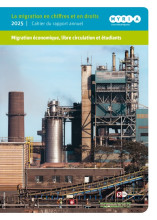
Myria, the Federal Migration Centre, has published a thematic report on economic migration, free movement and students as part of its annual report "Migration in figures and rights 2025". The publication explains trends in labour migration and study-related mobility. It shows that labour migration from outside the EU has slightly decreased, the share of third-country nationals among temporary postings has continued to grow, and student numbers are increasing.
Theme:
Type:
Keywords:
02/07/2025
In 2024, a total of 17.939 newcomers obtained an integration certificate in Flanders, according to the Jaarrapport Inburgering 2024. This is the highest number recorded since 2018 and marks a 16% increase compared to the previous year.
Theme:
Type:
Keywords:
27/06/2025
Nearly one in eight self-employed workers in Belgium do not hold Belgian nationality. This proportion rises to more than four in ten in the Brussels-Capital Region. An analysis of recent data from the National Institute for Social Security of the Self-Employed (INASTI) by the social insurance fund Acerta highlights these figures. The study also reveals differences in age, sector activity, and income between Belgian and non-Belgian self-employed individuals.
Theme:
Type:
Keywords:
06/06/2025
On 6 June 2025, the Flemish Government approved a communication advancing the development of pre-arrival integration trajectories for newcomers from their countries of origin. This step follows earlier pilot projects and aims to better prepare family reunification and labour migrants for life in Flanders through a digital societal orientation course.
08/05/2025
In 2024, 19.435 people participated in the Social Orientation (Maatschappelijke Oriëntatie, MO) course in Flanders. This marks a significant increase in participation. Alongside the rising numbers of participants in the Social Orientation course, the demand for Dutch as a Second Language (NT2) courses also remains high, as evidenced by recent reports from AMAL vzw, Atlas Antwerp, and the Agency for Integration and Civic Integration.
01/05/2025
On the occasion of Labour Day, Fedasil published new figures on the professional activity of applicants for international protection residing in reception centres. In 2024, 41% of those allowed to work were active on the Belgian labour market. The data show differences in employment rates depending on gender, age, and nationality.
Theme:
Type:
Keywords:
10/04/2025
The Education Department of Caritas International Belgium, in collaboration with the non-profit organisation Sankaa, has launched "Building Bridges", an educational resource for secondary school teachers. This resource helps educators address key topics such as identity, prejudice, racism, and media representation. At its core, "Building Bridges" explores the central question: How can we create a more supportive and inclusive society where everyone has a place?
Theme:
Type:
Keywords:

19/02/2025
About sixty Eritrean refugees gathered in front of the Town Hall in Ghent to draw the authorities' attention to the impact of the housing crisis on their situation and integration prospects. The authorities expressed their intention to find solutions but called on Minister of Asylum and Migration Anneleen Van Bossuyt to address this issue together. They also stated that they would consider a European response to this widespread problem.
04/02/2025
In a recent judgment, the Court of Justice of the European Union (CJEU) held that national legislation may oblige beneficiaries of international protection to pass a civic integration examination. However the fact of having failed such an examination cannot be systematically penalised by a fine.
29/01/2025
The European Commission has developed a new interactive tool to map labour migration pathways across the 27 EU Member States. It helps to visualise the 290 pathways that were active at the time of the research and updated to February 2024.
Theme:
Type:
Keywords:
19/12/2024
In a recent judgment, the Court of Justice of the European Union stated that a Member State cannot exclude from the benefit of family allowances a foreign worker whose children, born in a third country, cannot prove that they have entered its territory lawfully.
Theme:
Type:
Keywords:
30/09/2024
Myria has published the fourth thematic section of its 2024 annual report. In this section, entitled « Economic migration, free movement and students » Myria notes that more third-country nationals were posted to Belgium in 2023 than in 2022. Posted workers from third countries are more vulnerable to exploitation than EU-based posted workers. Therefore, they urgently need increased legal protection, according to Myria.
19/09/2024
On 19 September 2024, EMN Belgium presented the findings of its national contribution to the upcoming EMN Study on the Illegal Employment of Third-Country Nationals (2017-2022), in a comparative perspective with the national contributions from EMN Austria and EMN Italy.