The Belgian Council of State has suspended the decision of the Minister of Asylum and Migration to limit material reception conditions for applicants for international protection who have already obtained protection in another EU Member State. In its judgment No. 267.364 of 8 July 2026, the Council of State suspended the measure following an urgent appeal introduced by several organisations active in the field of asylum and migration. The decision concerns a measure adopted following the entry into application of the European Pact on Migration and Asylum on 12 June 2026.
08/07/2026

13/05/2026
The Belgian Council of Ministers has approved a draft bill aimed at strengthening rules on labour migration and improving the framework for highly qualified non-EU workers. The proposal includes measures aimed at strengthening the fight against fraud linked to labour migration, while also seeking to make the European Blue Card more attractive for highly qualified workers from outside the European Union. The draft bill also provides for additional protection for workers who are victims of certain social law infringements committed by employers. The text will now be submitted to the Council of State for advice.
Theme:
Type:
Keywords:
09/04/2026
On 9 April 2026, the European Court of Human Rights delivered its judgment in M.V. and Others v. Belgium and held that Belgium had violated several provisions of the European Convention on Human Rights in relation to the reception conditions of four applicants for international protection.
27/03/2026
The Belgian Council of State has suspended a ministerial instruction that systematically limited material assistance to international protection applicants who had already obtained protection in another EU Member State. The court ruled that the instruction exposed these individuals to the risk of severe hardship and potential homelessness. It also noted that, due to its regulatory character, the instruction should have been submitted for review by the Council of State’s Legislation Section.
Theme:
Type:
Keywords:

20/03/2026
Belgium plans to progressively return several defence sites used for the reception of applicants for international protection to military use as part of a broader plan to expand defence infrastructure towards 2040. The measure concerns around 4.000 reception places located on military premises across the country. Authorities state that the reduction in capacity can be absorbed within the existing reception network. The transition will take place gradually, with closures scheduled at different times depending on the site.

18/03/2026
The Netherlands has decided to resume Dublin transfers of single, non-vulnerable male asylum seekers to Belgium, following a period in which such transfers were suspended after a Dutch court ruling. In April 2025, the District Court of The Hague, sitting in Groningen, found that single male asylum seekers risked being deprived of adequate reception conditions in Belgium, which could expose them to inhumane or degrading treatment. The ruling led to a halt in transfers under the EU Dublin system.
Theme:
Type:
Keywords:
13/03/2026
Myria, the Federal Migration Centre, has advised against a draft law proposing to remove the legal possibility of activating a mandatory distribution plan for reception places in times of crisis. The plan allows the federal government to require municipalities to provide local reception initiatives according to objective allocation criteria. Myria stresses that this mechanism is important to safeguard human dignity and the right to reception, particularly during periods of structural shortages.
13/03/2026
CIRÉ, together with partner organisations, has lodged an urgent appeal at the Council of State challenging a ministerial instruction that continues to exclude asylum seekers who have already been granted protection in another EU member state from reception facilities. The move follows a recent temporary suspension of the measure by the Constitutional Court. CIRÉ argues the instruction undermines judicial authority and the rule of law.
Theme:
Type:
Keywords:
EU Parliament backs EU Talent Pool to facilitate international recruitment for in-demand occupations
10/03/2026
The European Parliament has endorsed the creation of an EU Talent Pool, a digital platform designed to match job vacancies in participating Member States with job seekers from third countries. The initiative aims to support recruitment in sectors facing labour shortages while remaining subject to national immigration procedures and voluntary participation by Member States. While supporters highlight its potential to strengthen legal pathways for labour migration, trade unions have raised concerns about worker protection and safeguards. The proposal still requires formal adoption by the Council before entering into force.

26/02/2026
The Belgian Constitutional Court has temporarily suspended legislative measures introduced in 2025 that tightened rules on material reception conditions for asylum seekers and family reunification for beneficiaries of subsidiary protection. The suspensions concern two separate laws, and the Court has referred several preliminary questions to the Court of Justice of the European Union (CJEU) to clarify their compatibility with EU law.

13/02/2026
Flanders granted around 21.460 work permits to non-EU nationals in 2025, the highest level in recent years. Seasonal work and medium- to high-skilled positions accounted for a large share of the permits. New rules introduced in January 2026 give priority to domestic and EU labour before non-EU recruitment. Stakeholders, including employer organisations and political parties, have expressed differing perspectives on these developments.
12/02/2026
Fedasil has released its management plan for 2025–2030. Approved in December 2025 and submitted by Director General Pieter Spinnewijn to the Minister for Asylum and Migration, the plan sets out the Agency’s priorities, including restoring the core functioning of the reception system, strengthening its capacity to respond to fluctuations in the number of applicants to be accommodated, and improving the quality, resilience, and effectiveness of services.
29/01/2026
The documents set out key elements of the European Commission’s approach to managing international mobility to the EU. The EU Visa Strategy aims to strengthen the Union’s security and integrity through enhanced visa procedures, modernise the processing and management of visas, and support the EU’s economy and competitiveness by facilitating legitimate travel. Complementing this, the Recommendation on Attracting Talent for Innovation provides guidance to Member States on attracting, admitting, and retaining international students, researchers, highly skilled workers, and innovative entrepreneurs.
Theme:
Type:
Keywords:
18/12/2025
In a judgment delivered in Case C-184/24 (Sidi Bouzid), the Court of Justice of the European Union has clarified the limits of sanctions that may be imposed on applicants for international protection who refuse to be transferred to another accommodation centre. The Court found that such a refusal cannot justify the withdrawal of all material reception conditions. While Member States may impose sanctions for serious breaches of reception rules, these must remain proportionate and respect the applicant’s dignity.
Theme:
Type:
Keywords:
16/12/2025
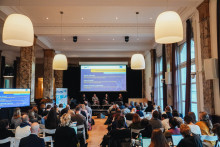
On 15 and 16 December 2025, EMN Belgium organised a conference in Brussels bringing together stakeholders from Belgium, EMN Member and Observer Countries, as well as European and international organisations. The event provided a forum to examine reception and support for applicants for international protection other than in-kind from legal, policy, and operational perspectives, exploring how these forms of support are organised, implemented, and linked to broader reception systems.
20/11/2025
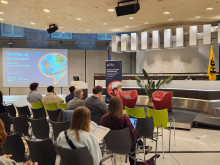
On 20 November 2025, EMN Belgium attended the launch of the annual report "Rechten op de drempel" by the Flemish Children’s Rights Commissioner, on the occasion of International Children’s Rights Day. The report highlights persistent challenges affecting foreign children and young people in reception centres, including disparities in living conditions, safety, hygiene, and access to basic needs.
Theme:
Type:
Keywords:
18/11/2025
On 18 November, the Council of the European Union and the European Parliament reached an agreement on the creation of a platform designed to facilitate the recruitment of non-European workers. The “EU Talent Pool” will connect employers established in the EU with non-EU jobseekers in sectors where Member States face labour shortages. Participation in the Talent Pool will be voluntary for Member States, and the platform will remain free of charge for both jobseekers and employers.
Theme:
Type:
Keywords:
13/11/2025
On 13 November 2025, several civil society organisations held a silent protest outside the Palais de Justice in Brussels to draw attention to the shortage of reception places for third-country nationals. Participants, including advocates, volunteers, and citizens, brought sleeping bags to symbolise people forced to sleep outdoors. The demonstration called for urgent measures to ensure that all individuals entitled to accommodation can access it.
Theme:
Type:
Keywords:
30/09/2025
On 30 September 2025, seven organisations, including humanitarian groups, published the fifth edition of their Belgian report on the country’s non-reception policy and its effects on asylum seekers. The report provides data on reduced access to accommodation and essential services during the first half of 2025, following policy changes introduced by the coalition government formed in January. It documents impacts on housing, healthcare, mental health, and legal support for people seeking international protection.

29/09/2025
The Flemish government has decided that third-country workers – from outside the EU, Iceland, Liechtenstein, Norway and Switzerland – will follow a mandatory tailored integration trajectory from 2027. The initiative, proposed by Minister Hilde Crevits, will be delivered digitally and can be started in the country of origin or within six months of arrival in Flanders. The programme provides essential information on work, rights and responsibilities, and Flemish norms and values. Certain temporary or seasonal workers, students, and holiday-work participants are excluded.
Theme:
Type:
Keywords:
19/09/2025
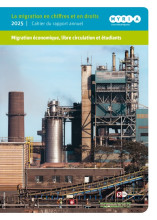
Myria, the Federal Migration Centre, has published a thematic report on economic migration, free movement and students as part of its annual report "Migration in figures and rights 2025". The publication explains trends in labour migration and study-related mobility. It shows that labour migration from outside the EU has slightly decreased, the share of third-country nationals among temporary postings has continued to grow, and student numbers are increasing.
Theme:
Type:
Keywords:

17/09/2025
The Committee of Ministers of the Council of Europe examined the execution of the European Court of Human Rights judgment in Camara v. Belgium. The case highlighted a systemic failure to enforce judicial decisions ordering the State to provide accommodation and material support to asylum-seekers. While some progress has been made in freeing up reception places and improving operational support, concerns persist over reductions in capacity and the risk to the rule of law. The Committee urged the Belgian authorities to adopt sustainable measures and provide detailed information on enforcement.
Theme:
Type:
Keywords:
08/08/2025
A European pilot project is underway to improve access to sustainable housing for beneficiaries of international protection and beneficiaries of temporary protection. Running from November 2024 to October 2027, PATHS brings together IOM, Orbit and Fedasil in Belgium, with partners in France and Greece. The initiative focuses on preventing homelessness through housing platforms, stronger intermediary organisations and greater engagement with property owners.
23/07/2025
On 23 July, Belgium officially published two new laws aimed at reducing the burden on international protection procedures and limiting access to reception for certain applicants. In particular, these laws redefine which applications are considered subsequent by including those who have already received protection or a final decision in another EU country, and they limit access to reception facilities and material assistance for this group. The laws reflect the government’s intention to streamline asylum processing and manage reception capacity effectively.
23/07/2025
The Dutch Council of State has ruled that single male asylum seekers may no longer be transferred to Belgium under the Dublin Regulation. The judgment cites systemic failures in Belgium’s reception and legal protection for this group, exposing them to a real risk of inhuman treatment. These individuals must now remain in the Netherlands while their asylum claims are processed.