
Publication date:
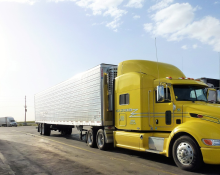
In a press release published on 27 January 2025, the Secretary of State for Asylum and Migration announced that Belgian authorities could organise the forced return of Afghans to Istanbul and that partners on the ground could then take them to Afghanistan. This collaboration and the budgets for it still need to be finalised by a new government.
Read more
Main theme: Return & Readmission
Keywords: forced return, Afghanistan
Publication date:
According to a report commissioned by the governor of West Flanders, a total of 632 transmigrants were caught in the province in 2024, while in 2023 there were fewer than 400. The province's share of interceptions also went up. West Flanders accounted for about 70% of all transit migrants intercepted in Belgium in 2024, compared to around 50% in previous years.
Read more
Main theme: Smuggling & Trafficking
Keywords: transmigrant, transit migrant, West Flanders

Publication date:
On 16 January 2025, the Office of the Commissioner General for Refugees and Stateless Persons (CGRS) released asylum statistics for the whole year 2024. According to the figures, 39.615 persons, mainly from Palestine, Syria, Afghanistan, Eritrea and Turkey, applied for international protection in Belgium. The Secretary of State for Asylum and Migration stressed that a large number of these applicants were already registered in another Member State.
Read more
Main theme: International Protection
Keywords: asylum applications, asylum decisions, asylum figures

Publication date:
With only 239 000 irregular crossings into the EU detected in 2024, Frontex reports the lowest number of irregular crossings since 2021, but warns about shifting dynamics and evolving challenges.
Read more
Main theme: Borders & Visa
Keywords: irregular border crossing
Publication date:
According to Statbel, the Belgian statistical office, 5.140 persons obtained Belgian nationality in October 2024. The main countries of origin of people who acquired Belgian nationality in October are Morocco, Syria, Romania, Afghanistan and Italy.
Read more
Main theme: Data & Statistics
Keywords: access to nationality, Belgian nationality
Publication date:
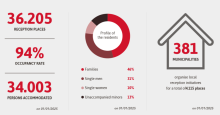
While Belgium continues to face a reception crisis, ongoing since the summer of 2021, the latest figures from Fedasil show that the number of places for asylum seekers made available by municipalities continues to decrease.
Read more
Main theme: Reception
Keywords: local reception initiative, reception crisis, housing shortage
Publication date:
As of 7 January 2025, 160 additional emergency shelter places are made available for homeless people sleeping on the streets in the Brussels Capital Region, supplementing the existing 2.600 places within the Brussels unhoused shelter network. The emergency shelter places are open to all homeless people, regardless of residence status.
Read more
Main theme: Vulnerable groups
Keywords: homeless shelter, extreme cold plan, homelessness
Publication date:
The UK Home Office released provisional figures showing that more than 36.000 people were detected in 2024, making the crossing of the English Channel in small boats. The International Organisation for Migration (IOM) estimates that at least 78 migrants died trying to cross the Channel in 2024.
Read more
Main theme: Irregular Migration
Keywords: English channel, illegal border crossing, small boat
Publication date:
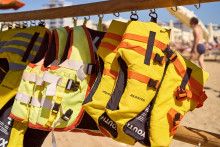
In London, the UK, Germany, France, Netherlands and Belgium, in the presence of the European Commission and its agencies, Europol and Frontex, agreed on a five-point priority plan to tackle irregular migration and migrant smuggling in 2025. Key priorities include targeting illicit financial flows that sustain smuggling networks and tackling organised crime groups' use of social media to recruit and advertise dangerous journeys across Europe and the Channel.
Read more
Main theme: Smuggling & Trafficking
Keywords: Calais Group, irregular migration, English channel, smuggling network, action plan

Publication date:
As of 9 December 2024, the Office of the Commissioner General for Refugees and Stateless Persons will temporarily suspend processing cases of applicants originating from Syria. Planned personal interviews will be cancelled and assessments will be temporarily put on hold.
Read more
Main theme: International Protection
Keywords: application for international protection, Syria

Publication date:
From 9 December 2024 until 8 June 2025, the Royal Netherlands Marechaussee will conduct temporary checks at its borders with Belgium and Germany to, among other things, stem irregular immigration into the country and combat migrant smuggling. Travellers intending to cross the border are advised to carry their ID documents with them.
Read more
Main theme: Borders & Visa
Keywords: internal border control, Schengen borders code
Publication date:
On the occasion of International Volunteer Day, Fedasil highlights the importance of volunteers who give their time to residents in reception centres and of sponsors who create links with these residents outside of the centres. If you have free time, join them and contact a reception centre in your neighbourhood!
Read more
Main theme: Reception
Keywords: reception centre, volunteer

Publication date:
The Secretary of State for Asylum and Migration has announced that she would use all possible means to reduce the number of applications from persons who already have protection in another EU Member State. She intends to oppose the Council for Aliens Law Litigation's rulings leading to the admissibility of these applications and the recognition of a protected status.
Read more
Main theme: International Protection
Keywords: applicant for international protection, refugee, protection status
Publication date:
The Federal Public Service Justice is currently able to assign a guardian to an unaccompanied foreign minor within the normal period of 8 weeks. However, the demand for guardians remains high in Limburg, Antwerp and Brussels, and the Guardianship Service is still urgently looking for additional guardians.
Read more
Main theme: Vulnerable groups
Keywords: unaccompanied minors, guardianship
Publication date:
According to Statbel, the Belgian statistical office, 4.048 persons obtained Belgian nationality in August 2024. The main countries of origin of people who acquired Belgian nationality in August are Morocco, Romania, Syria, Italy and France.
Read more
Main theme: Data & Statistics
Keywords: access to nationality, Belgian nationality
Publication date:
Fedasil announced that the Belgian reception network has now a higher capacity than that recorded during the asylum crisis of 2015-2016. However, this capacity is insufficient to accommodate all applicants for international protection who are entitled to reception. At present, 2.650 single men are still on the waiting list for a reception place.
Read more
Main theme: Reception
Keywords: reception capacity, reception centre, shortage
Publication date:
Fedasil announced that it can temporarily make use of centres in Bredene (Flanders) and in Theux (Wallonia) to accommodate applicants for international protection until March 2025. Both sites have already been used by Fedasil in the past, each time for a period of a few months.
Read more
Main theme: Reception
Keywords: reception capacity, reception centre, shortage

Publication date:
France notified that controls would take place at its borders with Belgium, Luxembourg, Germany, the Swiss Confederation, Italy, and Spain (land, air, and sea) from 1 November 2024 until 30 April 2024. Similar checks were already underway between 1 May 2024 and 31 October 2024 due to the Olympic and Paralympic Games organised in France during the summer 2024.
Read more
Main theme: Borders & Visa
Keywords: Schengen, internal border control, border control, border check

Publication date:
Nicole de Moor said that applications relating to 859 persons have already been processed in accelerated procedure since February 2024. In 96 % of cases, applicants were not granted protection status. Ms de Moor wants to focus more on prevention to prevent people who do not need protection from applying for international protection in Belgium.
Read more
Publication date:
As of 24 October 2024, the centre for registering applications for international protection is located at rue Belliard 68 in 1000 Brussels. Applications can still be registered in the Pacheco building until Wednesday, 23 October 2024.
Read more
Main theme: International Protection
Keywords: applicant for international protection, registration, registration centre
Publication date:
According to Statbel, the Belgian statistical office, 5.806 persons obtained Belgian nationality in July 2024. The main countries of origin of people who acquired Belgian nationality in July are Morocco, Romania, Syria, Afghanistan and Italy.
Read more
Main theme: Data & Statistics
Keywords: access to nationality, Belgian nationality
Publication date:
Fedasil has a budget for financing specific projects relating to the reception of asylum seekers (and other reception beneficiaries). The Agency has launched its call for projects for the year 2025. In 2025, the focus will be on projects that focus on support, activation, and housing.
Read more
Main theme: Reception
Keywords: call for projects, applicant for international protection, support, activation, housing
Publication date:
In a non-paper, seventeen European countries called on the European Commission to submit a new proposal for more effective returns. The letter emphasises the need for a stricter EU return system with clearer obligations for cooperation from the returnees and less interpretation by the European Court of Justice.
Read more
Main theme: Return & Readmission
Keywords: effective return

Publication date:
The Office of the Commissioner General for Refugees and Stateless Persons (CGVS) announced on 2 October 2024 that the notification of decisions granting or refusing subsidiary protection status to applicants from Lebanon is suspended until the CGRS has sufficient objective information to assess the security situation in Lebanon.
Read more
Main theme: International Protection
Keywords: applicant for international protection, Lebanon, refugee status, subsidiary protection status

Publication date:
On 1 October 2024, Nicole de Moor stated that proportionally speaking, more Palestinian applicants for international protection come to Belgium than to other European Member States. She also confirmed that the protection rate for Palestinian applicants had increased in recent years.