The European Commission has rejected calls from the aviation sector and the Port of Dover to suspend the EU Entry/Exit System (EES) during the summer travel season. While acknowledging operational difficulties at around 20 external border crossing points, the Commission considers that suspending the system would not be appropriate. It has instead announced additional efforts to support Member States facing implementation challenges.
07/07/2026
07/05/2026
The Court of Justice of the European Union has ruled on the compatibility of a national residence requirement with EU equal treatment rules. The Court examined whether a 10-year residence condition could be applied to beneficiaries of international protection in order to access a social benefit. It found that the measure constitutes indirect discrimination prohibited under EU law.

07/05/2026
DUO for a JOB has launched a national awareness campaign highlighting the persistence of discrimination in recruitment processes in Belgium. The initiative uses the format of the well-known game “Guess Who?” to illustrate how candidates may still be excluded on the basis of appearance, name, origin or accent rather than skills. The campaign is being rolled out in May across public spaces, including stations and metro networks in several Belgian cities.

23/04/2026
On 23 April 2026, the Belgian Chamber of Representatives adopted a bill introducing the possibility of imposing a lifetime entry ban on certain foreign nationals. The measure concerns individuals registered in the national database on terrorism, extremism and radicalisation and amends the Law of 15 December 1980 on access to the territory, residence, establishment and removal of foreign nationals.
16/04/2026
The Court of Justice of the European Union (CJEU) has clarified that detention centres holding applicants for international protection under the border procedure do not need to be located at the external border of a Member State. It also confirmed that continued detention after the expiry of the border procedure time limit may be permissible under certain conditions. The judgment further addresses the validity of procedural steps taken during the border procedure and reiterates key safeguards under EU law.

31/03/2026
Belgium and Algeria have signed two linked agreements, one on the readmission of irregularly staying Algerians and another providing a visa exemption for holders of Algerian diplomatic and service passports. The readmission agreement introduces measures to speed up identification, extend the validity of travel documents, allow the return of multiple individuals on the same flight, and permit the use of Algerian escorts during enforced returns.
Theme:
Type:
Keywords:
30/03/2026
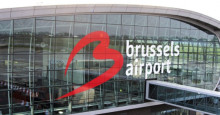
Belgium has postponed the registration of biometric data for third-country nationals entering the Schengen area. The measure, announced by the Interior Minister Bernard Quintin and Minister of Asylum and Migration Anneleen Van Bossuyt, follows significant queues and operational disruptions at Brussels Airport. The decision affects the gradual implementation of the European Entry/Exit System (EES) and aims to ensure border checks can be conducted under acceptable conditions for passengers.
Theme:
Type:
Keywords:
20/03/2026
On 20 March 2026, the Belgian Council of Ministers approved a draft law that would link the level of social assistance granted to beneficiaries of subsidiary and temporary protection to their participation in integration efforts through the Individual Social Integration Project (ISIP). Under the proposal, the amount of social assistance could be adjusted depending on the efforts made by the beneficiary to integrate.

01/02/2026
On 1 February 2026, Belgian Ministers Anneleen Van Bossuyt (Asylum and Migration) and Bernard Quintin (Interior) announced the extension of targeted internal checks, in place since July 2025, until at least 31 July 2026. The measures aim to curb irregular migration and secondary movements into Belgium while enforcing residence requirements and enhancing security. Targeted checks are conducted on major roads, long‑distance buses, selected trains, and intra‑Schengen flights.
29/01/2026
The documents set out key elements of the European Commission’s approach to managing international mobility to the EU. The EU Visa Strategy aims to strengthen the Union’s security and integrity through enhanced visa procedures, modernise the processing and management of visas, and support the EU’s economy and competitiveness by facilitating legitimate travel. Complementing this, the Recommendation on Attracting Talent for Innovation provides guidance to Member States on attracting, admitting, and retaining international students, researchers, highly skilled workers, and innovative entrepreneurs.
Theme:
Type:
Keywords:
01/01/2026
From 1 January 2026, the Onder1Dak project, which promotes co-housing between private homeowners and recognised refugees in Flanders, has restarted following renewed support from the Flemish Minister for Civic Integration and Integration. The initiative aims to facilitate access to housing while supporting the social and professional integration of recognised refugees.
23/12/2025
On 23 December 2025, the Belgian Council of Ministers approved a draft law linking social assistance to integration efforts. For recognised refugees, the draft law foresees that the Individual Social Integration Project (ISIP) should include, at a minimum, participation in an integration path. Other newcomers, including third-country students and economically inactive EU citizens, would now need to have legally resided in Belgium for five years before becoming eligible for social assistance.
Theme:
Type:
Keywords:
25/11/2025
The Federal Ombudsman has highlighted persistent challenges for individuals required to submit visa applications in person at Belgian diplomatic or consular posts. These requirements can create significant financial, administrative, and security burdens, particularly for applicants living far from a competent post or in conflict-affected regions. The Ombudsman recommends reviewing visa submission procedures to improve accessibility and consistency.
Theme:
Type:
Keywords:
07/11/2025
The Belgian Council of Ministers has approved a draft law providing for the possibility of imposing lifetime entry bans on individuals who pose a genuine security threat, based on an assessment by the Coordinating Body for Threat Analysis (OCAM). The measure is intended to implement a commitment set out in the government agreement and envisage amendments to several provisions of the Aliens Act of 15 December 1980. The draft law will now be submitted to the Council of State for its opinion.
31/10/2025
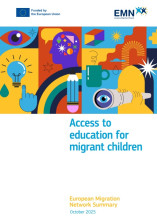
On 31 October 2025, the European Migration Network (EMN) released its latest Inform highlighting how 25 EMN Member and Observer Countries are addressing access to education for migrant children. The report shows that nearly all participating countries have adopted national measures to support linguistic, social, and emotional integration in schools. Despite persistent barriers, such as language difficulties and unequal learning outcomes, good practices are emerging across Europe, according to this Inform.
Theme:
Type:
Keywords:

12/10/2025
On 12 October 2025, Belgium began implementing the European Entry-Exit System (EES) for third-country nationals travelling to Europe for short stays. Brussels Airport and Brussels-Midi station (for Eurostar passengers) have planned the necessary infrastructure and procedures to support border registration. EU and Schengen-area travellers are not affected. Full implementation across Europe is scheduled for 10 April 2026.
Theme:
Type:
Keywords:
07/10/2025
The European Parliament has approved legislation making it easier to suspend visa-free travel to the EU in cases of security risks, hybrid threats or human rights breaches. The reform introduces new grounds for suspension, including the use of “golden passports” and violations of international law, and allows targeted suspensions for government officials deemed responsible for abuses. The agreement will take effect once formally adopted by the Council.
Theme:
Type:
Keywords:
02/10/2025
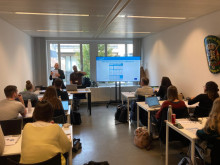
On 2 October 2025, EMN Belgium held an information session for new visa officers of the Federal Public Service Foreign Affairs. During this information session, the Belgian institutional framework for migration and asylum policies was presented.

29/09/2025
The Flemish government has decided that third-country workers – from outside the EU, Iceland, Liechtenstein, Norway and Switzerland – will follow a mandatory tailored integration trajectory from 2027. The initiative, proposed by Minister Hilde Crevits, will be delivered digitally and can be started in the country of origin or within six months of arrival in Flanders. The programme provides essential information on work, rights and responsibilities, and Flemish norms and values. Certain temporary or seasonal workers, students, and holiday-work participants are excluded.
Theme:
Type:
Keywords:
Minister Van Bossuyt updates Parliament on internal checks against irregular and secondary migration

17/09/2025
Belgium introduced targeted internal checks in July 2025 to address irregular and secondary migration. The measures are applied at airports, international bus and rail stations, and motorway rest areas. Over 11.000 individuals have been checked, with some ordered to leave the territory or placed in closed centres. The government plans to continue the checks and to conduct a six‑month evaluation.
30/07/2025
The European Commission announced that the operations of the Entry/Exit System (EES), an advanced IT system that will digitally record the entries and exits of third-country nationals traveling to 29 European countries for short stays, are set to start on 12 October 2025.
Theme:
Type:
Keywords:
02/07/2025
In 2024, a total of 17.939 newcomers obtained an integration certificate in Flanders, according to the Jaarrapport Inburgering 2024. This is the highest number recorded since 2018 and marks a 16% increase compared to the previous year.
Theme:
Type:
Keywords:
27/06/2025
Nearly one in eight self-employed workers in Belgium do not hold Belgian nationality. This proportion rises to more than four in ten in the Brussels-Capital Region. An analysis of recent data from the National Institute for Social Security of the Self-Employed (INASTI) by the social insurance fund Acerta highlights these figures. The study also reveals differences in age, sector activity, and income between Belgian and non-Belgian self-employed individuals.
Theme:
Type:
Keywords:

24/06/2025
On 24 June 2025, EMN Belgium participated in the Polish Presidency Conference on countering irregular migration. The discussions examined this phenomenon from three perspectives: strengthening the EU’s external borders to prevent irregular entries, combating migrant smuggling to dismantle criminal networks, and addressing the root causes of irregular migration and providing safe and legal alternatives.

19/06/2025
On 19 June 2025, Interior Minister Bernard Quintin and Asylum and Migration Minister Anneleen Van Bossuyt announced that, starting from summer 2025, federal police, local police, and the Immigration Office will collaborate to conduct targeted checks within Belgium. These measures aim to combat irregular migration and secondary movements towards Belgium. Reactions have emerged regarding the capacity required to implement such checks, their actual effectiveness in reducing irregular migration, and whether they can deliver a real deterrent effect or remain largely symbolic.