Nine human rights associations, including 11.11.11 Belgium, published the European Pushback Report 2024. The report highlights that illegal pushbacks are a persistent practice at Europe's borders and calls for the establishment of independent monitoring mechanisms at borders to ensure compliance with human rights standards and to prevent further violations.
23/01/2025
On 23 January 2023, the European Commissioner for Home Affairs participated in the European Parliament plenary session to discuss EU funding of physical border protection structures such as walls, fences or other barriers at the external border. According to him, the Commission will take border management needs into account “in a holistic manner”, whilst always ensuring proportionate measures and respect for fundamental rights.
Theme:
Type:
Keywords:

16/01/2025
With only 239 000 irregular crossings into the EU detected in 2024, Frontex reports the lowest number of irregular crossings since 2021, but warns about shifting dynamics and evolving challenges.
19/12/2024
On 19 December 2024, Myria published the sixth thematic section of its 2024 annual report. In this section, entitled « Nationality », Myria pays particular attention inter alia to the sums to be paid to become Belgian and analyses the impact of such costs on fundamental rights and on women's access to nationality.
Theme:
Type:
Keywords:
12/12/2024
The Council of the European Union adopted a decision to lift checks on persons at the internal land borders with and between Bulgaria and Romania from 1 January 2025. Bulgaria and Romania will so become full Schengen members.

11/12/2024
The situation at the Union’s borders with Russia and Belarus remains of concern with persistent threats related to the weaponisation of migrants. In a new Communication, the European Commission sets the framework for actions to guarantee the security of the Union and the territorial integrity of the Member States.
Theme:
Type:
Keywords:

09/12/2024
From 9 December 2024 until 8 June 2025, the Royal Netherlands Marechaussee will conduct temporary checks at its borders with Belgium and Germany to, among other things, stem irregular immigration into the country and combat migrant smuggling. Travellers intending to cross the border are advised to carry their ID documents with them.

04/12/2024
On 4 December 2024, the European Commission released a proposal for a Regulation enabling a progressive start of operations for Europe’s new digital border system - the Entry/Exit System (EES). According to the proposal, the Member States will start registering at least ten per cent of border crossings, and by the end of the given six-month period, they will need to reach the full registration of all people.
Theme:
Type:
Keywords:
30/11/2024
This ad hoc query examines national regulations and practices concerning the employment of third-country nationals during short stays or visa-free stays, as well as the procedures in place to issue long-stay D-visas for the purpose of employment.
Theme:
Publication type:
Keywords:
29/11/2024
This ad hoc query examines whether EMN Member Countries issue visas, short-term permits, or temporary authorisations of stay before third-country nationals can receive a residence permit and, if so, which conditions apply and which processes are in place.
Theme:
Publication type:
Keywords:

24/09/2024
The consultation for the ex post evaluation for 2014-2020 ISF Police aims to strengthen the evidence base of the evaluation by gathering the views of all relevant stakeholders. You can contribute to this consultation by filling in an online questionnaire before 21 November 2024.

24/09/2024
The public consultation for the Internal Security Fund - Borders and Visa (ISF BV) ex-post evaluation for 2014-2020 aims to strengthen the evidence base of the evaluation by gathering the views of all relevant stakeholders for the ISF BV programme. You can contribute to this consultation by filling in an online questionnaire before 21 November 2024.

01/11/2024
France notified that controls would take place at its borders with Belgium, Luxembourg, Germany, the Swiss Confederation, Italy, and Spain (land, air, and sea) from 1 November 2024 until 30 April 2024. Similar checks were already underway between 1 May 2024 and 31 October 2024 due to the Olympic and Paralympic Games organised in France during the summer 2024.
Theme:
Type:
Keywords:

03/09/2024
The Polish National Contact Point to the European Migration Network (EMN) will hold its national conference in 2024 on "Security of the EU's External Borders: Development of systems, technologies and threats prevention".

15/10/2024
According to preliminary data collected by Frontex, the most significant declines in irregular border crossings were observed on the Western Balkan and Central Mediterranean routes, with a 79% and 64% decline, respectively. The Eastern Land Border and Western African routes saw the highest increases, at 192% and 100%, respectively.

10/10/2024
EU Commissioner Ylva Johansson announced that the Entry-Exit System (EES) which aims to modernise EU border management and which was supposed to start on 10 November 2024, has been postponed with no new date set. Ms Johansson suggested that the EU may roll out the EES gradually.
07/10/2024
During the plenary debate on the reintroduction of internal border controls in the Schengen area and its impact on EU free movement, Commissioner Ylva Johansson underlined that internal border controls must be temporary, proportionate and a measure of last resort. She underlined that alternative measures should always be prioritised.

31/05/2024
Before 20 September 2024, Member States can apply for funding for projects focused on combating organised crime under the Internal Security Fund and for projects to reinforce border checks or border surveillance under the Border Management and Visa Instrument. EUR 17 million are intended for this purpose.
16/09/2024
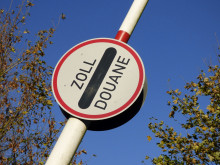
Checks are being temporarily reintroduced at Germany's borders with Belgium, France, Luxembourg, the Netherlands, and Denmark. They will run from 16 September 2024 until 15 March 2025 to, among other things, reduce irregular migration and combat people smuggling.
Theme:
Type:
Keywords:

30/07/2024
The latest report from the EU Agency for Fundamental Rights (FRA) identifies systemic gaps and obstacles to investigating rights violations at EU borders. The report suggests concrete steps to ensure more effective investigations into incidents of loss of life and ill-treatment at the EU’s borders.
Theme:
Type:
Keywords:
18/07/2024
Many of the applicants for international protection are believed to hold or have held a visa in order to enter the territory, but their number remains unknown. This ad hoc query maps the collection of statistics on migrants who enter the Schengen area legally but who subsequently lodge an asylum application in an EU Member State.
Theme:
Publication type:
Keywords:

11/07/2024
The number of irregular border crossings into the European Union in the first six months of 2024 fell to roughly 94.000, according to preliminary data collected by Frontex. The Western Balkans and the Central Mediterranean recorded the largest decreases in detections of irregular border crossings, while the West African and the Eastern Land Border have seen the largest increases.
Theme:
Type:
Keywords:

07/06/2024
This online annual conference, organised by the Academy of European Law (ERA), will debate the latest developments and challenges in the EU’s internal and external border management. It will inter alia analyse the latest proposals and reforms on the functioning and operation of EU border management systems, including Schengen, as well as Frontex’ role and responsibilities.
Theme:
Type:
Keywords:
03/06/2024
This ad hoc query maps the pathways to citizenship in place across EMN Member and Observer countries. The information reported covers the possibility of dual citizenship, the residence, linguistic and economic criteria to obtain citizenship, and the process fees required by responding countries.
Theme:
Publication type:
Keywords:
24/05/2024
On 24 May 2024, the Council of the European Union, with Spain and Slovenia abstaining, finally adopted the reform of the Schengen Borders Code. The reform inter alia aims to make the Schengen area more resilient to present and future crises at its external borders.